Thomas Edison and the Electric Arc Light System Test - August 30, 1879
1879 · Menlo Park, United States
Thomas Edison tests the first practical electric arc light system at the village of Menlo Park, New Jersey.
October 21, 1879
Thomas Edison invents a workable electric light at his laboratory in Menlo Park, New Jersey.
Menlo Park, United States | Edison Electric Light Company
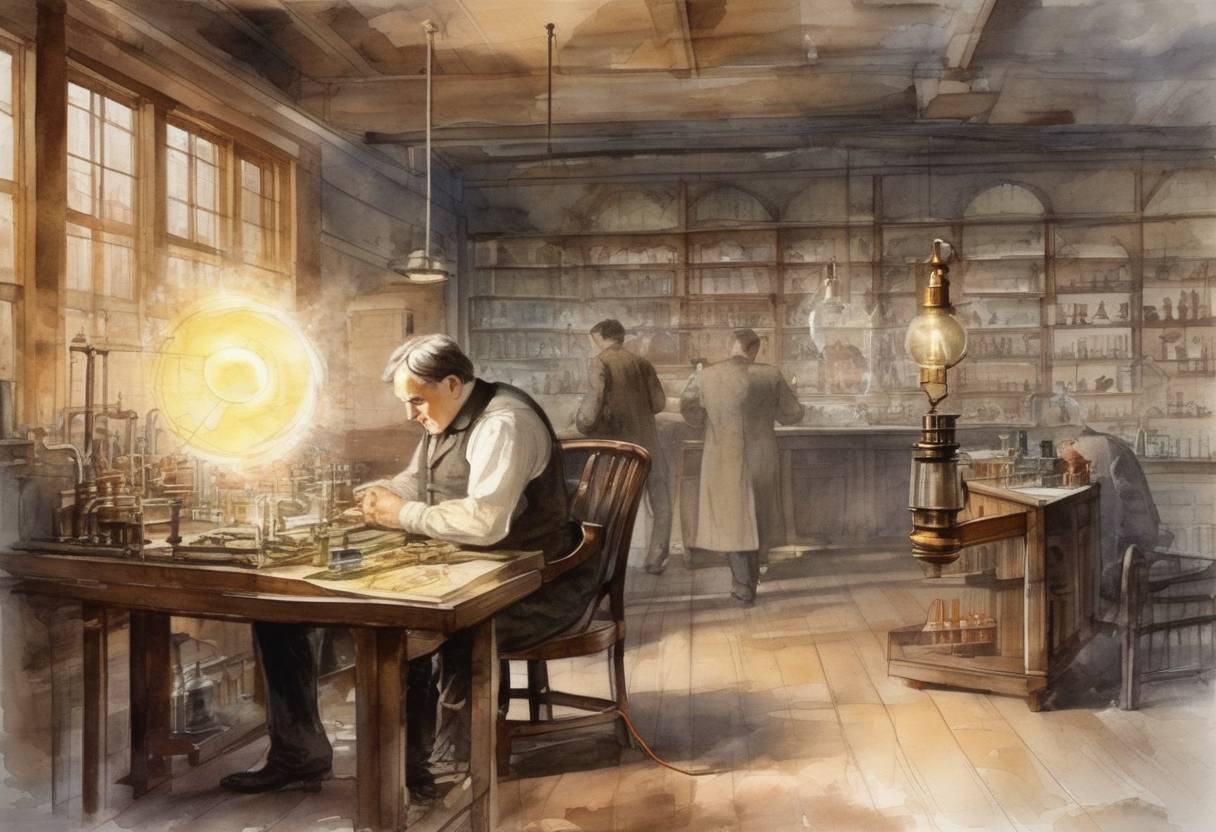
On October 21, 1879, Thomas Edison achieved a significant milestone in the development of electric lighting at his laboratory in Menlo Park, New Jersey. This date marks the successful testing of a practical and long-lasting incandescent light bulb, a breakthrough that would revolutionize the way people lived and worked.
Before Edison’s invention, the concept of electric lighting was not new. Several inventors, including Sir Humphry Davy and Joseph Swan, had experimented with electric light. However, these early attempts were either too costly, inefficient, or short-lived to be practical for widespread use.
Edison, already a prolific inventor with numerous patents, set his sights on creating a commercially viable electric light. His goal was to develop a system that could provide affordable and reliable lighting to homes and businesses.
Research and Experimentation: Edison and his team at Menlo Park conducted extensive research and experimentation. They tested thousands of materials for the filament, the component of the bulb that would glow when electricity passed through it.
Carbon Filament: After numerous trials, Edison discovered that a carbonized bamboo filament could last for over 1,200 hours. This was a significant improvement over previous designs and materials.
Vacuum Bulb: Edison’s design also included a vacuum inside the glass bulb, which helped prevent the filament from burning out quickly by reducing oxidation.
On October 21, 1879, Edison successfully tested his incandescent light bulb, which burned for approximately 13.5 hours. This demonstration proved that electric lighting could be practical and durable, paving the way for its commercial use.
Patent and Commercialization: Edison received a patent for his electric light bulb in January 1880. He then focused on developing an entire electrical distribution system to support the widespread use of electric lighting.
Impact on Society: The invention of the electric light bulb had profound effects on society. It extended the workday, improved safety in homes and streets, and contributed to the growth of industries by enabling round-the-clock operations.
Legacy: Edison’s work laid the foundation for modern electrical engineering and the global electric power industry. His Menlo Park laboratory is often regarded as the first industrial research lab, setting a precedent for future innovation.
Edison’s invention of a workable electric light bulb is a testament to his ingenuity and perseverance. It remains one of the most transformative technological advancements of the 19th century, fundamentally altering human life and progress.
Source: en.wikipedia.org