Refusal of Warsaw to Surrender: September 26, 1939
1939 · Warsaw, Poland
Warsaw's surrender in World War II is demanded by Germany, but the city refuses to surrender.
September 17, 1939
The Soviet Union invaded Poland from the east during World War II, following the Molotov-Ribbentrop Pact with Nazi Germany.
Eastern Poland, Poland | Soviet Union
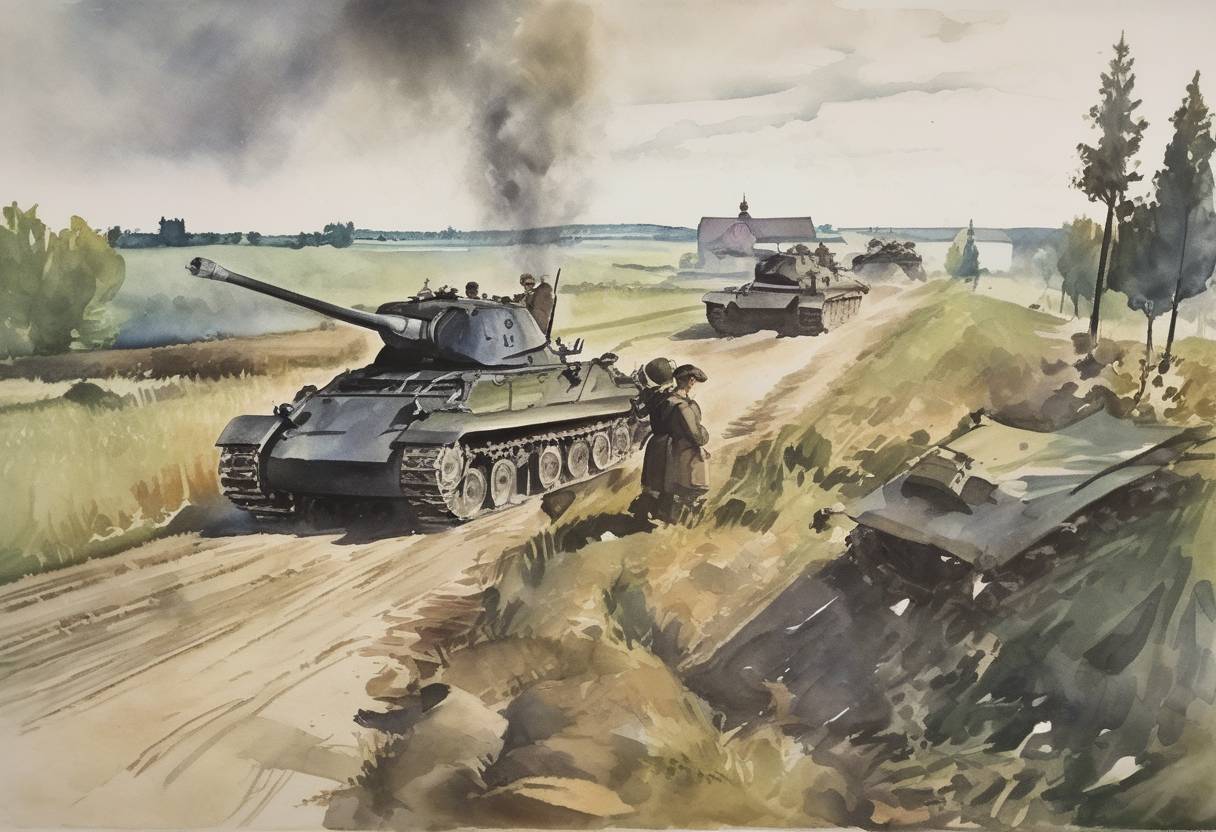
On September 17, 1939, the Soviet Union invaded Poland from the east, a significant event during the early stages of World War II. This invasion was a direct consequence of the Molotov-Ribbentrop Pact, a non-aggression treaty signed between Nazi Germany and the Soviet Union on August 23, 1939.
Molotov-Ribbentrop Pact: Officially known as the Treaty of Non-Aggression between Germany and the Union of Soviet Socialist Republics, this pact included a secret protocol that divided Eastern Europe into German and Soviet spheres of influence. Poland was to be partitioned between the two powers.
German Invasion of Poland: On September 1, 1939, Germany invaded Poland from the west, marking the beginning of World War II. The Polish military was quickly overwhelmed by the German blitzkrieg tactics.
Soviet Justification: The Soviet government claimed that their invasion was to protect Ukrainians and Belarusians living in eastern Poland after the Polish state had “collapsed” under the German attack.
Military Action: The Red Army crossed the Polish border with over 800,000 troops. The Polish forces, already engaged with the Germans in the west, were unable to mount a significant defense against the Soviet advance.
Outcome: Within weeks, the Soviet forces occupied eastern Poland. The rapid Soviet advance met with little resistance, as the Polish government had already fled to Romania.
Partition of Poland: Following the invasion, Poland was divided between Nazi Germany and the Soviet Union, as per the secret agreement in the Molotov-Ribbentrop Pact.
Impact on Poland: The Soviet occupation led to significant political and social changes in the region. Thousands of Polish military personnel and civilians were arrested, deported, or executed. The Katyn Massacre, where thousands of Polish officers were killed by the Soviet NKVD in 1940, was one of the most notorious atrocities during this period.
Broader Implications: The invasion solidified the temporary alliance between Nazi Germany and the Soviet Union, allowing both powers to focus on their respective military and strategic goals. However, this alliance would later dissolve when Germany invaded the Soviet Union in June 1941.
The Soviet invasion of Poland was a pivotal moment in World War II, demonstrating the aggressive expansionist policies of both Nazi Germany and the Soviet Union. It highlighted the vulnerability of smaller nations caught between powerful adversaries and set the stage for further conflicts in Eastern Europe. The event also underscored the brutal realities of the Molotov-Ribbentrop Pact, which had far-reaching consequences for the people of Poland and the broader geopolitical landscape of the time.
Source: en.wikipedia.org