October 7, 1959

The Soviet probe Luna 3 transmitted the first-ever photographs of the far side of the Moon, providing unprecedented views of the lunar surface.


Moscow, Soviet Union | Soviet Space Program
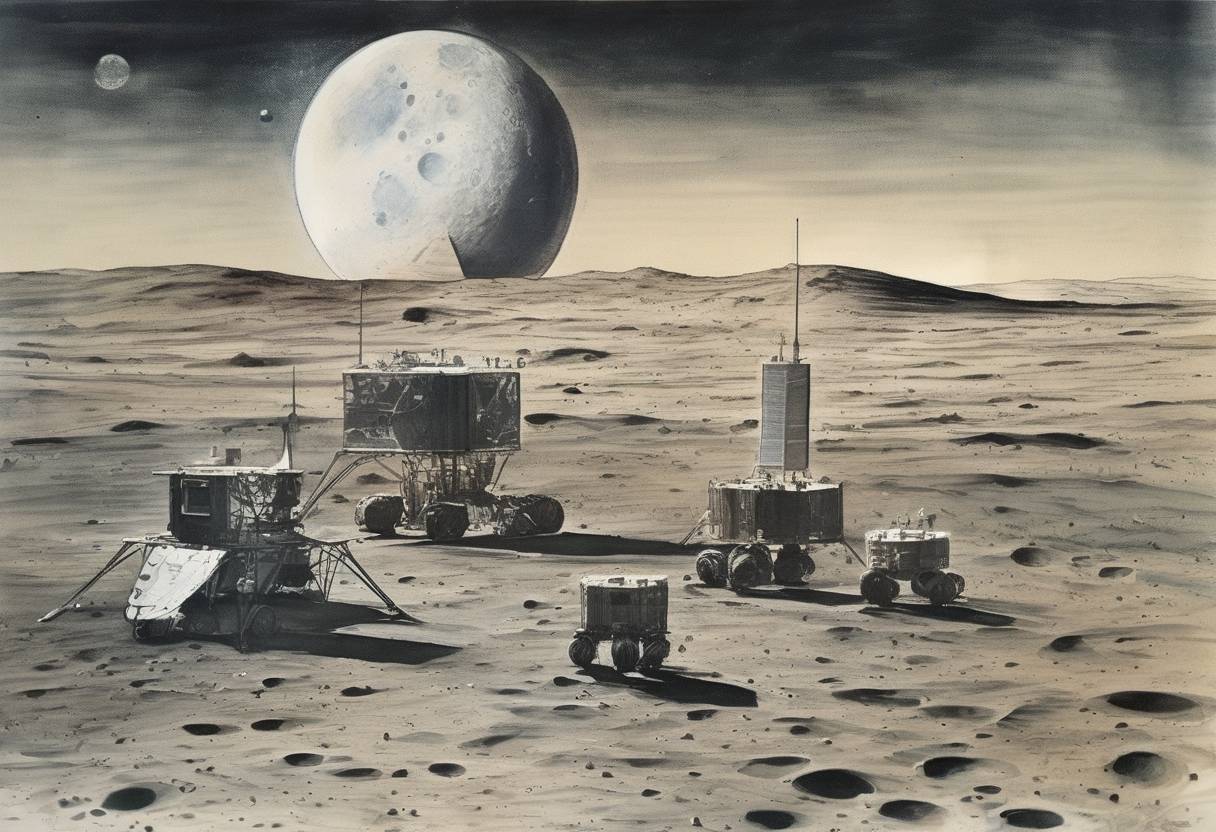
Watercolor painting based depiction of The Soviet probe Luna 3 transmitted the first-ever photographs of the far side of the Moon, providing unprecedented views of the lunar surface. (1959)

Luna 3 and the First Photographs of the Far Side of the Moon

On October 7, 1959, the Soviet space probe Luna 3 achieved a groundbreaking milestone in space exploration by transmitting the first-ever photographs of the far side of the Moon. This event marked a significant advancement in our understanding of the lunar surface and showcased the capabilities of early space technology.

Background

The Luna 3 mission was part of the Soviet Union’s Luna program, which aimed to explore the Moon and demonstrate the USSR’s prowess in space exploration during the Cold War. Prior to Luna 3, the far side of the Moon had never been observed by humans or machines, as it is perpetually hidden from Earth due to the Moon’s synchronous rotation.

The Mission

  • Launch Date: Luna 3 was launched on October 4, 1959, from the Baikonur Cosmodrome.
  • Spacecraft Design: The probe was equipped with a camera system designed to capture images of the Moon’s far side. It also carried radio transmitters to send the images back to Earth.
  • Trajectory: Luna 3 followed a complex trajectory that allowed it to swing around the Moon, using its gravitational pull to adjust its path and capture images of the previously unseen lunar surface.

Achievements

  • First Photographs: On October 7, 1959, Luna 3 successfully transmitted 29 photographs of the Moon’s far side back to Earth. These images covered about 70% of the far side’s surface.
  • Image Quality: Although the images were of low resolution by today’s standards, they provided unprecedented views and revealed features such as craters and mountain ranges, which were previously unknown.
  • Scientific Impact: The photographs allowed scientists to identify and name several new lunar features, including the Mare Moscoviense and the Tsiolkovskiy crater.

Aftermath and Significance

  • Technological Milestone: Luna 3’s success demonstrated the feasibility of remote space photography and laid the groundwork for future lunar exploration missions.
  • Cold War Context: The mission was a significant propaganda victory for the Soviet Union, highlighting its technological capabilities during the space race with the United States.
  • Legacy: The images from Luna 3 provided valuable data that contributed to the planning of subsequent lunar missions, including those of the Apollo program.

In conclusion, the Luna 3 mission was a pivotal moment in space exploration history, offering humanity its first glimpse of the Moon’s mysterious far side and expanding our understanding of our closest celestial neighbor.