Arrest Warrant for Omar al-Bashir: March 3, 2009
2009 · The Hague, Netherlands
The International Criminal Court issued an arrest warrant for Sudanese President Omar al-Bashir for war crimes and crimes against humanity in Darfur.
May 3, 2006
The International Criminal Court issues its first-ever arrest warrants, targeting leaders of the Lord's Resistance Army in Uganda, including Joseph Kony, for war crimes and crimes against humanity.
The Hague, Netherlands | International Criminal Court
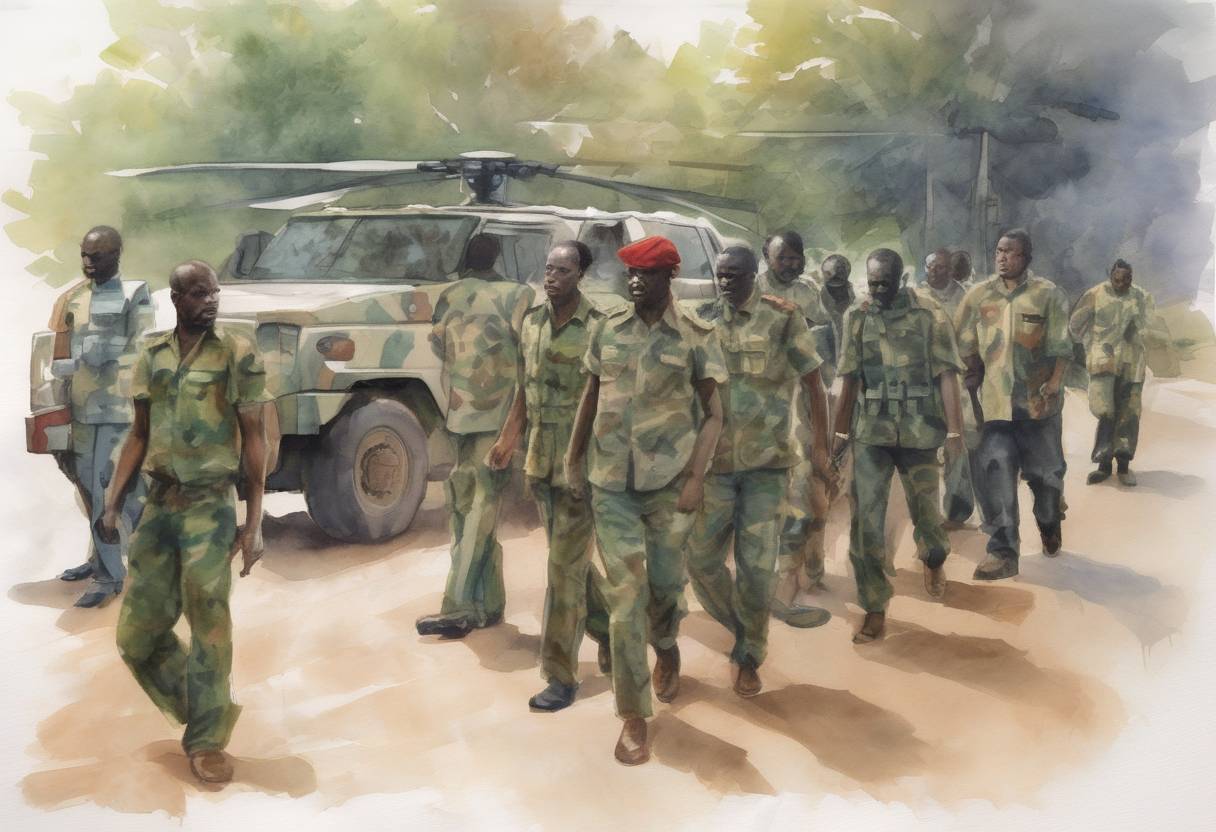
On May 3, 2006, the International Criminal Court (ICC) made a significant move in its pursuit of international justice by issuing its first-ever arrest warrants. These warrants targeted leaders of the Lord’s Resistance Army (LRA) in Uganda, including its notorious leader, Joseph Kony. This marked a pivotal moment in the ICC’s efforts to address war crimes and crimes against humanity.
The Lord’s Resistance Army, led by Joseph Kony, has been active since the late 1980s. The group is infamous for its brutal tactics, including the abduction of children to serve as soldiers and sex slaves, widespread killings, and other atrocities committed against civilians in northern Uganda and neighboring regions. The conflict has resulted in severe humanitarian crises, displacing millions and causing untold suffering.
The ICC, established by the Rome Statute in 2002, is the first permanent international court designed to prosecute individuals for genocide, war crimes, and crimes against humanity. Uganda referred the situation concerning the LRA to the ICC in December 2003, seeking international assistance in bringing the group’s leaders to justice.
On May 3, 2006, the ICC issued arrest warrants for five top LRA commanders:
These warrants were significant as they underscored the ICC’s commitment to holding accountable those responsible for grave human rights violations, regardless of their location or political power.
The issuance of these warrants was a landmark in international law, demonstrating the ICC’s role in addressing impunity for serious crimes. It also highlighted the challenges of enforcing international justice, as capturing and prosecuting individuals like Kony proved difficult due to their elusive nature and the complex geopolitical landscape in which they operated.
Despite the warrants, Joseph Kony and several other LRA leaders evaded capture for years. The LRA’s activities diminished over time, but Kony remained at large, reportedly moving between countries in Central Africa. Efforts to apprehend him continued, involving international cooperation and regional military operations.
The ICC’s actions in this case set a precedent for future prosecutions and reinforced the importance of international mechanisms in addressing crimes that transcend national borders. The pursuit of justice for victims of the LRA’s atrocities remains a critical component of reconciliation and peacebuilding efforts in affected regions.
In summary, the ICC’s issuance of arrest warrants on May 3, 2006, was a crucial step in the global fight against impunity for war crimes and crimes against humanity, emphasizing the court’s role in promoting justice and accountability on the international stage.
Source: www.icc-cpi.int