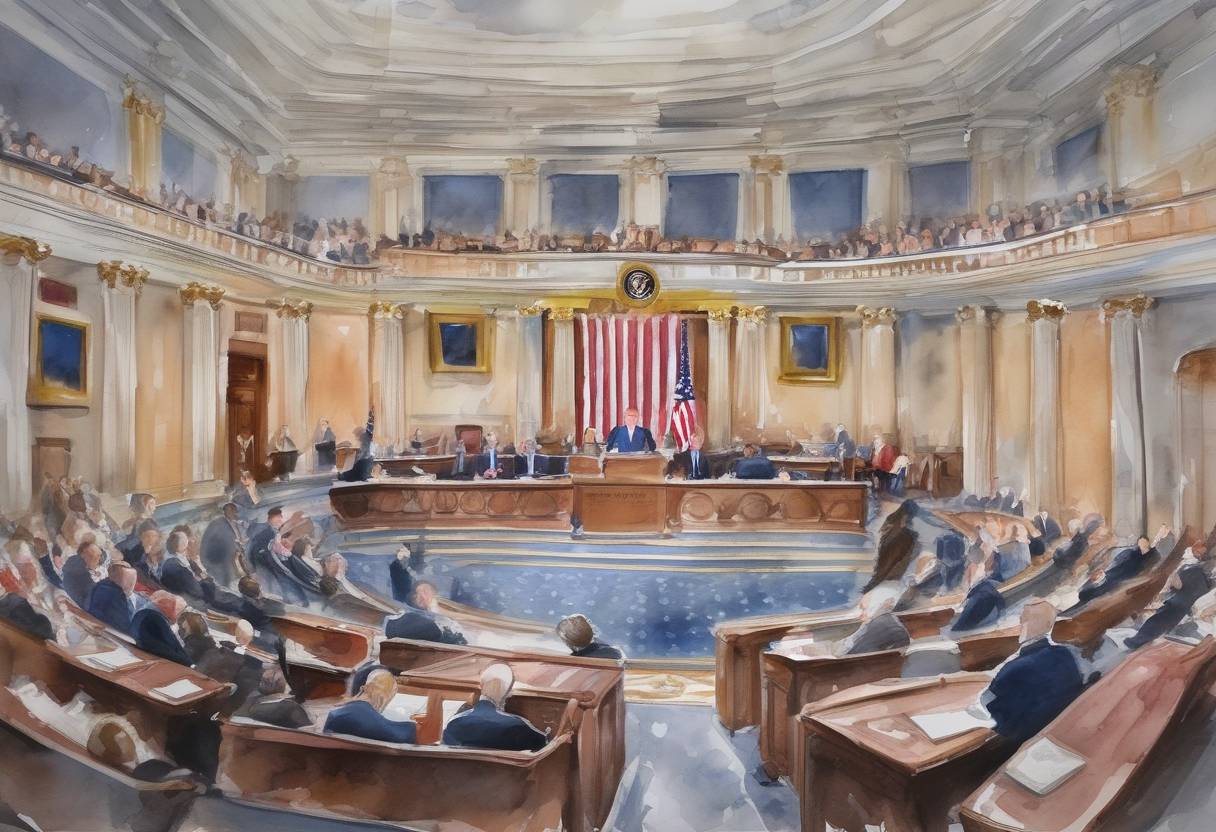
Acquittal of President Donald Trump: February 5, 2020
On February 5, 2020, the United States Senate voted to acquit President Donald J. Trump on two articles of impeachment: abuse of power and obstruction of Congress. This decision concluded the third impeachment trial of a U.S. president in American history.
Background
The impeachment process began in the House of Representatives, where President Trump was accused of soliciting foreign interference in the 2020 U.S. presidential election. The allegations centered around a phone call with Ukrainian President Volodymyr Zelensky, during which Trump was accused of pressuring Ukraine to investigate Joe Biden, a political rival, and his son, Hunter Biden. The House of Representatives passed two articles of impeachment:
- Abuse of Power: Accusing Trump of using his office to solicit foreign interference for personal political gain.
- Obstruction of Congress: Accusing Trump of blocking efforts by Congress to investigate his actions.
The House voted to impeach President Trump on December 18, 2019, largely along party lines.
The Senate Trial
The impeachment trial in the Senate began in January 2020. The Senate, controlled by the Republican Party, was responsible for conducting the trial and ultimately deciding whether to convict and remove the president from office.
- Trial Proceedings: The trial included opening arguments from House managers, who acted as prosecutors, and Trump’s defense team. Witnesses were not called to testify, a decision that was a point of contention between parties.
- Vote Outcome: On February 5, 2020, the Senate voted on the two articles of impeachment:
- Abuse of Power: 52 senators voted to acquit, while 48 voted to convict. Notably, Senator Mitt Romney of Utah was the only Republican to vote to convict on this charge.
- Obstruction of Congress: 53 senators voted to acquit, and 47 voted to convict, with all Republicans voting to acquit.
Aftermath and Significance
- Political Impact: The acquittal was a significant political victory for President Trump and the Republican Party. It underscored the deep partisan divisions in Congress and the country.
- Historical Context: This trial marked the third time a U.S. president had been impeached and acquitted, following Andrew Johnson in 1868 and Bill Clinton in 1999. Richard Nixon resigned before he could be impeached.
- Legacy: The trial and its outcome have had lasting implications on the political landscape, influencing public opinion and the dynamics of the 2020 presidential election.
The acquittal of President Trump remains a pivotal moment in U.S. political history, reflecting the complexities and challenges of the impeachment process in a highly polarized environment.