The Battle of York: April 27, 1813
1813 · York, Canada
During the War of 1812, American troops captured the capital of Upper Canada, York (now Toronto), in the Battle of York.
October 24, 1812
In the War of 1812, the Battle of Frenchtown took place. American forces engaged with British and Native American troops near what is today Monroe, Michigan, resulting in a significant defeat for the American side.
Monroe, United States | United States Army
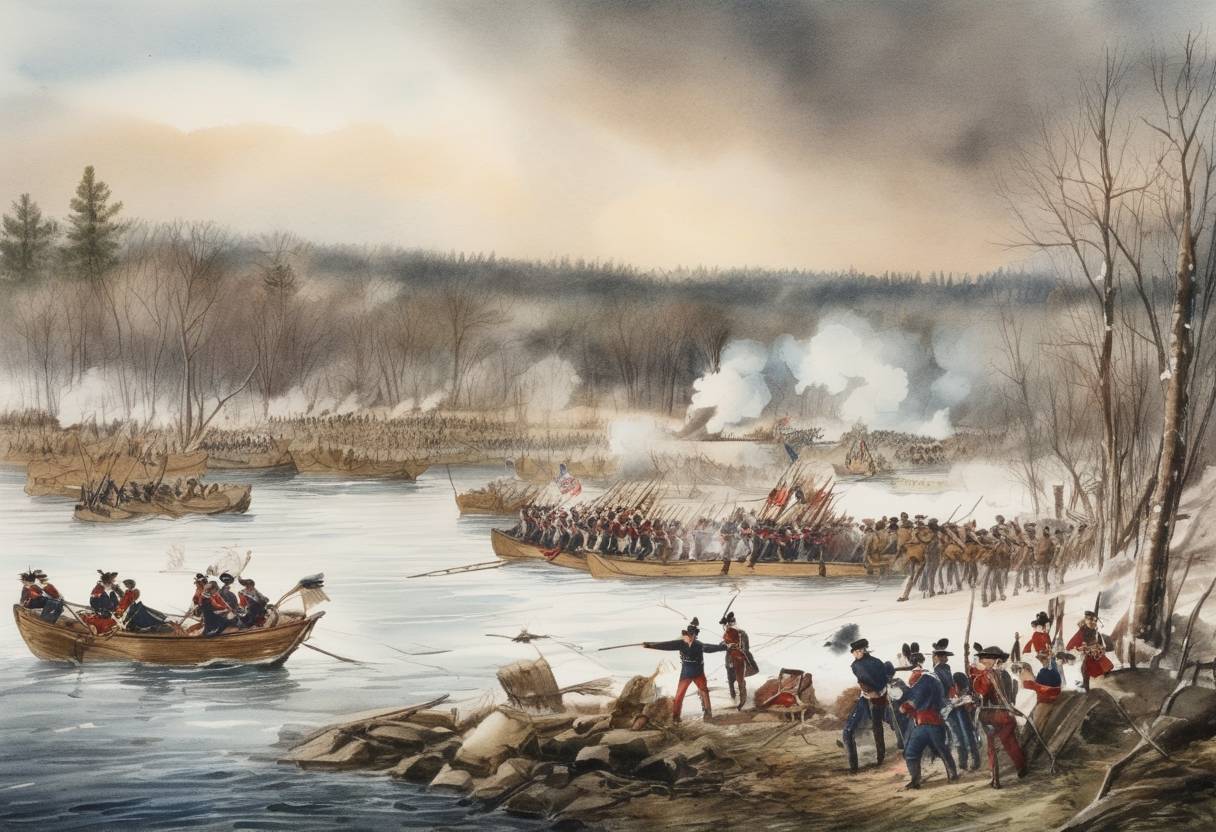
The Battle of Frenchtown is commonly associated with the events of January 1813 rather than October 1812. However, during October 1812, the broader context of the War of 1812 was defined by other skirmishes and battles, primarily centered around pitched conflicts between American forces and a coalition of British forces and Native American allies. By this point in the war, tensions and intermittent engagements were common in the Northwest Territory.
Leading up to late 1812, the United States sought to assert control over the Michigan Territory, an area with strategic significance due to its proximity to British-held Fort Detroit and the waterways leading into Canada. The early months of the war saw several movements and engagements aimed at disrupting British supply lines and loosening their grip on key geographic points.
While no notable confrontation labeled as the Battle of Frenchtown occurred on October 24, the area near present-day Monroe, Michigan, would soon become the site for the infamous Battle of Frenchtown in January 1813. This battle was marked by the brutal defeat of American forces and the subsequent ‘River Raisin Massacre,’ which caused a public outcry in the United States. The January 1813 battle was one of the bloodiest in the War of 1812 and resulted in high casualties, influencing the war’s dynamics by intensifying American resolve against the British and their allies.
Understanding the events near the end of 1812 and their location within the Michigan Territory provides insight into the strategic importance of the Great Lakes region during the War of 1812. The campaign in this area exposed vulnerabilities in American military strategy and underscored the critical role of Native American alliances with the British. This period set the stage for the broader confrontation at Frenchtown in January 1813, which would have lasting repercussions for American military operations in the region.
Source: en.wikipedia.org