The Triumph of Emperor Domitian Over the Chatti
86 · Rome, Roman Empire
The Roman Emperor Domitian celebrates a triumph over the Chatti, a Germanic tribe, marking a significant military victory for Rome.
March 1, 0086
Lucius Antonius Saturninus, governor of Upper Germany, begins a revolt against Roman Emperor Domitian known as the Revolt of Saturninus, although the main hostilities occur outside this date.
Mogontiacum, Roman Empire | Roman military
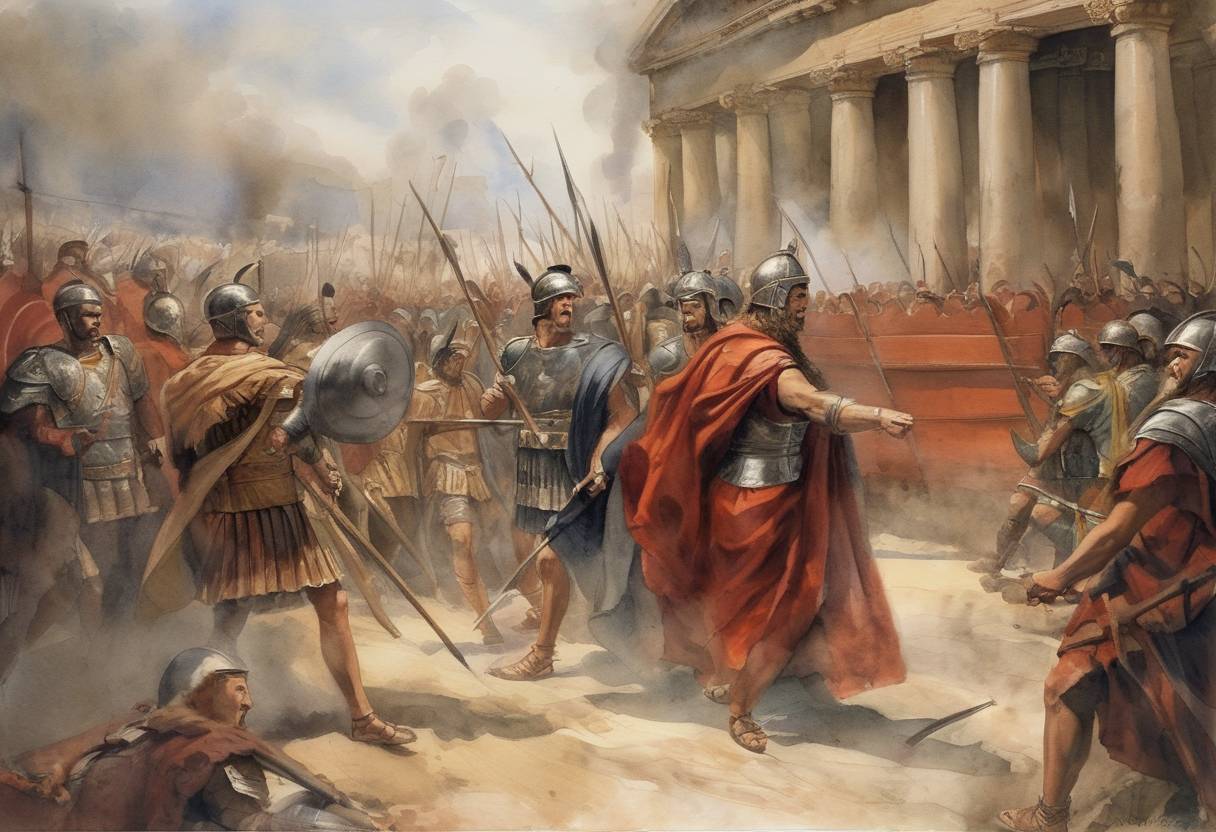
On January 3, 89 AD, a significant but ultimately unsuccessful revolt erupted in the Roman Empire, orchestrated by Lucius Antonius Saturninus, the governor of Upper Germany. This rebellion, known as the Revolt of Saturninus, directly challenged the authority of Emperor Domitian.
Lucius Antonius Saturninus, a high-ranking military officer, found himself discontented with the leadership of Emperor Domitian, whose reign from 81 AD was marked by both militaristic ambition and political repression. The advent of the revolt was rooted in Saturninus’s grievances against Domitian, including disillusionment with the emperor’s policies and favoritism within the military, which had fostered discontent among certain factions.
Saturninus’s rebellion was primarily organized in Mogontiacum (modern-day Mainz, Germany), the capital of the province of Germania Superior. On January 3, 89 AD, Saturninus declared his insurrection against Domitian, rallying the Roman legions stationed in the province. His forces included the Legio XIV Gemina and Legio XXI Rapax, notable for their strategic importance and martial prowess.
The revolt was not supported by a wide network across the Roman territories, which ultimately limited its potential to gain ground swiftly. Additionally, unfavorable winter conditions inhibited Saturninus’s ability to mobilize support from other auxiliary troops and allies, including tribes such as the Chatti, who might have been inclined to join the uprising against Rome.
The rebellion saw a swift response from loyalist forces. Domitian, informed of the insurrection, acted decisively. With local assistance from Roman forces in adjacent provinces, including the impressive response by the Lower German governor, Lappius Maximus, the revolt was quickly suppressed within a month.
The aftermath of the failed revolt saw punitive measures against conspirators and suspect individuals within the region. To prevent further dissent, Domitian intensified his authoritarian regime, establishing more significant controls over administrative and military operations.
Although brief and contained, the Revolt of Saturninus underscores the endemic issues of loyalty and governance faced by the Roman Empire during Domitian’s reign. It highlighted the latent tensions within the imperial command structure and the potential volatility of Roman provincial governors. Furthermore, the rebellion and its rapid quelling reinforced Domitian’s reputation for ruthless efficiency in consolidating imperial power, despite continued opposition from various quarters within the empire.
Source: www.britannica.com