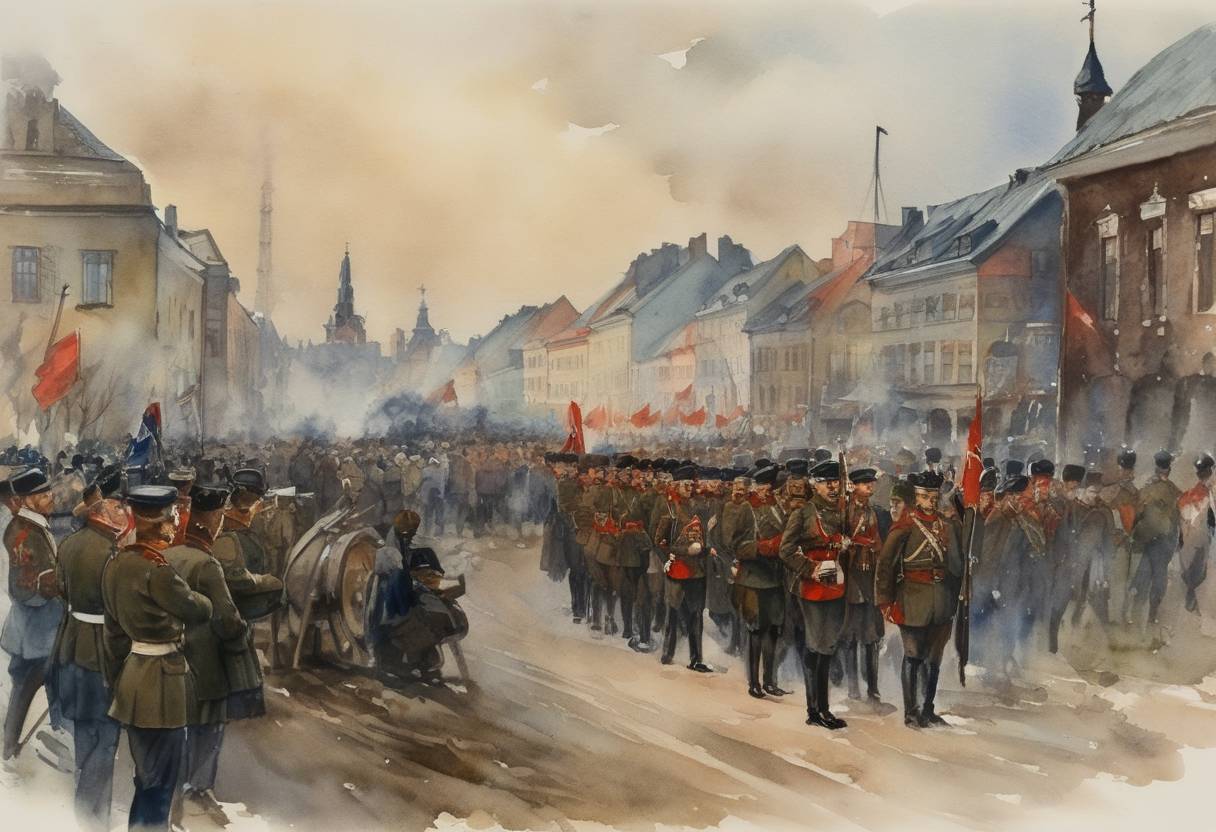
Clarification Needed: Event Date and Historical Context
There seems to be a date discrepancy in your request concerning the end of the Estonian War of Independence. The Treaty of Tartu, which formally recognized Estonia’s independence, was actually signed on February 2, 1920, not June 23, 1919. June 23, 1919, is more notably linked with the Battle of Cēsis (Võnnu Lahing), a pivotal victory for Estonian forces and their Latvian allies against the Baltische Landeswehr during the war. Here is a detailed account of these events with accurate dating:
Battle of Cēsis (Võnnu Lahing) - June 23, 1919
Context
- Background: The Estonian War of Independence began in November 1918 as the fledgling Estonian Republic, having declared independence on February 24, 1918, sought to secure its sovereignty amid the chaos following World War I and the Russian Revolution.
- Coalition Forces: Estonia faced threats from both Soviet Russia and German forces, including the Baltische Landeswehr, which comprised mainly Baltic German troops and sought control in the region to maintain German dominion.
Key Events: Battle of Cēsis
- Combatants: The battle was fought between the Estonian Army, supported by the Latvian Northern Brigade, and the Baltische Landeswehr, backed by German Freikorps units.
- Location: Cēsis, located in present-day Latvia, was a strategic point in the conflict between pro-independence forces and German-backed troops.
- Outcome: Beginning on June 19 and culminating on June 23, the battle ended in a decisive victory for Estonian and Latvian forces. This triumph was characterized by successful counterattacks and strategic maneuvers, which forced the opposing German units to retreat.
Aftermath
- Significance: The victory at Cēsis was crucial, effectively crippling the German military presence in the region and strengthening the Estonian negotiating position in subsequent peace talks.
- Legacy: This victory is commemorated in Estonia and Latvia as a symbol of national resistance and triumph over foreign intervention. In Estonia, June 23 is celebrated as Victory Day (Võidupüha), marking the successful defense of independence.
Treaty of Tartu - February 2, 1920
Although the treaty was signed on February 2, 1920, its significance marked the formal end of hostilities and international recognition of Estonia’s independence:
- Parties Involved: The Republic of Estonia and Soviet Russia.
- Terms: The treaty established peaceful relations and officially recognized Estonia’s independence. Soviet Russia relinquished all claims to Estonian territory, establishing a new era for Estonia as an independent European state.
By recognizing these key events in proper historical context and date, the importance of both the Battle of Cēsis and the Treaty of Tartu in establishing Estonian independence is underscored.