Election of Rodrigo Borgia as Pope Alexander VI - August 11, 1492
1492 · Rome, Papal States (now Italy)
Rodrigo Borgia is elected as Pope Alexander VI.
March 27, 1829
Papal conclave elects Francesco Saverio Castiglioni as Pope Pius VIII.
Rome, Papal States (now Italy) | Catholic Church
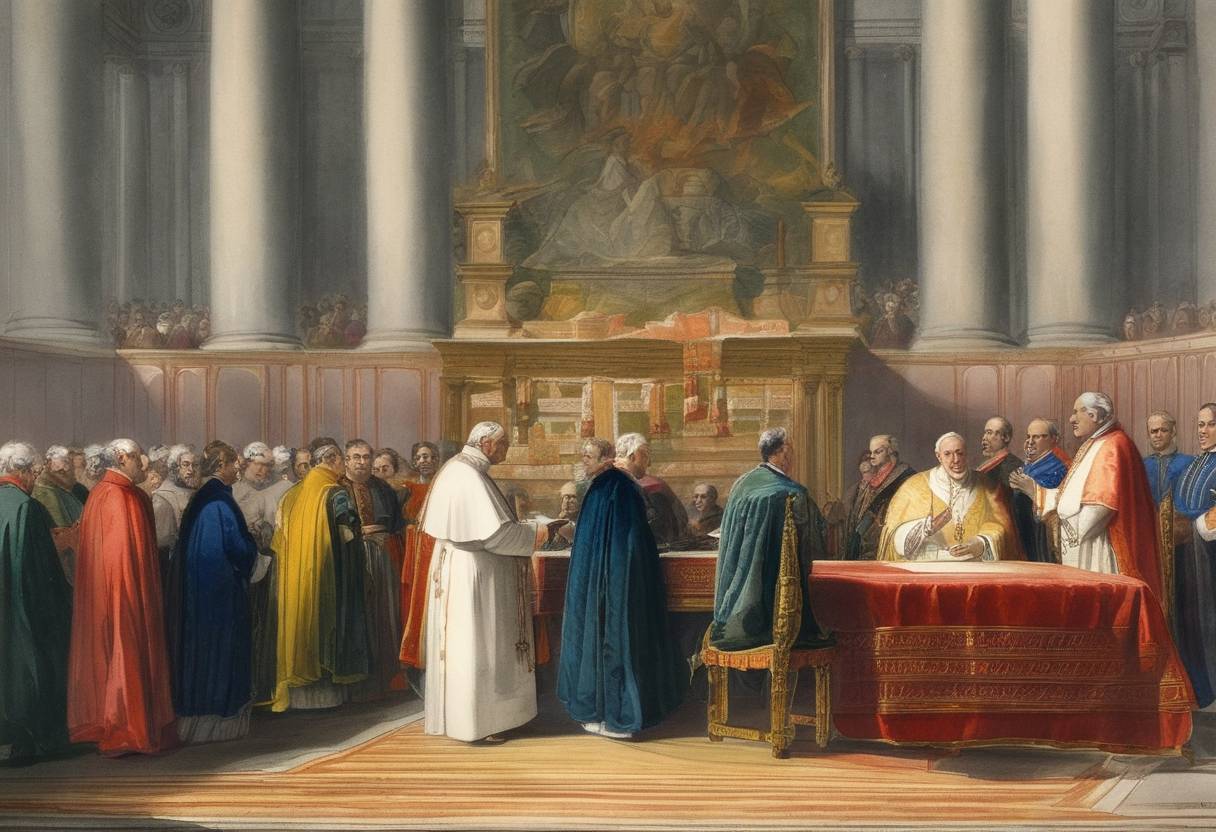
The papal conclave that elected Francesco Saverio Castiglioni as Pope Pius VIII took place in 1829 following the death of Pope Leo XII. The selection of a new pope during this period was of particular significance as the Catholic Church was navigating through the reverberations of the Napoleonic Wars and the restoration of monarchies, which had profound impacts on political-religious relations across Europe.
The conclave convened in Rome at the Quirinal Palace with the gathering of cardinals beginning on February 24, 1829. It became pivotal as it was marked by factional disputes among the cardinals. The key factions were those who supported a conservative continuation of Pope Leo XII’s policies and those who advocated for a more conciliatory approach towards modernizing influences within the Church.
Francesco Saverio Castiglioni, a cardinal with a reputation for canonical knowledge and diplomacy, emerged as a compromise candidate. On March 31, 1829, Castiglioni was elected after a relatively short conclave lasting little over a month. He adopted the name Pope Pius VIII, paying homage to his predecessor, Pius VII, under whom he had served as a close associate.
Castiglioni’s election was influenced by his perceived ability to bridge the divide between the factions, and his diplomatic skills were seen as essential for managing the Church’s external relations as well as internal reform.
Pope Pius VIII’s tenure was relatively short due to his fragile health. Nonetheless, his papacy was notable for several key activities:
The election of Pope Pius VIII represents an era in ecclesiastical history marked by the transition from stringent conservatism to a more moderate approach in church policies and external relations. Although his papacy was brief, it paved the way for subsequent reformations within the Church as it adapted to the changing sociopolitical landscape of the 19th century.
Source: www.britannica.com