The Conclusion of The Long March: October 20, 1935
1935 · Yan'an, China
The Long March, a major event in Chinese history, ends as the Communist Army reaches Yan'an, having successfully evaded the Chinese Nationalist forces.
August 1, 1927
The Nanchang Uprising was initiated, marking the beginning of the Chinese Civil War.
Nanchang, China | Chinese Communist Party
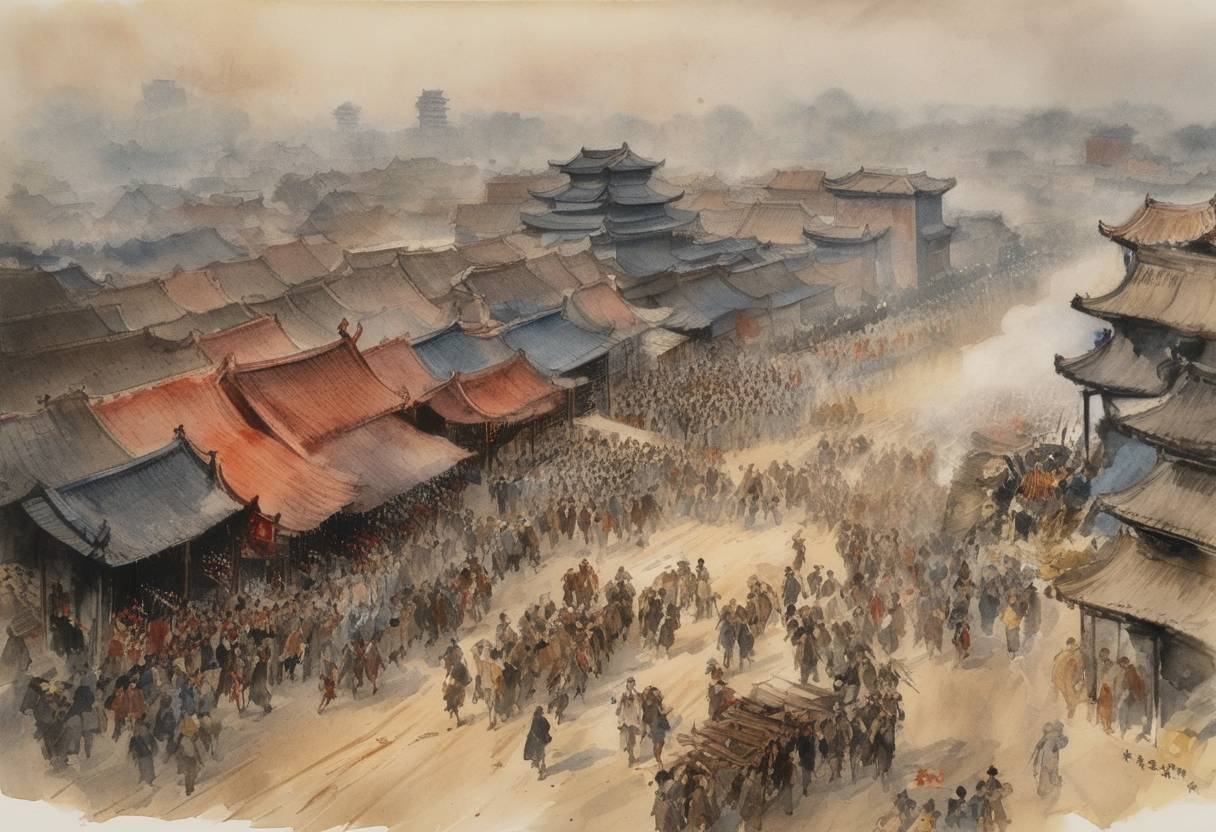
The Nanchang Uprising, occurring on August 1, 1927, in the city of Nanchang, Jiangxi Province, is widely regarded as the inaugural event of the Chinese Civil War. This insurrection marked a pivotal point in Chinese history as it was the first major conflict in the war between the Chinese Nationalist Party (Kuomintang or KMT) and the Communist Party of China (CPC).
During the mid-1920s, China was embroiled in political instability, with multiple factions vying for control following the fall of the Qing Dynasty in 1912. The Kuomintang, initially cooperating with the Communists in what was known as the First United Front, aimed to unify China and challenge the power of warlords dominating various regions. However, ideological differences led to increasing tensions between the KMT and CPC.
In April 1927, the Shanghai Massacre led by Chiang Kai-shek—where thousands of Communists and their sympathizers were purged—marked a definitive break between the two parties. This event triggered Communist leaders to reconsider their strategies, culminating in the decision to initiate an armed uprising.
The Nanchang Uprising was orchestrated by key communist figures, including Zhou Enlai, Zhu De, and He Long. These leaders mobilized approximately 20,000-25,000 troops, mainly comprised of Communist soldiers who were former members of the KMT’s National Revolutionary Army. In the early hours of August 1, the rebels seized control of Nanchang, capturing local government offices and military arsenals.
The strategic goal was to showcase the Communists’ resilience and establish a base from which they could spread their influence in southern China. However, the uprising’s initial success was short-lived. Within several days, Nationalist forces regrouped and counterattacked the communist positions. By mid-August, the insurgents retreated southward, eventually leading to their dispersal and withdrawal.
Although the Nanchang Uprising failed to hold Nanchang or sustain a long-term base, it critically spurred the Chinese Civil War’s open hostilities. It is commemorated annually on August 1 as the founding date of the People’s Liberation Army (PLA), underscoring its significance in shaping the Communist military forces.
This event highlighted the deep-seated ideological conflicts between the two parties, setting the stage for the protracted civil war that would last until 1949. It demonstrated the determination of the CPC to fight for its vision of China’s future, laying the groundwork for subsequent communist military actions, including the establishment of the Jiangxi-Fujian Soviet and the initial stages of Mao Zedong’s rise to military leadership.
The Nanchang Uprising’s legacy is pivotal in understanding the origins of the People’s Republic of China and the historical trajectory of Chinese communism.
Source: www.britannica.com