April 4, 1884

The Suez Canal, originally opened in 1869, saw the Eastman Agricultural, the first vessel to transit the newly installed lighting system. This advancement facilitated night-time navigation, significantly increasing the canal's capacity and commercial importance.


Ismailia, Egypt | Suez Canal Company
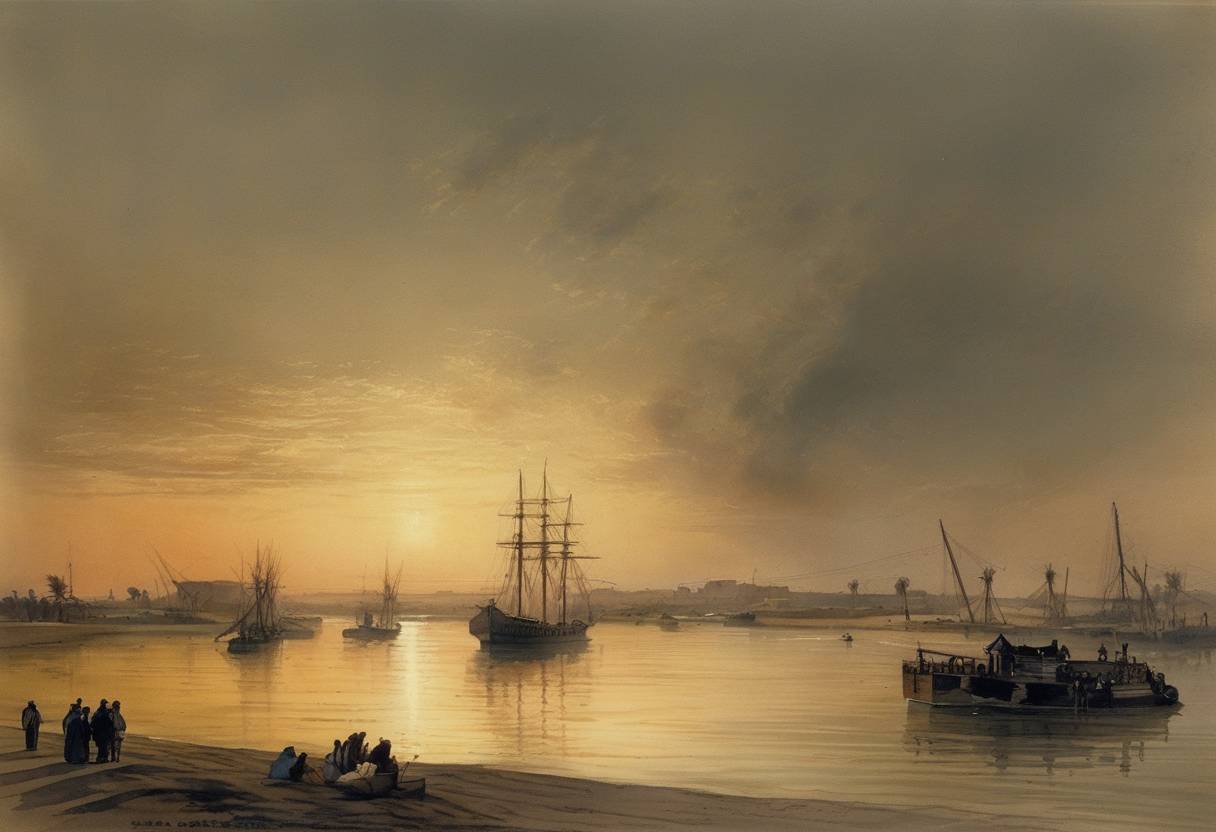
Watercolor painting based depiction of The Suez Canal, originally opened in 1869, saw the Eastman Agricultural, the first vessel to transit the newly installed lighting system. This advancement facilitated night-time navigation, significantly increasing the canal's capacity and commercial importance. (1884)

Lighting System Installation in the Suez Canal: Night-Time Navigation Commences

On April 4, 1884, the Suez Canal, a pivotal maritime passage linking the Mediterranean Sea to the Red Sea, experienced a significant milestone in its operational capacity. The canal became equipped with a state-of-the-art lighting system, enabling vessels to navigate the waterway after dark for the first time. This technological advancement was inaugurated with the passage of the Eastman Agricultural, the first vessel to transit the canal under the new lighting.

Key Context and Background

  • Suez Canal Inception: Opened in 1869, the Suez Canal fundamentally altered global trade routes by providing a shorter path for ships traveling between Europe and Asia. It eliminated the need to navigate around the southern tip of Africa via the Cape of Good Hope.
  • Importance Prior to 1884: Initially, canal operations were limited to daylight hours due to the challenges and risks associated with night-time navigation in an unlit environment.

The Lighting System Enhancement

  • Implementation: The installation of electric lights along the Suez Canal in 1884 marked a transformative development in its operational capabilities. The new system comprised strategically placed lights that illuminated the canal, thereby facilitating safe passage for vessels during the night.
  • Inauguration Voyage: The Eastman Agricultural, as the first ship to make the night-time transit utilizing the newly installed lighting, symbolized the advent of a more efficient and continuously operational canal.

Impact and Consequences

  • Increased Canal Capacity: The ability to navigate the canal at any hour significantly increased its capacity by allowing continuous ship traffic. This advancement reduced delays and bottlenecks, enhancing overall efficiency.
  • Boost to Commercial Importance: The improvement reinforced the Suez Canal’s status as a critical conduit for international trade. By allowing night-time passage, the canal became an even more attractive route for the global shipping industry.
  • Technological Progress: The successful introduction of lighting systems represented broader technological progress of the era, highlighting the integration of electric technology into major infrastructure projects.

Broader Historical Significance

The implementation of night-time lighting in the Suez Canal stands as an example of how technological advancements can propel infrastructure utility and economic value. It underscored the canal’s pivotal role in global commerce and set a precedent for adopting modern technologies in large-scale engineering projects. The enhancement not only solidified the canal’s operational status but also demonstrated the innovative spirit of the late 19th century.