Death of King Gustav III of Sweden
1792 · Stockholm, Sweden
Gustav III of Sweden died from gunshot wounds received during an assassination attempt on March 16, leaving Sweden under the regency of his son, Gustav IV Adolf.
February 17, 1370
The Northern Third Order, a nobleman-led faction, declares itself openly against Magnus IV of Sweden, known as Magnus Eriksson. This reflects the increasing domestic strife and power struggles within Sweden during his reign.
Stockholm, Sweden | The Northern Third Order
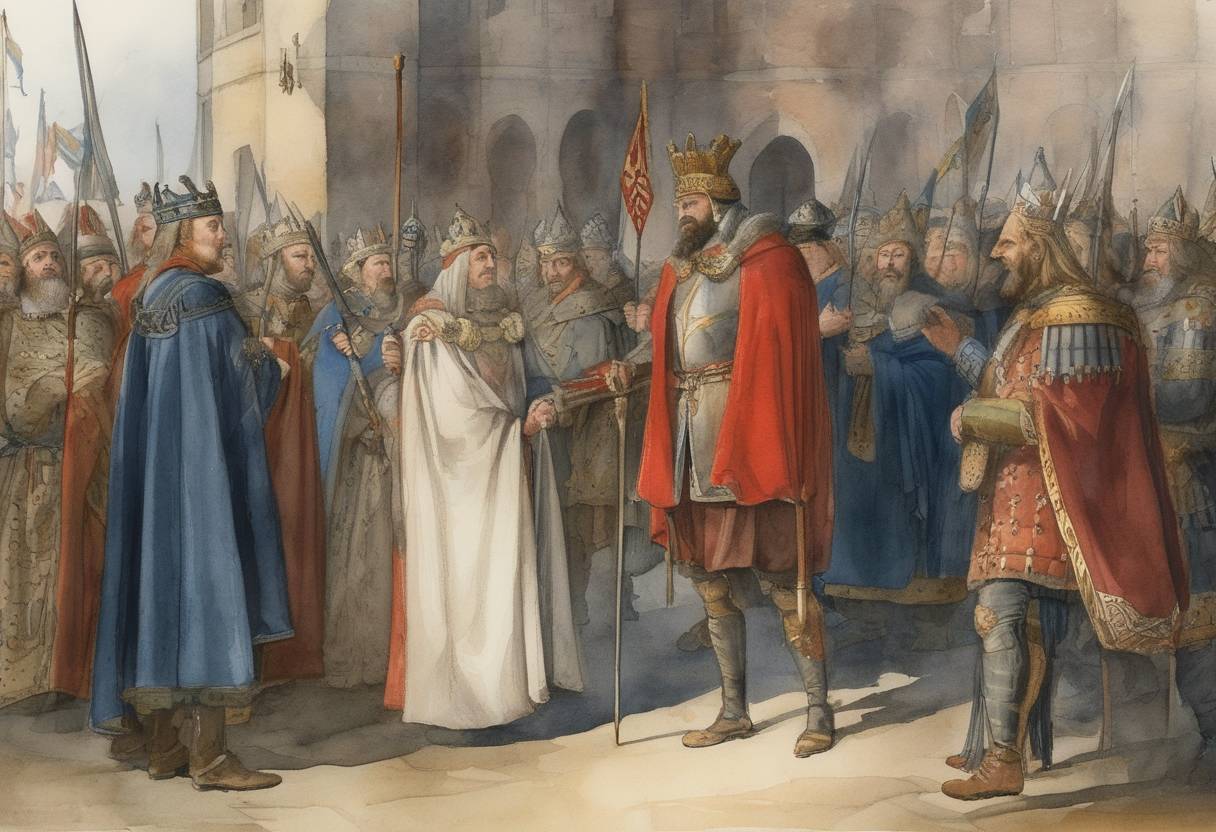
On February 17, 1370, a significant power shift occurred in Sweden as The Northern Third Order, a faction led predominantly by discontented nobles, openly declared itself against King Magnus IV, also known as Magnus Eriksson. This declaration was a critical moment in the domestic power struggles that marked Magnus IV’s tumultuous reign, underscoring the internal divisions and dissatisfaction within the Swedish nobility.
Ascension and Ambitions: Magnus IV ascended to the throne in 1319, becoming King of Sweden and Norway while still a child. He aimed to consolidate power across his realms, engaging in expansive projects and law reforms, including King Magnus’s Law of the Land aimed at unifying Sweden’s legal system.
Internal Strife: Despite his reformist efforts, his reign was marred by internal dissent. Nobles were increasingly discontent with Magnus’s centralized governance, which they perceived as infringing on their traditional privileges and powers.
Economic and Political Challenges: Economic troubles, such as difficulties in collecting taxes and supporting ambitious construction projects, further weakened his position. Additionally, Magnus’s foreign policy, including entanglements with neighboring Denmark and the appointment of his son Eric as king of Denmark, strained Sweden’s resources and aggravated his political isolation.
Formation and Motivation: Comprised of influential aristocrats and landowners from northern Sweden, The Northern Third Order coalesced around shared grievances regarding Magnus’s rule.
Open Declaration: On February 17, 1370, the faction openly declared its opposition, marking a formal break with Magnus IV. This event signified not merely a rebellion but an overt challenge to the monarch’s authority.
Significance: The declaration highlighted the extent of the monarchy’s fragility and set the stage for increased factionalism in Swedish politics. It spelled a period of instability and civil strife, as loyalists and rebel factions jostled for control.
Magnus’s Declining Influence: The rebellion weakened Magnus’s grip on power, exacerbating the divisions within the kingdom and leading to more profound conflicts, including his eventual removal from power.
Political Evolution: This confrontation contributed to the eventual political restructuring in Sweden. The power tussles catalyzed changes towards a more aristocratically influenced monarchy, paving the way for future constitutional developments.
The declaration by The Northern Third Order against Magnus IV is a reflection of the troubled and dynamic nature of Swedish politics in the late 14th century. It represents a critical juncture in the kingdom’s evolution from absolute monarchy towards a political landscape increasingly defined by noble power and influence.