Deportation from the Łódź Ghetto to Auschwitz: August 12, 1944
1944 · Lodz, Poland
Nazi Germany began the systematic deportation of 70,000 people from the Lodz Ghetto to the Auschwitz concentration camp, part of the Holocaust's Final Solution.
July 23, 1942
The Treblinka extermination camp opens in Poland as part of the Nazi regime's 'Operation Reinhard', initiating mass killings of Jews.
Treblinka, Poland | Nazi Germany
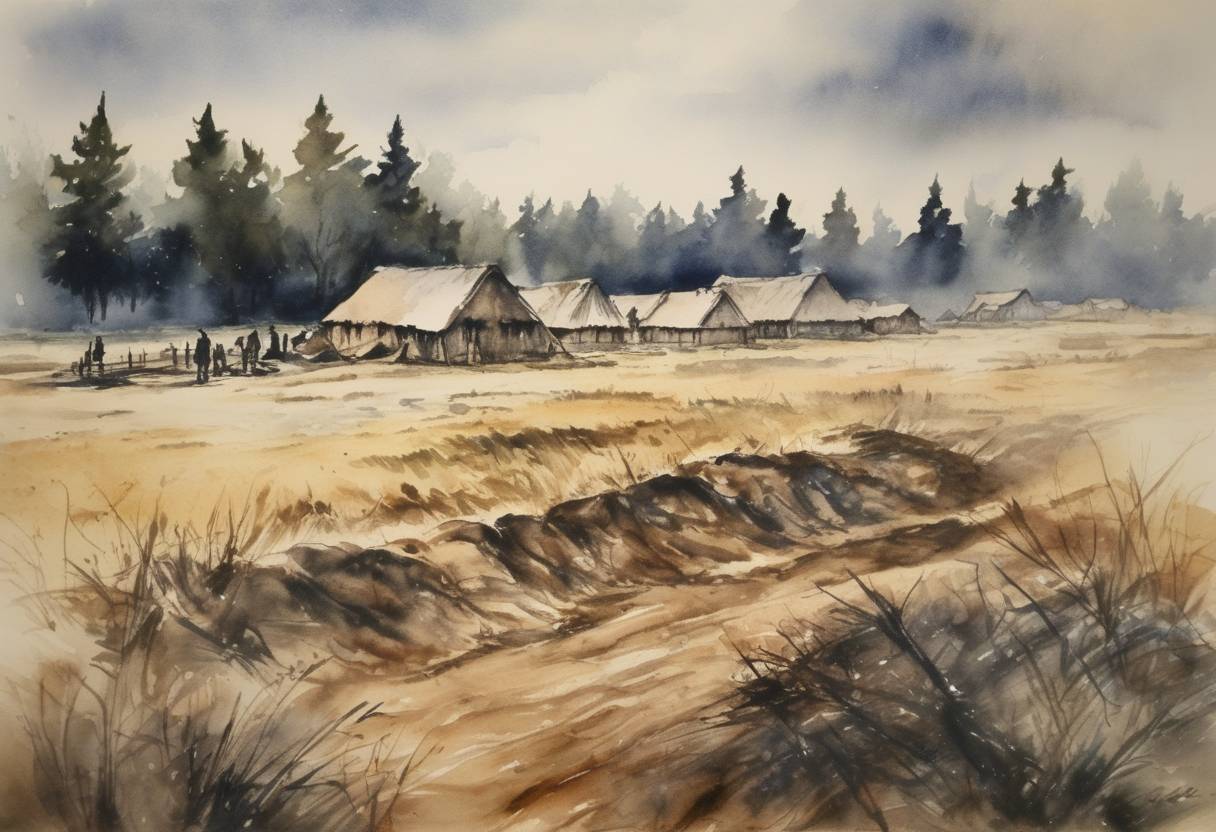
On July 23, 1942, the Treblinka extermination camp began operations as a critical component of Nazi Germany’s “Operation Reinhard.” This operation represented a systematic plan to eradicate the Jewish population in occupied Poland, part of the broader genocidal policies of the Holocaust.
Treblinka was constructed following the Wannsee Conference in January 1942, where high-ranking Nazi officials formalized plans for the “Final Solution to the Jewish Question.” This marked the beginning of one of the most brutal and systematic extermination campaigns during World War II.
Located approximately 50 miles northeast of Warsaw, Treblinka was specifically designed for mass murder rather than as a labor or concentration camp. It comprised two separate sections: Treblinka I, a forced-labor camp, and Treblinka II, the extermination site.
The camp was strategically hidden in a forested area to maintain secrecy. Its layout included gas chambers disguised as shower facilities where victims were murdered using carbon monoxide. Managed initially by SS officer Irmfried Eberl, it became one of the primary sites for the extermination of Polish Jews.
Upon arrival, victims were often deceived into believing they were being relocated or resettled. As part of the operation, they were quickly shepherded from packed trains into the lethal confines of the camp. The process was designed to maximize efficiency, minimizing resistance and ensuring rapid gassing.
Throughout its operation, Treblinka witnessed the deaths of an estimated 700,000 to 900,000 Jews, among other targeted groups like Romani people. The majority of these killings took place between July 1942 and October 1943.
The sheer scale of the atrocities committed at Treblinka contributed significantly to the overall horror of the Holocaust. Following a prisoner uprising on August 2, 1943, and the subsequent dismantling of the camp, the site was largely destroyed by the Nazis to obliterate evidence of their crimes.
The extermination at Treblinka deepened global understanding of the mechanisms and impact of genocide, influencing post-war legal and humanitarian discourse. The camp became a symbol of the devastating repercussions of hate-fueled policies and the importance of remembrance and education to prevent future atrocities.
Source: en.wikipedia.org