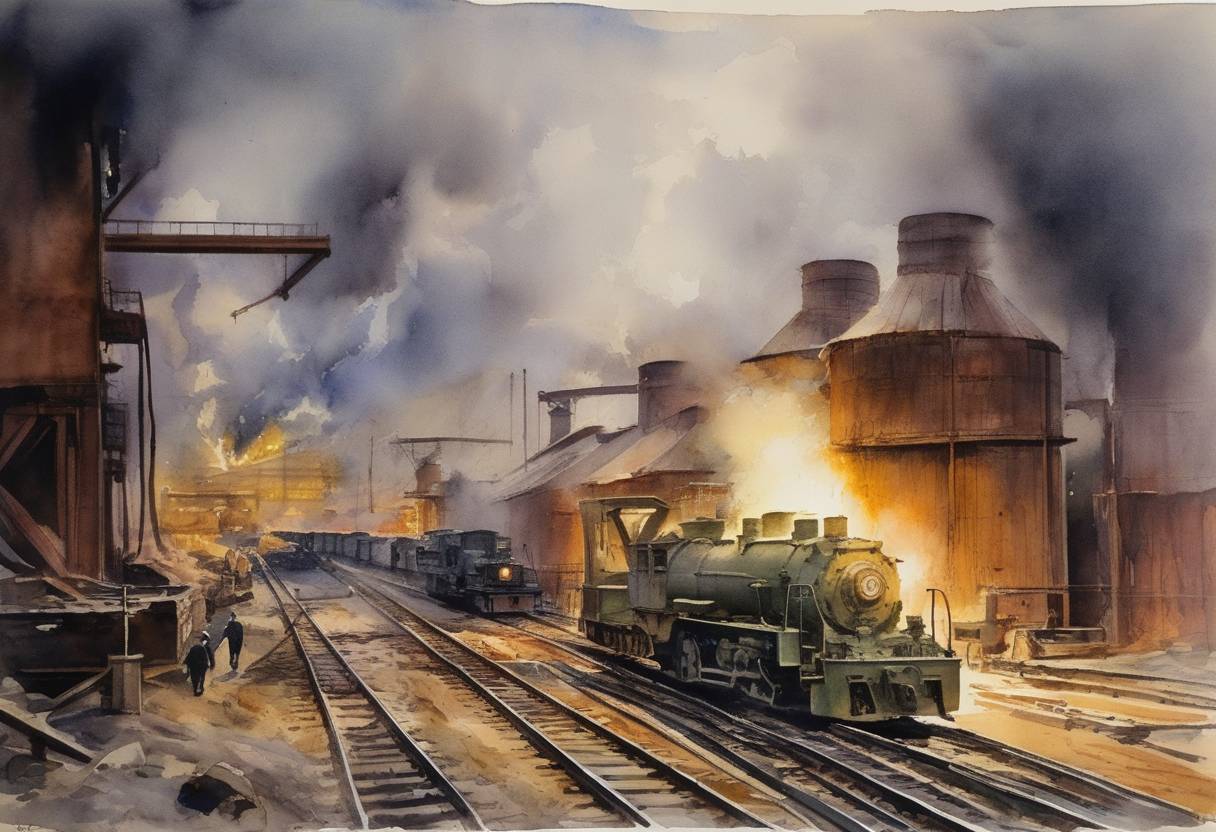
Presidential Seizure of Steel Mills on April 8, 1952
On April 8, 1952, in a move that significantly impacted labor relations and the scope of executive power in the United States, President Harry S. Truman ordered the federal government to seize control of the nation’s steel mills. This decision was prompted by an imminent labor strike in the steel industry, which threatened to disrupt steel production during the Korean War, a critical period for U.S. military supply chains.
Context
By 1952, the Korean War had been ongoing for nearly two years, and steel was a crucial resource for producing military equipment. Labor-management disputes in the steel industry, particularly over wages and conditions, had reached a stalemate, leading to the threat of a nationwide strike by the United Steelworkers of America. A work stoppage in the steel industry would have seriously hampered the United States’ war effort and economic stability.
President Truman’s Decision
President Truman, concerned about the implications of a strike on both national security and economic stability, decided that the best course of action was to prevent the work stoppage by taking control of the steel mills. He justified this action on the need to ensure military resources were uninterrupted, invoking his presidential powers.
The seizure was carried out under Executive Order 10340 on the evening of April 8, just hours before the strike was set to begin. Truman directed Secretary of Commerce Charles Sawyer to take possession of the mills and keep them operating.
Legal and Political Ramifications
The decision to seize the steel mills was immediately controversial. It ignited a national debate over the limits of presidential authority, specifically regarding the balance of powers among the branches of government. The steel companies challenged the legality of the seizure, arguing it was an overreach of executive power as Congress had not authorized such action.
The case quickly proceeded through the courts, culminating in a landmark decision by the Supreme Court in Youngstown Sheet & Tube Co. v. Sawyer. On June 2, 1952, the Court ruled against the Truman administration, stating that the President did not have the authority to seize private property without Congressional legislation.
Significance
The events of April 8, 1952, and the subsequent legal battles underscored critical questions about the extent of presidential powers, especially in times of emergency. The Supreme Court’s decision set a precedent for the limitation of executive power, reinforcing the need for a separation of powers and a check by Congress on presidential authority.
In the context of labor relations, the incident highlighted the ongoing struggles between unions and management, specifically within crucial industries. The decision demonstrated the federal government’s occasional involvement in labor disputes when national interests were perceived to be at risk, although such interventions would be subject to scrutiny and limitations imposed by law.
This episode remains a pivotal moment in U.S. history, reflecting the tensions between executive authority, judicial oversight, labor rights, and the national interest.