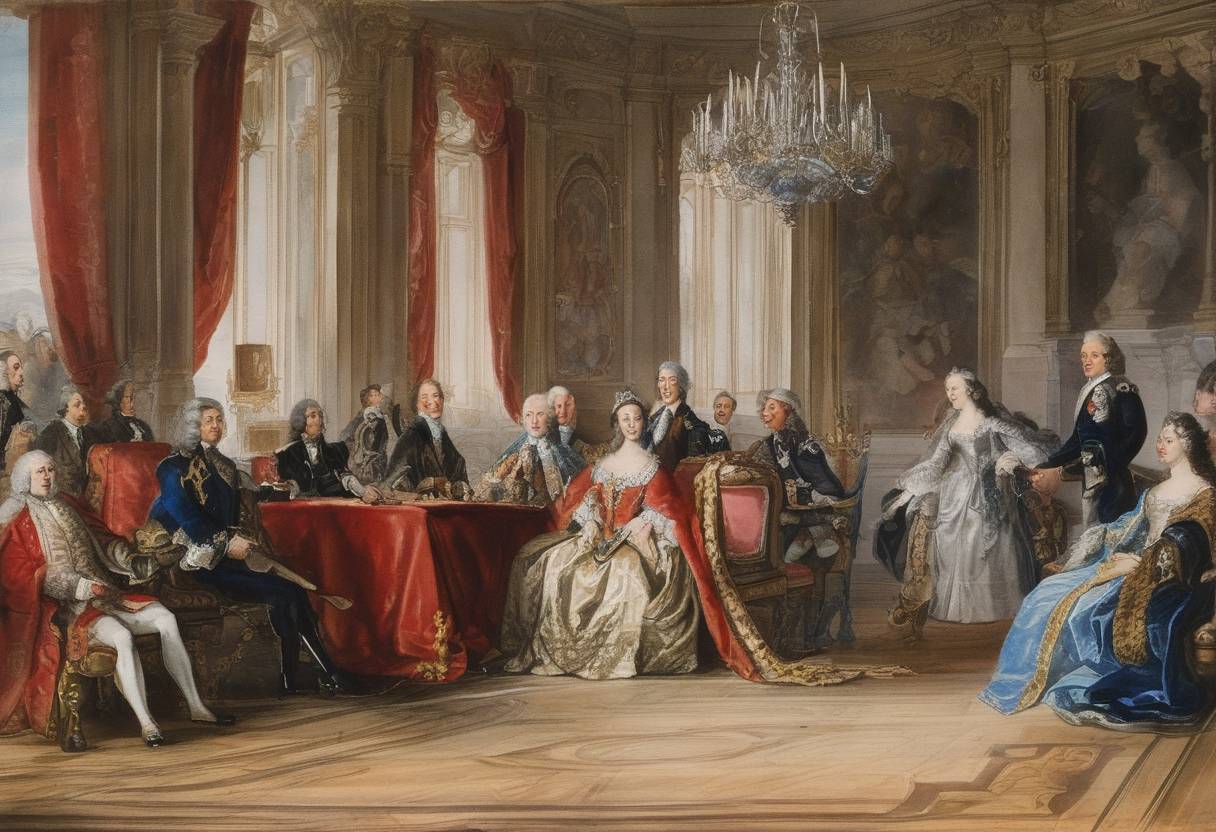
The Treaty of Rastatt: Concluding the War of the Spanish Succession
On March 6, 1714, the Treaty of Rastatt was signed, marking a significant phase in the concluding chapter of the War of the Spanish Succession. This treaty was pivotal in reshaping the political landscape of Europe following over a decade of conflict.
Background
The War of the Spanish Succession (1701-1714) erupted over the disputed succession of the Spanish throne following the death of the childless Charles II of Spain. The potential unification of France and Spain under a single Bourbon monarch threatened the balance of power in Europe. A coalition led by England, the Dutch Republic, and the Holy Roman Empire opposed France and Spain.
Significant prior developments, particularly the death of key figures like Queen Anne’s heir, Prince William of Gloucester, highlighted the fragility of dynastic successions, further complicating European political affairs.
The Negotiating Parties
The Treaty of Rastatt involved key representatives from France and the Holy Roman Empire:
- France: Represented by Marshal Claude Louis Hector de Villars, an experienced military leader who had commanded French forces effectively during the war.
- Austria: Represented by Prince Eugène of Savoy, one of the most prominent military commanders of the Habsburg Monarchy.
These negotiations followed the Treaty of Utrecht (1713), which had already settled many issues but left certain territorial disputes unresolved between France and the Empire.
Key Provisions
The Treaty of Rastatt addressed several critical territorial and political issues:
- Territorial Settlements: France relinquished control over certain territories in the Spanish Netherlands, returning them to Habsburg rule. Additionally, territories in Italy, such as Naples and Milan, were reassigned to maintain balance.
- Recognition of Sovereignty: France recognized the sovereignty of the Habsburgs over the ceded territories, while the recognition of the Bourbon claimant, Philip V, continued as King of Spain.
The treaty’s provisions were aimed at restoring stability in Western Europe, ensuring that neither France nor the Habsburg Empire gained an overwhelming advantage.
Aftermath and Significance
The Treaty of Rastatt, in conjunction with the Treaty of Baden later in 1714, helped to bring the War of the Spanish Succession to a comprehensive close. It played a crucial role in re-establishing peace in Europe, maintaining the balance of power that would dominate European politics in the 18th century.
The agreements solidified the division of the Spanish inheritance and curtailed French expansionism, thus preventing further immediate large-scale conflicts. The war’s conclusion allowed for a period of relative peace and the development of Enlightenment ideas across the continent.
In summary, the Treaty of Rastatt exemplified diplomatic negotiations’ potential to alter geopolitics profoundly, reinforcing diplomatic resolutions as integral components in the quest for lasting peace.