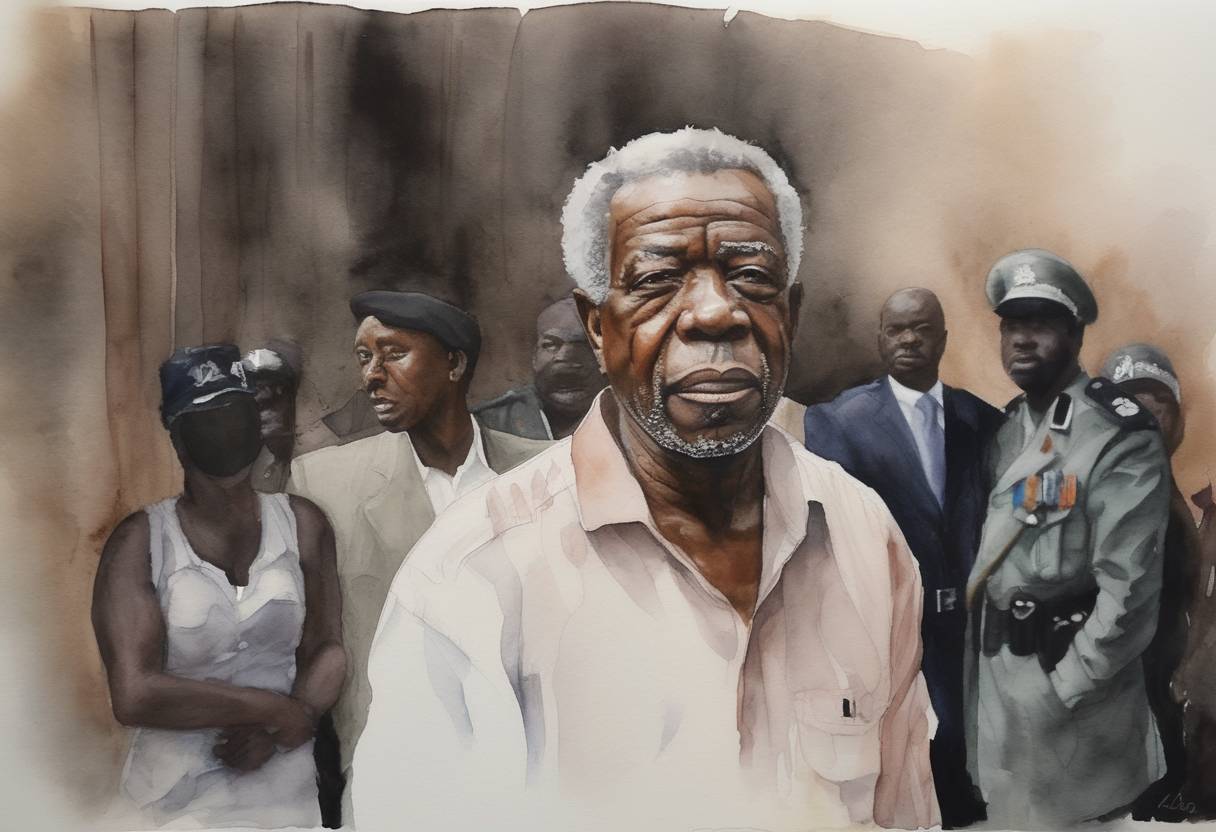
Charles Taylor Sentencing by the Special Court for Sierra Leone
Background
Charles Taylor, former President of Liberia, was a central figure in the Sierra Leone Civil War (1991-2002). He was accused of supporting, arming, and commanding the Revolutionary United Front (RUF) rebels in Sierra Leone from his base in Liberia. This support contributed to a bitter conflict characterized by extreme brutality, including mass murders, rapes, and the use of child soldiers by the RUF during their campaign of terror.
The Trial
Taylor’s trial was conducted by the Special Court for Sierra Leone (SCSL), established in 2002 by the government of Sierra Leone and the United Nations. The court aimed to prosecute those with the greatest responsibility for the atrocities committed during the civil war.
The trial took place in The Hague, Netherlands, for security reasons and lasted from 2006 until 2012. The prosecution presented evidence of Taylor’s involvement in crimes including acts of terrorism, murder, and enslavement.
Conviction on April 26, 2012
On April 26, 2012, Charles Taylor was found guilty on 11 counts of war crimes, crimes against humanity, and other serious violations of international humanitarian law, becoming the first former head of state to be convicted by an international tribunal since the Nuremberg Trials post-World War II.
Significance
Taylor’s conviction was a landmark moment in international law, reaffirming the principle that former heads of state can be held accountable for war crimes and crimes against humanity. It sent a strong signal about the international community’s commitment to justice and accountability, potentially influencing global approaches to handling similar cases.
Sentencing and Aftermath
Following his conviction, Taylor was sentenced on May 30, 2012, to 50 years in prison. He is serving his sentence in the United Kingdom, as part of an agreement with the SCSL. The verdict and his sentencing were significant steps forward for international criminal justice system processes and for the victims of the Sierra Leone civil war seeking redress and healing.