1277 · Paris, France
The University of Paris issued the Condemnation of 1277, a list of 219 philosophical and theological propositions that were deemed heretical by the Bishop of Paris, Étienne Tempier.
May 30, 1778
Voltaire, the French Enlightenment writer and philosopher, dies in Paris.
Paris, France
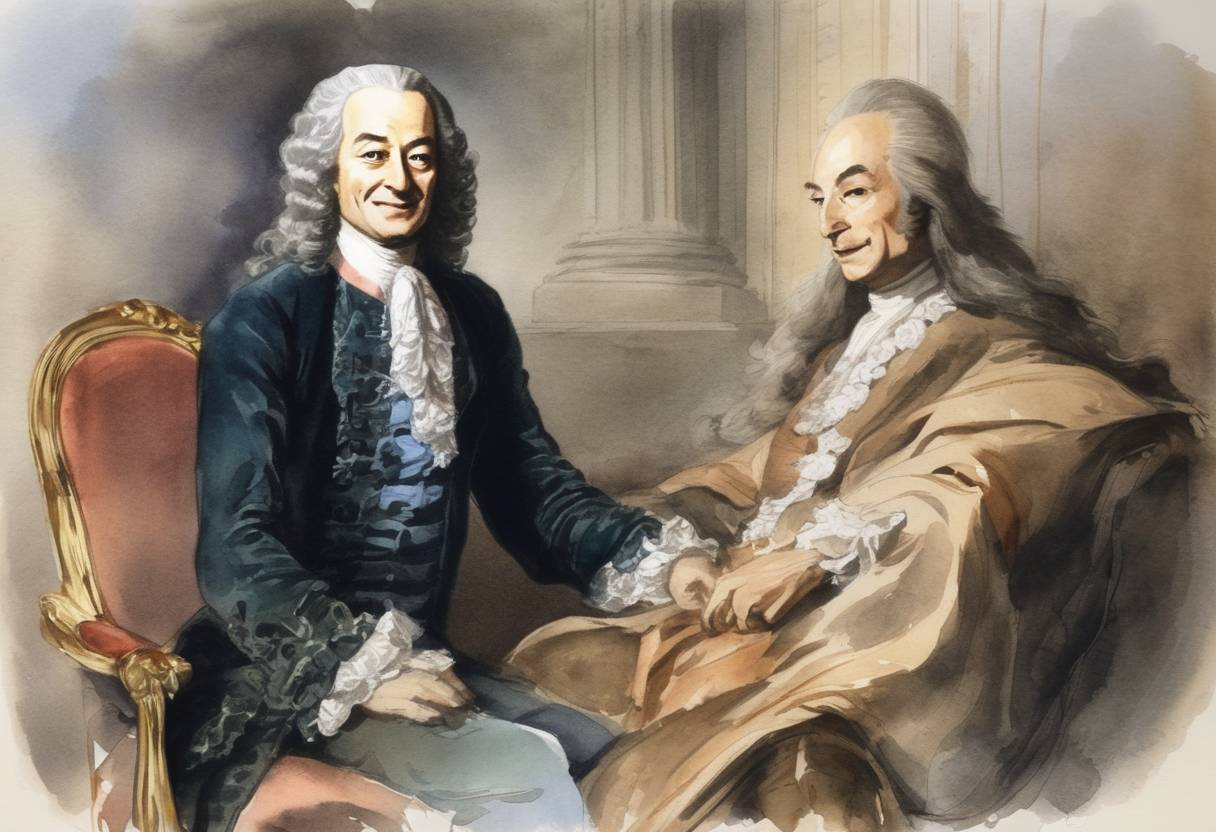
Voltaire, one of the most illustrious figures of the French Enlightenment, passed away on May 30, 1778, in Paris, France. This significant event marked the end of a life marked by profound influence on modern thought, literature, and reform.
Born François-Marie Arouet on November 21, 1694, in Paris, Voltaire was a prominent writer, historian, and philosopher known for his wit and advocacy for civil liberties. He was educated at the Collège Louis-le-Grand, a Jesuit school, where he excelled in literature and rhetoric. After a brief career in law, Voltaire found his calling in writing, where he began to craft plays, essays, and works of satire.
Throughout his life, Voltaire was a fierce critic of the established religious and political institutions of his time. His criticism of the French government and the Catholic Church often placed him at odds with authorities, leading to imprisonments and exiles.
Voltaire’s works, such as “Candide,” “Letters Concerning the English Nation,” and “Philosophical Dictionary,” are celebrated for their incisive criticism of dogma and advocacy for tolerance, freedom of speech, and separation of church and state. His efforts laid a cornerstone for modern democratic thinking.
In the final years of his life, Voltaire was reconciled with Parisian society and returned to the city in early 1778 after two decades of self-imposed exile at his estate in Ferney, near the Swiss border. His return to Paris was a triumphal one, receiving a hero’s welcome with crowds hailing his contributions during his visit to the theater and other public appearances.
Seemingly reinvigorated upon his return to Paris, Voltaire continued writing and engaging with the intellectual community until his health declined. On May 30, 1778, Voltaire died at the age of 83. He was denied a Christian burial by the Parisian clergy due to his outspoken criticism of the Church. However, his nephew was able to secure his burial in the Abbey of Scellières in Champagne, although his remains were later transferred to the Panthéon in Paris during the French Revolution in 1791.
Voltaire’s death marked the loss of a pivotal figure whose ideas sparked enduring change. He left behind an enduring legacy embodied in the values of the Enlightenment—advocacy for reason, liberty, and progress. His writings continue to be celebrated for their impact on both the French Revolution and the development of modern secular and democratic societies.
Source: en.wikipedia.org