Mikhail Gorbachev Elected as the First President of the Soviet Union
1990 · Moscow, Soviet Union
Mikhail Gorbachev was elected as the first President of the Soviet Union.
May 8, 1984
The Soviet Union announced it would boycott the 1984 Summer Olympics in Los Angeles, California.
Moscow, Soviet Union | Soviet Union
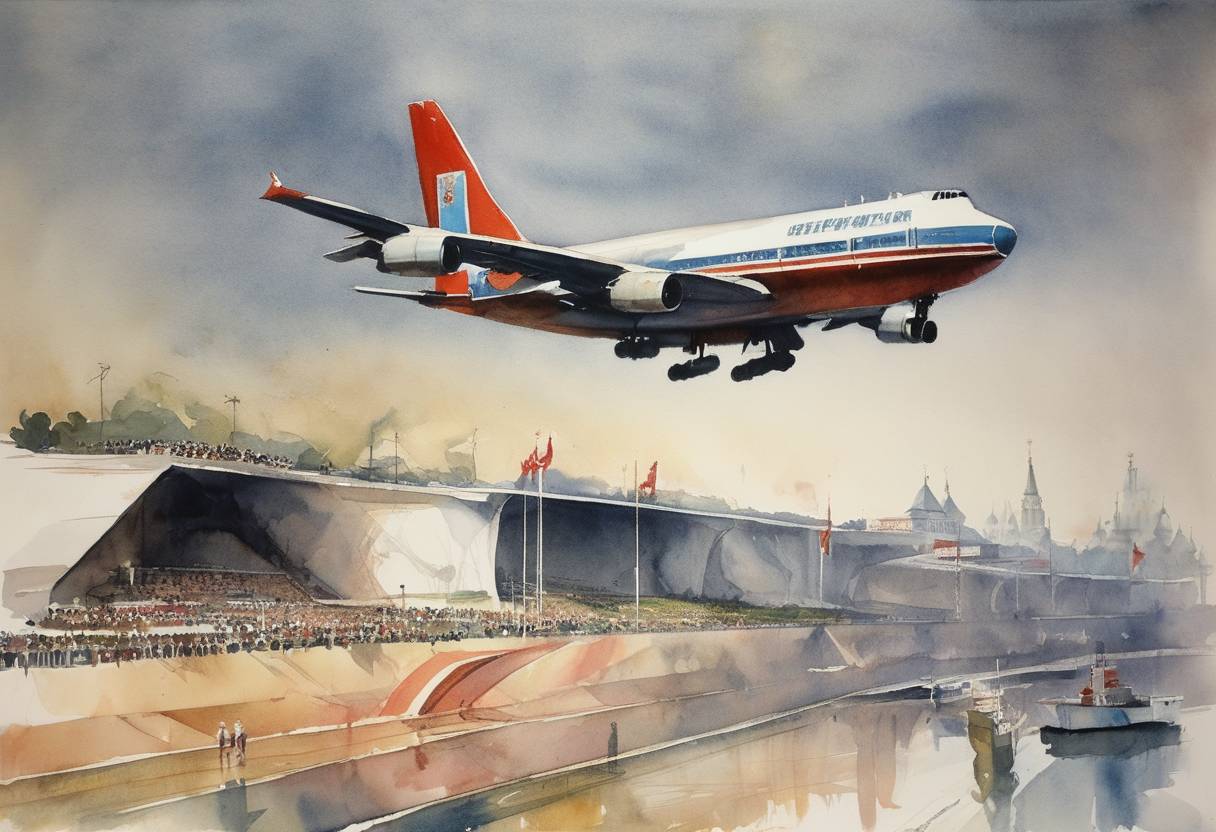
On May 8, 1984, the Soviet Union formally announced its decision to boycott the Summer Olympics scheduled to be held in Los Angeles, California. This announcement was a significant Cold War-era development, reflecting heightened tensions between the United States and the Soviet Union.
The decision to boycott the 1984 Olympics was heavily influenced by the geopolitical climate following the Soviet invasion of Afghanistan in 1979. This event had led to the United States, along with several other Western nations, boycotting the 1980 Summer Olympics held in Moscow as a protest against the Soviet military presence in Afghanistan. The U.S. boycott was seen as a significant snub, leading to strained diplomatic relations between the two superpowers.
In announcing their boycott, Soviet officials cited concerns over the safety and security of their athletes in the United States. They alleged that overt anti-Soviet sentiments and a pervasive atmosphere of hostility in the U.S. posed a considerable threat. While the official narrative focused on these security concerns, many analysts and observers saw the move as a retaliatory gesture directly linked to the previous U.S.-led boycott of the Moscow Olympics.
Additionally, the boycotting act was part of a wider Soviet strategy to undermine the Los Angeles Olympics, seeking to diminish its status and success without the participation of the Eastern Bloc’s powerful athletes.
The Soviet Union’s announcement set off a chain reaction, with 14 Eastern Bloc allies and other nations joining the boycott. These countries included East Germany, Bulgaria, Cuba, Czechoslovakia, and Poland. Despite the absence of the Soviet Union and its allies, the 1984 Los Angeles Olympics proceeded with great success and became one of the few Olympics to produce a financial surplus.
The boycott highlighted the extent of Cold War tensions and demonstrated how international politics could significantly influence global cultural and sports events. It also revealed the deep divides and the politicization of the Olympic movement during that era.
The 1984 boycott did little to ease the Cold War tensions of the time. However, it marked one of the last major boycotts in Olympic history, as later Games would see improved cooperation and participation from across the globe. The next Olympics, hosted in Seoul in 1988, saw full participation from the Soviet Union and most of its allies, indicating a thawing period just before the eventual dissolution of the Soviet Union in 1991.
Source: www.olympic.org