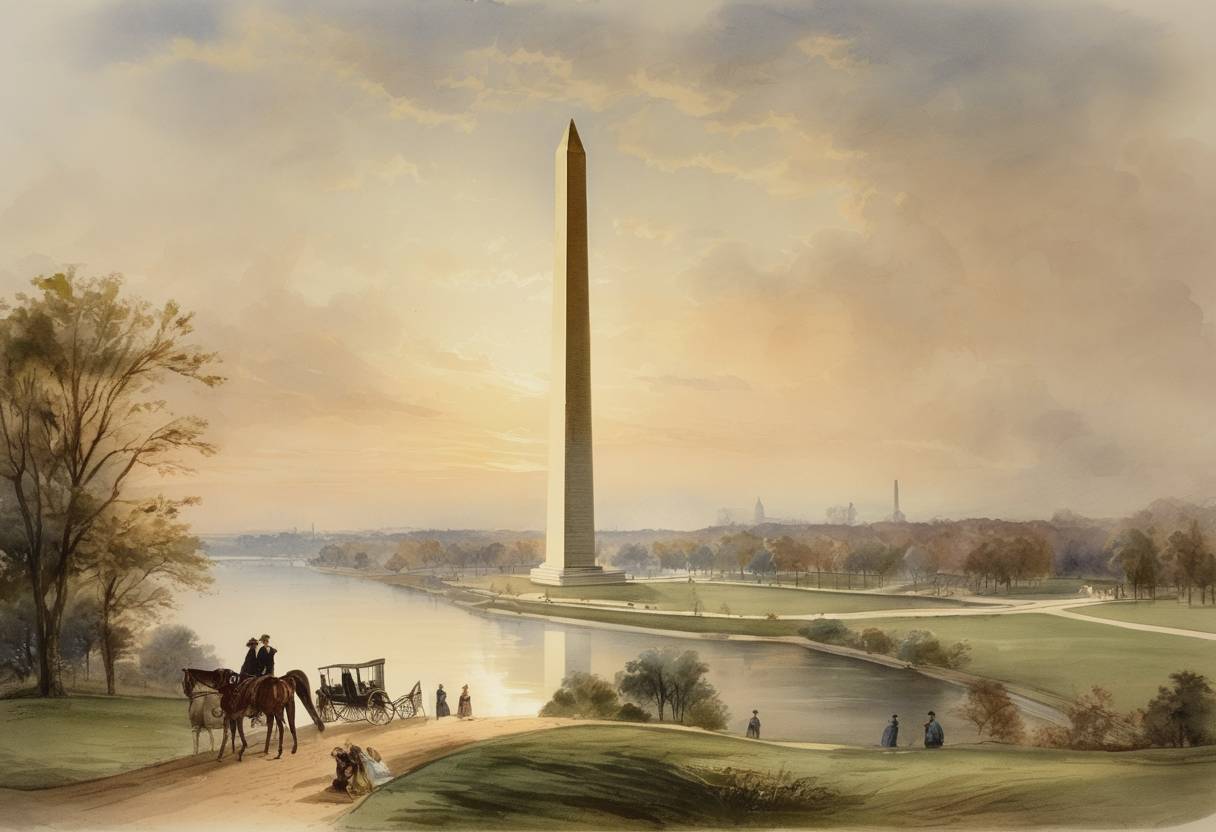
Dedication of the Washington Monument
On February 21, 1885, the Washington Monument was dedicated in Washington, D.C., to honor George Washington, the first President of the United States. This monumental event marked the completion of a project that had spanned several decades and had become a significant symbol of national pride.
Background and Construction
The idea for a monument to commemorate George Washington was first proposed in the 1780s, shortly after the American Revolution. However, significant progress began only after the formation of the Washington National Monument Society in 1833. The society aimed to raise funds and oversee the construction of a grand obelisk. The cornerstone was laid on July 4, 1848, attended by thousands, including President James K. Polk.
Construction progressed slowly due to funding issues and political interruptions, including the Civil War. Work halted for years, and it was not until the intervention of the U.S. Congress in the 1870s that construction resumed, leading to its completion under the direction of Lt. Colonel Thomas Lincoln Casey of the U.S. Army Corps of Engineers.
Design and Structure
The final design was a simple yet imposing obelisk, standing at approximately 555 feet (169 meters), making it the world’s tallest structure at the time of its completion. Comprised mainly of marble, granite, and bluestone gneiss, the monument’s design reflects the simplicity and elegance of Egyptian obelisks, a style deemed suitable to commemorate Washington’s virtues.
The Dedication Ceremony
The dedication ceremony was a grand affair, attended by numerous dignitaries, including President Chester A. Arthur and Speaker of the House John G. Carlisle. Major speeches highlighted Washington’s enduring legacy and the symbolic importance of the monument as a testament to American unity and perseverance. The machinery of state virtually ground to a halt for the celebration, with parades and various festivities marking the occasion.
Historical Significance
The importance of the Washington Monument extends beyond its role as a memorial to George Washington. It became a symbol of the American spirit, embodying ideals of leadership, resilience, and national unity. The completion of the monument, despite numerous setbacks, exemplified the determination of the nation to honor its foundational figures and principles.
Today, the Washington Monument remains a vital part of the National Mall’s iconic landscape, attracting millions of visitors each year and serving as a testament to the enduring legacy of the United States’ first president.