The United States Navy Begins Blockade of Cuban Ports
1898 · Washington, D.C., United States
The United States Navy began a blockade of Cuban ports during the Spanish-American War.
May 28, 1813
During the War of 1812, the Royal Navy begins its blockade of the New England coast, specifically targeting several American ports.
New England Coast, United States | Royal Navy
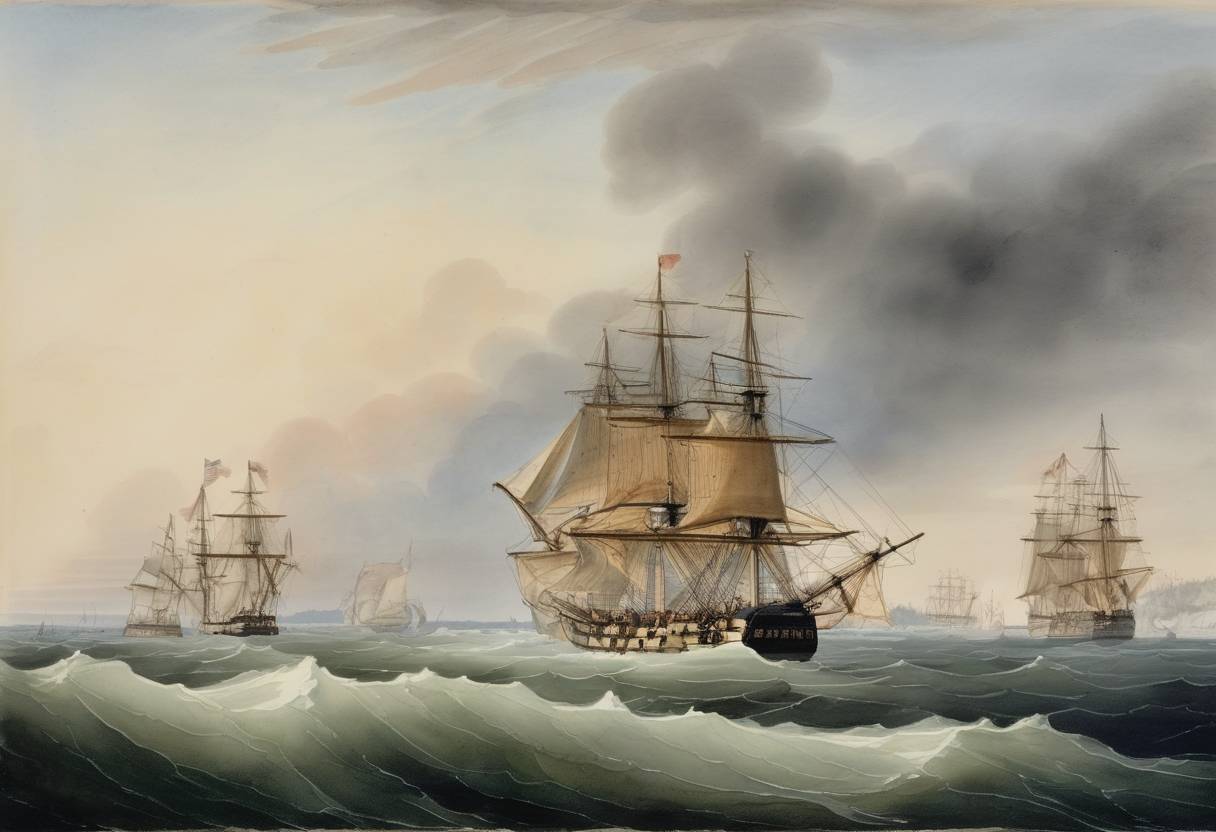
On May 28, 1813, the Royal Navy of Great Britain officially began its blockade of the New England coast during the War of 1812. This strategic military action sought to cut off American ports, particularly in New England, from trade and resupply, dealing a significant economic blow to the United States.
The War of 1812, fought between the United States and the United Kingdom, was heavily influenced by a number of factors, including maritime disputes and the British practice of impressment. The blockade of the American coast was a tactical decision by the British to leverage their naval superiority against the economically and militarily weaker United States.
Prior to the blockade’s full implementation, the Royal Navy had already targeted American shipping along the Atlantic, but the formal establishment of blockades was a more comprehensive approach. The blockade’s primary aim was to restrict American privateers and shipping vessels from leaving or entering crucial ports, thus strangling the economic lifeline critical for sustaining the war effort.
The Royal Navy’s blockade covered the New England coastline, encompassing major ports such as Boston, Portsmouth, and Portland. This region was chosen due to its economic importance; New England had a robust maritime trade sector crucial to the United States’ economy.
Admiral Sir John Borlase Warren, commanding the North American Station, spearheaded the blockade. His orders reflected the need to suppress enemy privateers that threatened British merchant ships and to deplete American resources by stifling their trade networks.
The blockade severely impacted the U.S. economy, resulting in widespread shortages and inflation of goods. Trade restrictions put citizens and businesses in a precarious position, particularly affecting merchants reliant on transatlantic trade.
Moreover, the blockade fortified British control over the seas and pressured American leadership to reconsider their military strategy. It also contributed to increasing domestic dissent against the war, particularly in the New England states, which were disproportionately affected compared to other regions.
The blockade played a critical role in the war’s maritime theater and showcased the importance of naval power in controlling economic channels. Although it didn’t cause the United States to capitulate, it demonstrated the leverage Britain held in oceanic warfare and had long-lasting effects on American economic policy and national defense initiatives.
The British blockade of New England in 1813 is remembered as a pivotal moment in the War of 1812, underlining the strategic employment of naval dominance to exert pressure on an adversary and achieving greater control over the wartime economy.
Source: www.history.com