The Founding of Santiago, Chile - September 13, 1541
1541 · Santiago, Chile
Santiago, Chile, was officially founded by Spanish conquistador Pedro de Valdivia's expedition.
August 6, 1538
Bogotá, the present-day capital of Colombia, was founded by Spanish conquistador Gonzalo Jiménez de Quesada.
Bogotá, Colombia | Spanish Empire
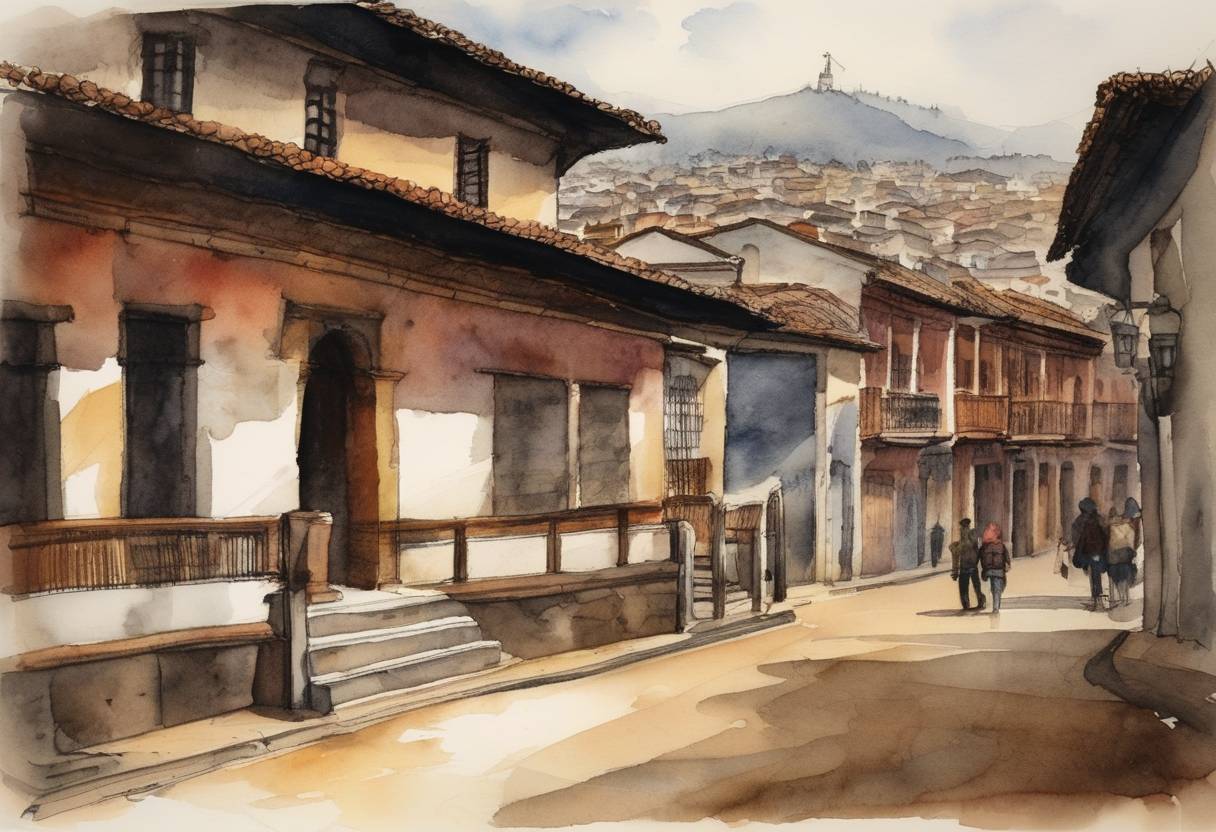
On August 6, 1538, Bogotá, presently the capital city of Colombia, was founded by Spanish conquistador Gonzalo Jiménez de Quesada. This significant event marked a pivotal moment in the Spanish conquest and the establishment of colonial rule in the New World.
Before the arrival of the Spanish, the area now known as Bogotá was inhabited by the Muisca people, who were part of the advanced Muisca Confederation, with a rich cultural heritage and established societal structures. The region was economically and politically significant due to its organized agriculture, trade networks, and the extraction of salt and gold, which held symbolic and tangible wealth.
The expedition led by Jiménez de Quesada set out from Santa Marta on the Caribbean coast in 1536. The goal was to explore the interior of the continent, driven by the Spanish Crown’s and explorers’ interest in finding wealth, particularly the mythical El Dorado. After a grueling journey through difficult terrain and encountering various indigenous communities, the expedition reached the highlands of the Eastern Cordillera.
Upon arrival, Jiménez de Quesada recognized the strategic and economic potential of the Muisca territory. On August 6, 1538, he officially established the city of Santafé de Bogotá on the site of the Muisca town of Bacatá, paying homage to the tradition of naming places after Saint’s feast days, combined with the indigenous name. The founding ceremony included a mass and the establishment of a municipal government building, marking the beginning of Spanish colonial influence over the region.
The founding of Bogotá laid the cornerstone for what would become the political and administrative center of the Spanish colony in the New Kingdom of Granada. Over time, Bogotá grew in prominence, playing a crucial role in the colonial administration of the region and later, in the movements for independence from Spanish rule.
In a broader historical sense, Bogotá’s founding was part of the larger pattern of European colonization in the Americas, which led to profound cultural, demographic, and environmental changes in the continent. The integration and often suppression of indigenous cultures and the imposition of European socio-political structures dramatically reshaped the region’s history and identity, elements that still resonate in modern Colombia.
Today, Bogotá is not only Colombia’s capital but also a vibrant cultural and economic hub that reflects its historical roots and ongoing evolution.
Source: en.wikipedia.org