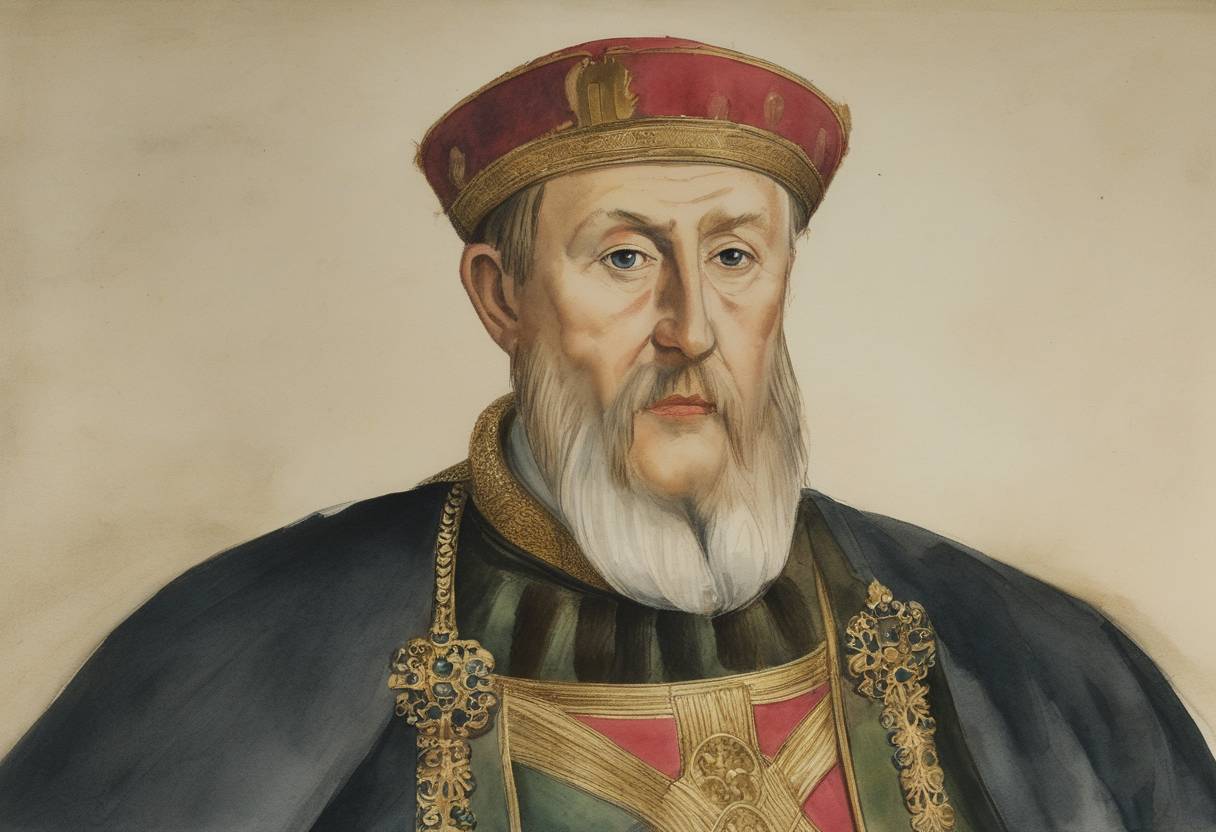
Gediminas and the Development of Vilnius
Historical Context
Gediminas, a historical figure who ruled as Grand Duke of Lithuania, is a crucial personality in the expansion and development of the Grand Duchy of Lithuania. However, it must be clarified that Gediminas wasn’t active in 1270. Instead, he reigned from approximately 1316 until his death in 1341. The specific event of Gediminas issuing letters inviting artisans and tradesmen to settle in his lands and contributing to Vilnius’s development did not occur on February 15, 1270.
Gediminas’s Reign
Gediminas is renowned for his policies of religious tolerance and bringing together a wide array of people to his realm. His open invitations to artisans and tradesmen were pivotal in establishing Vilnius as a major cultural and economic center. This initiative came during the 1320s, several decades after the erroneously cited date.
Significance of the Letters
The letters Gediminas issued in the early 14th century aimed to attract settlers from various parts of Europe, particularly from areas affected by the Knightly Crusades. These documents were a major factor in the demographic and economic growth of Vilnius, transforming it into a key node of trade and culture in Eastern Europe.
Broader Historical Impact
The influx of tradesmen and artisans contributed significantly to the economic vitality of Vilnius and surrounding areas, laying the groundwork for the city to develop into the capital of the Grand Duchy. The religious freedom promised by Gediminas also attracted diverse communities, including Germans, Jews, and Poles, which enriched the cultural tapestry of the region.
Conclusion
Although there is no historical evidence supporting the occurrence of this specific event on February 15, 1270, Gediminas’ invitations in the 14th century undeniably played a central role in establishing Vilnius as an influential cultural and economic center. His reign marked a period of expansion and consolidation for the Grand Duchy of Lithuania, with lasting impacts on the Baltic region’s history.