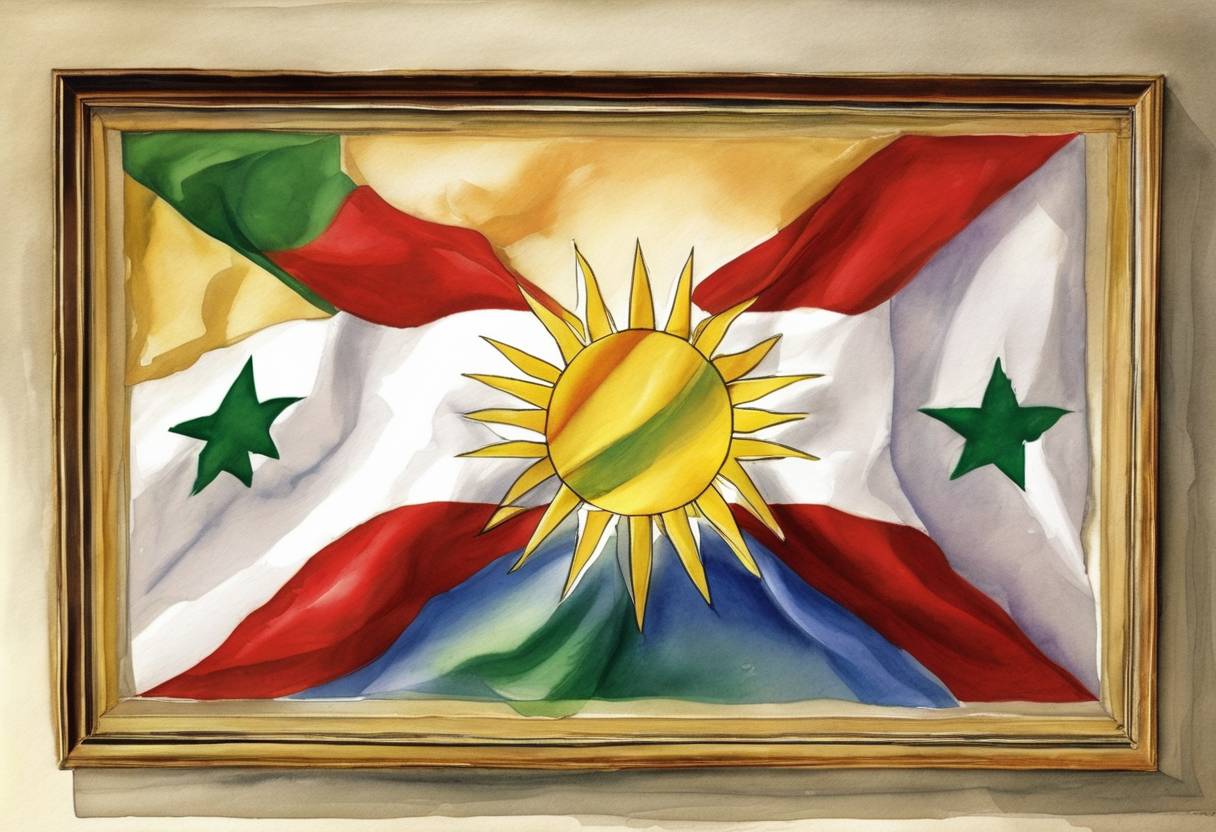
Adoption of the Kurdistan Regional Government Flag on August 3, 2005
On August 3, 2005, the Kurdistan Regional Government (KRG) in Iraq officially adopted its new flag. This event marked a significant moment for the Kurdish people, representing their aspirations, identity, and autonomy within Iraq.
Historical Context
The Kurds, an ethnic group with a distinct language and culture, predominantly inhabit the mountainous regions spanning the borders of Iraq, Iran, Turkey, and Syria. Despite their large population, they have faced historical struggles for recognition and autonomy, especially notable after the division of the Ottoman Empire and the subsequent creation of modern-day Iraq.
The Kurdistan Region’s aspirations for self-governance gained momentum following the establishment of a no-fly zone over northern Iraq after the Gulf War of 1991, providing a relatively safe haven for Kurdish people and enabling the establishment of the Kurdistan Regional Government.
The Flag Design
The flag of the Kurdistan Region features three horizontal bands of red, white, and green, with a prominent golden sun with 21 rays in the center. Each color and symbol holds specific meanings:
- Red symbolizes the struggle for freedom and the sacrifices made by the Kurdish people.
- White represents peace and equality.
- Green signifies the beauty and lush landscapes of Kurdistan.
- The Sun is a traditional Kurdish symbol, with its 21 rays representing renewal and resurrection, as well as the diverse Kurdish tribes.
Significance and Impact
The adoption of the KRG flag in 2005 came during a period when the Kurdistan Region was asserting its political stance within Iraq post-2003 invasion. It served as a unifying emblem for Kurds not only within the Kurdistan Region but also across bordering nations where Kurdish communities reside.
The flag has since become a strong symbol of Kurdish identity and pride, flown in public spaces, government buildings, and during cultural celebrations. It signifies the continued quest for recognition and rights within a multi-ethnic Iraq and highlights the region’s autonomy granted under the Iraqi Constitution of 2005.
Conclusion
The official adoption of the Kurdistan Region’s flag on August 3, 2005, stands as a testament to the resilience and cultural identity of the Kurdish people. It reflects their ongoing journey for self-determination and political recognition within the broader geopolitical landscape of the Middle East.