1829 · Rome, Papal States (now Italy)
Papal conclave elects Francesco Saverio Castiglioni as Pope Pius VIII.
August 12, 1492
Rodrigo Borgia is elected as Pope Alexander VI.
Rome, Papal States (now Italy) | Catholic Church
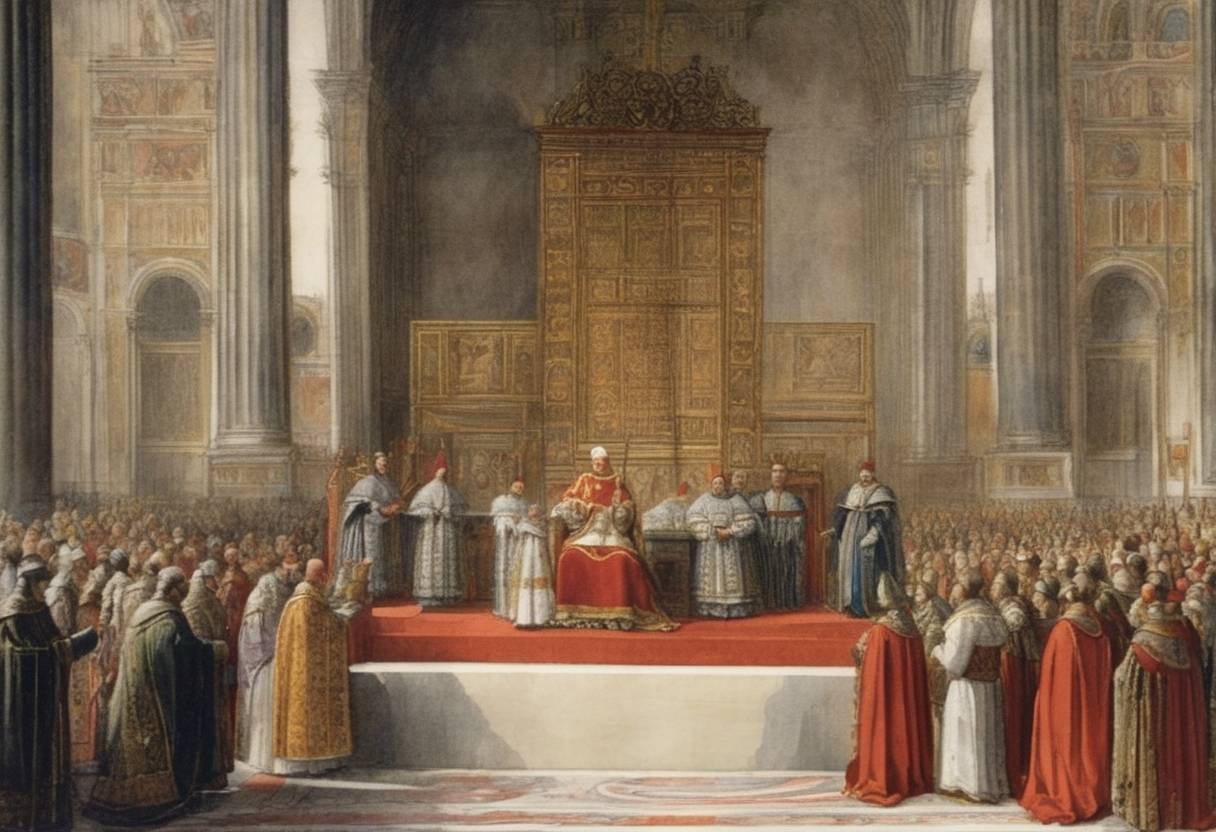
On August 11, 1492, Rodrigo Borgia was elected as Pope Alexander VI, a significant and controversial figure in the history of the Catholic Church. His election took place during a time of political intrigue and intense power struggles both within the Church and among Europe’s ruling families.
Rodrigo Borgia was born in 1431 in Xàtiva, Spain, and belonged to the prominent and influential Borgia family. Before becoming pope, he served as a cardinal and Vice-Chancellor of the Church, roles that allowed him to amass considerable wealth and influence. The papal conclave of 1492, convened following the death of Pope Innocent VIII, witnessed intense factionalism and political maneuvering. Borgia’s election was allegedly influenced by simony, where he was said to have used bribes and promises of lucrative positions to secure votes.
Alexander VI continued to play a pivotal role in European politics, often allying with various factions to strengthen his family’s position. His leadership style and the scandalous reputation of the Borgia family would leave an indelible mark on the perception of the Catholic Church and its practices leading into the 16th century.
The election of Rodrigo Borgia as Pope Alexander VI remains a critical moment in ecclesiastical history, encapsulating the complex interplay of religion, power, and politics during the Renaissance.
Source: en.wikipedia.org