Nixon Announces Suspension of Offensive Action in North Vietnam
1973 · Washington D.C., United States
President Richard Nixon announced the suspension of offensive action in North Vietnam, a step towards ending U.S. involvement in the Vietnam War.
October 31, 1968
U.S. President Lyndon B. Johnson announces a halt to the bombing of North Vietnam in a bid to seek a negotiated end to the Vietnam War.
Washington D.C., United States | U.S. Government
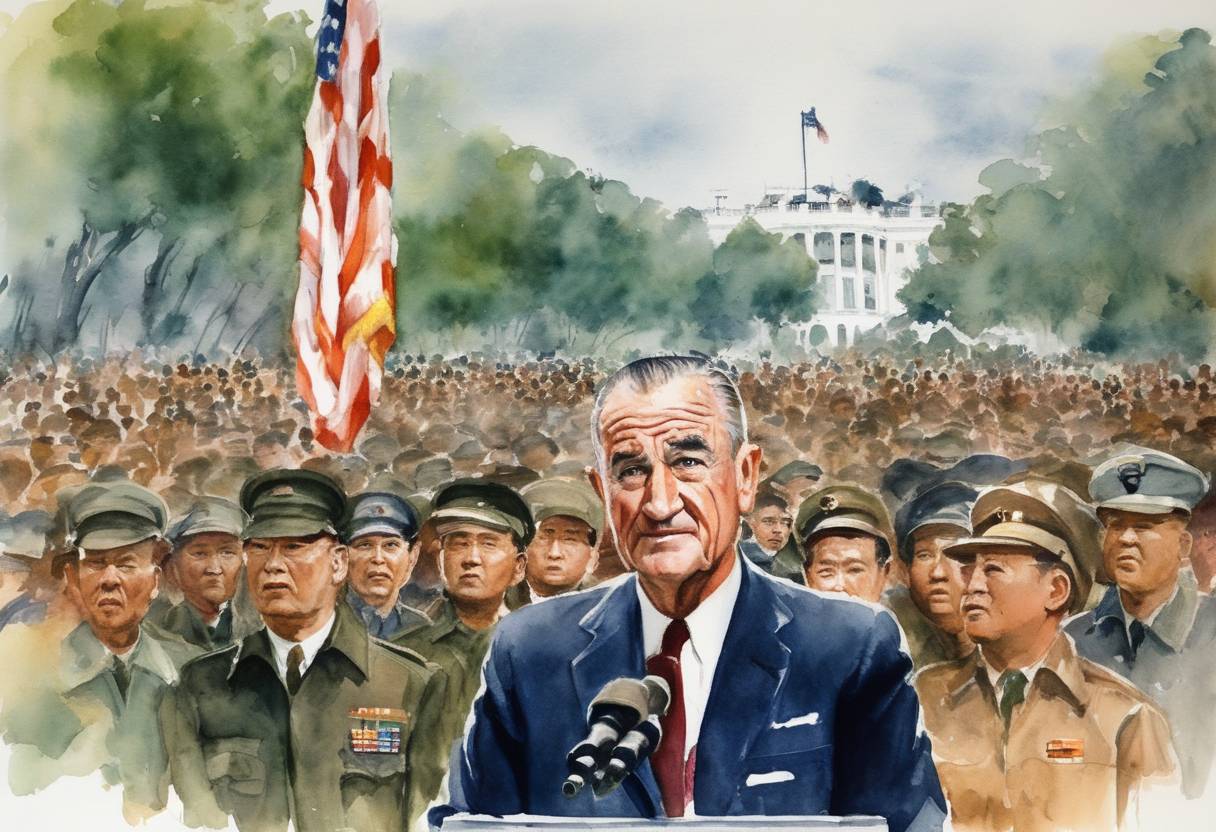
On October 31, 1968, U.S. President Lyndon B. Johnson made a landmark announcement that had significant implications for the Vietnam War and American foreign policy. Johnson declared an immediate halt to the bombing of North Vietnam, a move aimed at facilitating peace negotiations to bring an end to the protracted conflict.
The Vietnam War, which had escalated significantly during Johnson’s presidency, was a focal point of domestic and international controversy by 1968. The U.S. military’s bombing campaign, part of Operation Rolling Thunder, had been ongoing since 1965 with the goal of crippling North Vietnamese logistics and military capabilities. However, the escalating violence and human cost drew widespread criticism and sparked anti-war demonstrations across the United States and around the world.
In the months leading up to October 31, Johnson was under increasing pressure to find a pathway to peace. The war had become politically divisive, contributing to his decision not to seek re-election. Additionally, attempts at peace talks had been ongoing, with significant diplomatic efforts taking place in Paris throughout 1968.
On the evening of October 31, President Johnson addressed the nation through a televised broadcast. He revealed that the U.S. would cease “all air, naval, and artillery bombardment of North Vietnam” effective at 8 a.m. the following day—November 1. Johnson described this action as a means to “permit all parties to move toward peace with full assurance.”
This decision came after Johnson perceived signs of progress in the Paris peace talks, where representatives from the U.S., North Vietnam, South Vietnam, and the National Liberation Front (Viet Cong) were striving to develop frameworks for ending hostilities.
The halt in bombing was a pivotal gesture aimed at demonstrating U.S. commitment to a peaceful resolution. It signaled to the international community and domestic audiences alike that the U.S. government was willing to take concrete steps toward de-escalation.
However, the initial optimism that followed the announcement was tempered by the complex realities of the negotiation process. Although the bombing halt was intended to lead to substantive peace talks, progress was slow, and significant challenges remained. The war would continue for several more years, eventually concluding with the signing of the Paris Peace Accords in January 1973.
The October 31, 1968, bombing halt is significant not only as a pivotal moment in the Vietnam War but also as a reflection of the changing landscape of American politics and diplomacy during the era. Lyndon B. Johnson’s announcement is often viewed as a conciliatory act that highlighted the U.S. government’s readiness to explore diplomatic solutions, despite domestic opposition and international pressure.
This decision also marked a turning point in Johnson’s presidency, symbolizing both the limitations of military power and the intricate balance of diplomacy in Cold War geopolitics. It underscored the complexities of the Vietnam conflict and set the stage for further, albeit prolonged, negotiations toward peace.
Source: en.wikipedia.org