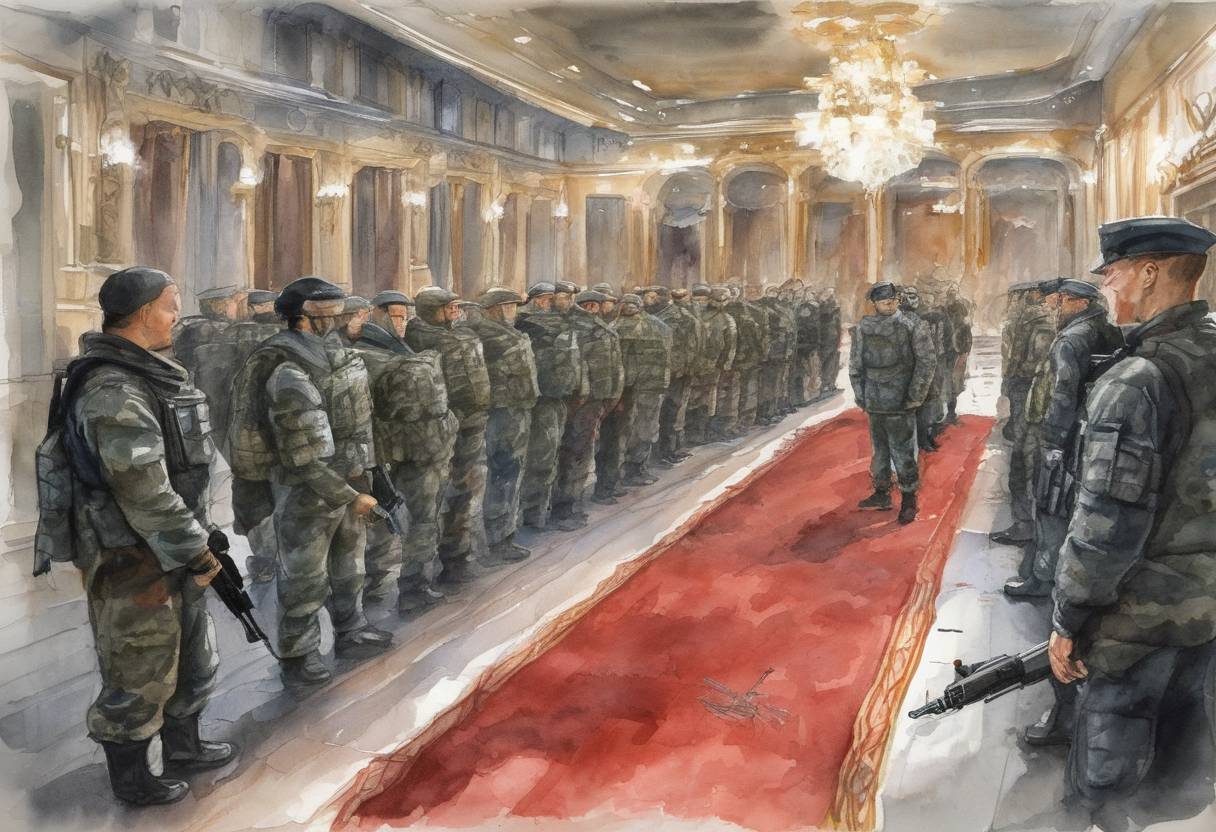
The Moscow Theater Hostage Crisis: October 26, 2002
The Moscow Theater Hostage Crisis, also known as the Dubrovka Theater hostage crisis, was a dramatic and tragic event that unfolded over several days in October 2002. It culminated in a controversial Russian special forces operation on October 26, 2002, which resulted in the deaths of 130 hostages and 40 attackers.
Background
The crisis began on October 23, 2002, when a group of approximately 40 to 50 armed Chechen rebels, led by Movsar Barayev, stormed the Dubrovka Theater in Moscow during a performance of the popular musical “Nord-Ost.” The attackers took around 850 hostages, demanding the withdrawal of Russian forces from Chechnya, where a brutal conflict had been ongoing since the early 1990s.
The Siege
For three tense days, the hostages were held under dire conditions, with the attackers threatening to kill them if their demands were not met. The Russian government, led by President Vladimir Putin, faced a critical situation, balancing the need to save the hostages with the imperative to not capitulate to terrorist demands.
Negotiations were attempted, and some hostages were released, including children and foreign nationals. However, the situation remained perilous, with the attackers rigging the theater with explosives.
The Special Forces Operation
In the early hours of October 26, Russian special forces, known as Spetsnaz, launched a rescue operation. They pumped an undisclosed chemical agent into the theater’s ventilation system to incapacitate the hostage-takers. The gas, later identified as a derivative of fentanyl, rendered most of the occupants unconscious.
Once the gas took effect, special forces stormed the building, killing all the attackers. However, the operation’s aftermath was catastrophic. The gas affected hostages as well, and due to inadequate medical preparedness, many succumbed to its effects. In total, 130 hostages died, primarily from the gas, while all the attackers were killed.
Aftermath and Controversy
The operation’s outcome sparked significant controversy and criticism. The Russian government’s refusal to disclose the exact nature of the gas hampered medical treatment for the affected hostages. The lack of adequate emergency medical response was also heavily criticized.
Internationally, the incident highlighted the complexities and dangers of dealing with hostage situations involving terrorism. Domestically, it reinforced the Russian government’s hardline stance against Chechen separatism but also raised questions about the balance between security and human rights.
Historical Significance
The Moscow Theater Hostage Crisis remains a poignant example of the challenges posed by terrorism and the difficult decisions governments face in such crises. It underscored the ongoing conflict in Chechnya and its broader implications for Russian domestic and foreign policy. The event also served as a grim reminder of the potential human cost of counter-terrorism operations.