King Louis IX's Decree on Jewish Identification - June 19, 1269
1269 · Paris, France
King Louis IX of France orders all Jews found in public without an identifying yellow badge to be fined ten livres of silver.
January 28, 1393
During a masquerade ball at the court of Charles VI of France, the 'Bal des Ardents' occurs, where several dancers, disguised as wild men in flammable costumes, are accidentally set on fire, resulting in the deaths of four knights. The incident highlights the dangers of court entertainment and the instability of Charles's reign.
Paris, France | House of Valois
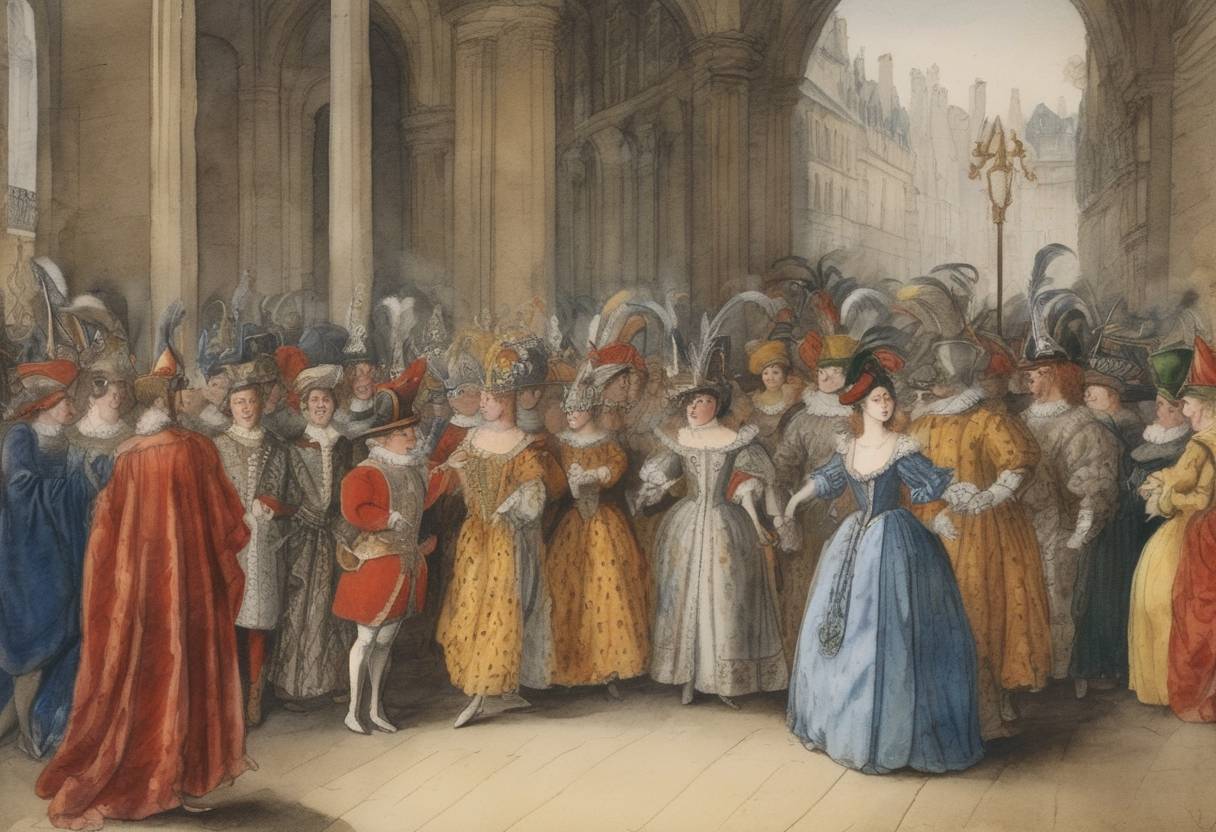
On January 28, 1393, a tragic incident unfolded during a masquerade ball at the court of Charles VI of France, famously known as the “Bal des Ardents” or the “Ball of the Burning Men.” This calamitous event highlighted the perils associated with court entertainments and underscored the broader instability present during King Charles VI’s reign.
The ball was held to celebrate the remarriage of a lady-in-waiting to Queen Isabeau of Bavaria. During the festivities, a group of six nobles, including the king himself, decided to entertain the court by masquerading as “wild men,” a popular motif symbolizing untamed and chaotic spirits. They adorned themselves in costumes coated with resin and covered in flax to add a savage and hairy appearance, materials that were highly flammable.
The masquerade reached its peak when the dancers entered the hall. However, the ill-fated twist occurred when Charles VI’s brother, Louis of Valois, Duke of Orléans, unknowingly brought a torch too close to the dancers. The flame made contact with the flammable costumes, quickly engulfing the dancers in fire.
Out of the six dancers, four were unable to escape and died from the burns. King Charles VI survived by quick thinking; Duchess Joan II of Auvergne and Boulogne covered him with her skirts to extinguish the flames. Another dancer, Sieur de Nantouillet, survived by jumping into a nearby vat of wine.
The Bal des Ardents was not just a tragic accident but also a reflection of King Charles VI’s troubled reign. The king, who had begun exhibiting signs of mental illness in the years prior, faced increased scrutiny and doubt about his ability to govern effectively. The catastrophe at the ball became symbolic of the perilous nature of court excesses and served as a grim reminder of the volatility within the French monarchy during this period. It further eroded the confidence of the French nobility and populace in their king, contributing to the ongoing political instability in late medieval France.
The tragedy of the Bal des Ardents became an infamous incident in French history, illustrating the dangerous blend of courtly opulence and negligence. It also punctuated the challenges that came with Charles VI’s reign, encapsulating the broader themes of instability and vulnerability that characterized his time on the throne.
Source: en.wikipedia.org