Incorporation of Chicago as a City on March 4, 1837
1837 · Chicago, United States
Chicago was incorporated as a city.
July 28, 1896
The city of Miami, Florida, is officially incorporated.
Miami, United States | Miami city officials
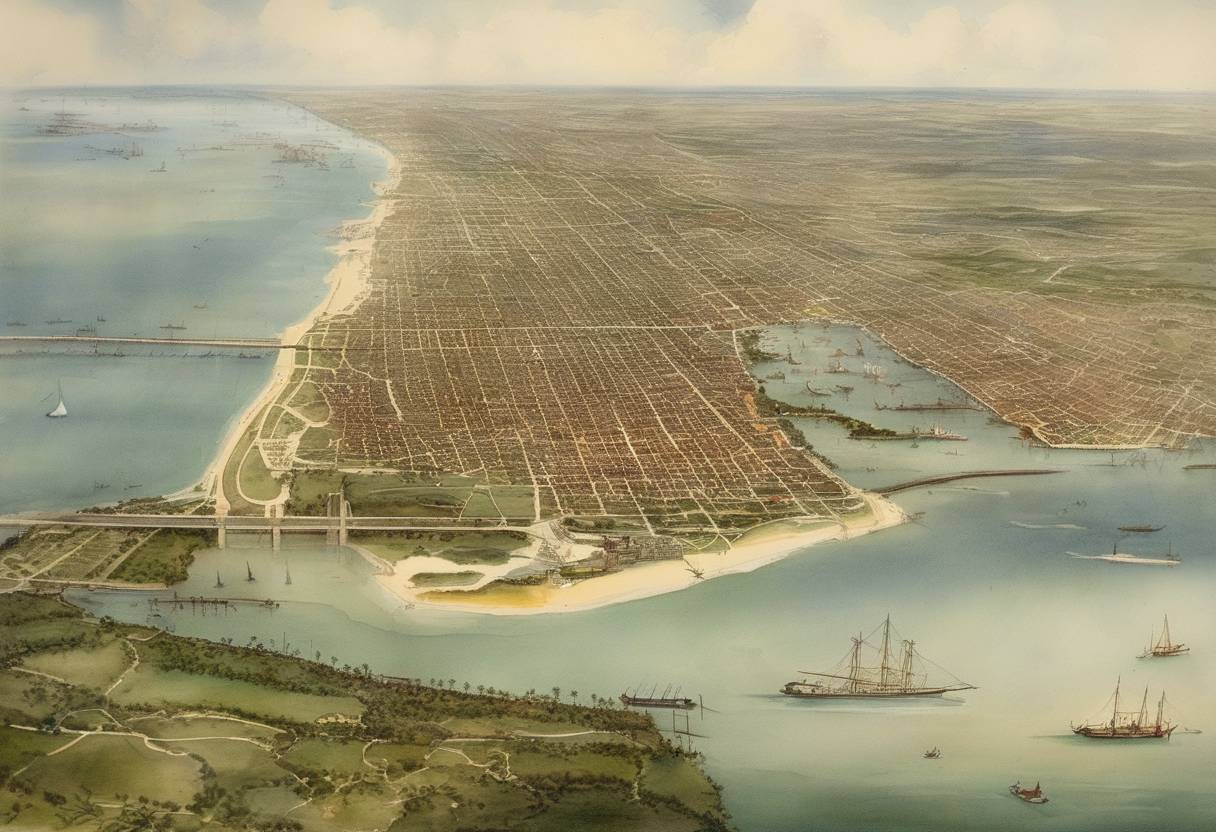
On July 28, 1896, the city of Miami, Florida, was officially incorporated. This marked the beginning of Miami’s development as one of the most significant urban centers in the southeastern United States.
Prior to incorporation, the area that would become Miami was sparsely populated, primarily consisting of indigenous tribes and a few settlers. The completion of the Florida East Coast Railway in 1896, spearheaded by industrialist Henry Flagler, was a pivotal factor that catalyzed Miami’s transformation. The railway’s extension to this remote area was influenced by the region’s potential for agricultural and real estate development, driven in part by the winter resort potential Flagler saw.
Railway Expansion: Henry Flagler’s railway reached Biscayne Bay in 1896, connecting the area directly to the rest of the coast and encouraging the influx of settlers and tourists.
Land Development: Julia Tuttle, a key figure known as the “Mother of Miami,” was instrumental in negotiating with Flagler to bring the railway to the area. She provided land and resources to facilitate this development.
Population Growth: The arrival of the railway prompted a population increase, drawing settlers, developers, and tourists. This growth necessitated an organized municipal structure.
On July 28, 1896, a meeting was held to vote on the incorporation of Miami. About 344 registered voters, including a significant number of African American men, participated in the vote. This diverse group of voters reflected Miami’s initial demographic composition.
Following incorporation, Miami rapidly developed, leveraging its strategic position as a transportation hub and tourist destination. The city’s favorable climate and location contributed to its growth as a key economic and cultural center.
Economic Development: Miami’s economy expanded through tourism, agriculture, and real estate. By the early 20th century, it began attracting business investments due to its growing population and infrastructure.
Cultural Impact: Miami became known as a melting pot of cultures, partly due to its historical engagement with Caribbean countries and its draw as an immigrant destination.
Modern Day: Today, Miami is a vibrant city known for its cultural diversity, iconic art deco architecture, and as an international center for finance, trade, and tourism.
The incorporation of Miami laid the foundation for its transformation from a rural outpost to a bustling metropolitan city that would continue to grow and evolve significantly through the 20th and 21st centuries.