June 27, 1895: First U.S. Patent for a Gasoline-Driven Automobile
1895 · Springfield, United States
The first U.S. patent for a gasoline-driven automobile is granted to Charles Duryea.
April 1, 1826
Samuel Morey patented an internal combustion engine, marking a significant milestone in automobile technology.
Orford, United States | United States Patent Office
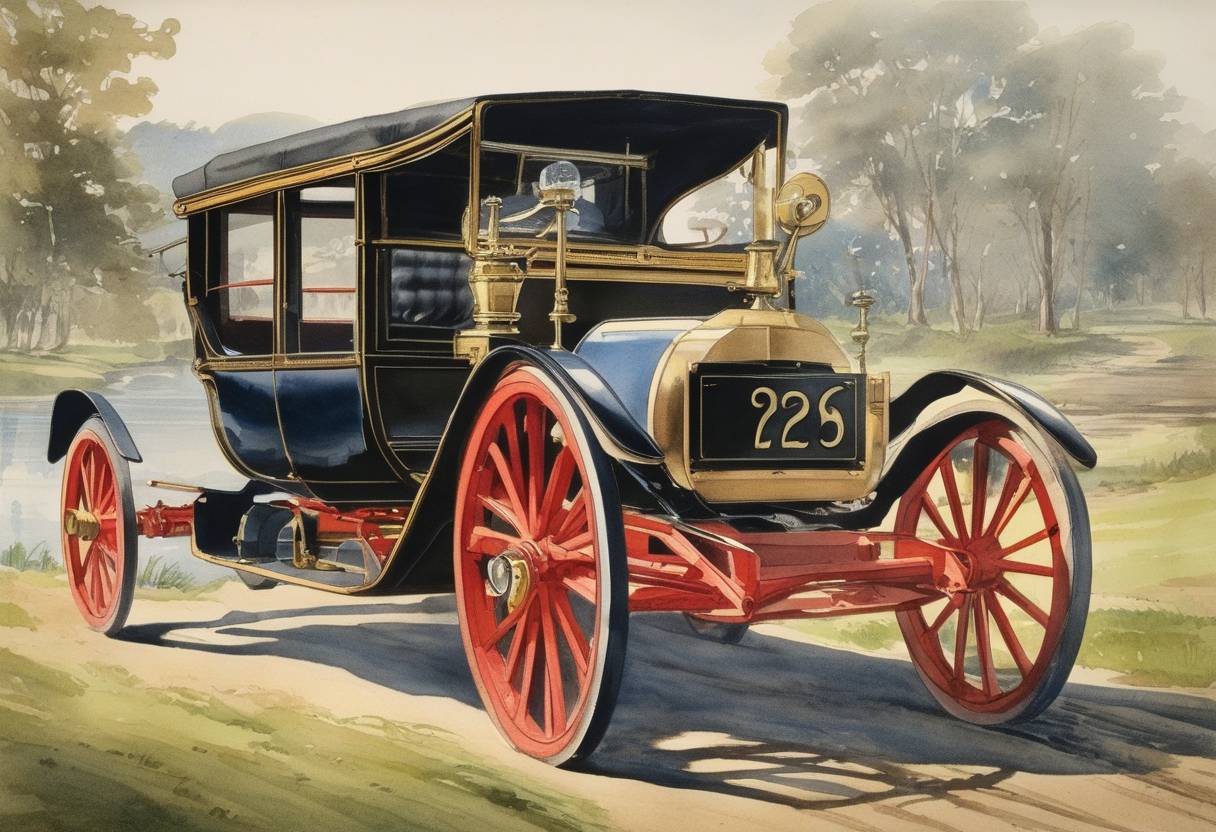
On April 1, 1826, Samuel Morey, an American inventor, was granted a patent for an internal combustion engine, a groundbreaking development that laid the foundational technology for the modern automobile. Morey’s invention demonstrated the practical application of an engine powered by combustion, specifically utilizing a mixture of turpentine and air.
Samuel Morey, born in 1762 in Connecticut, was a prolific inventor whose work primarily focused on steam and combustion engines. By the early 19th century, the quest for efficient power sources was intensifying, driven by the industrial revolution and advancements in transportation. Morey had been experimenting with steam energy systems and, over several years, developed ideas for an engine using the explosive power of combustion.
Morey’s internal combustion engine involved a cylinder and piston mechanism. The combustion process entailed a controlled explosion of a fuel-air mixture, which generated power to drive the piston. Such technology marked a departure from steam engines, which used external combustion to create steam and required heavy, cumbersome boilers.
Although Morey’s engine did not achieve commercial success in his lifetime, it was an essential precursor to later developments in the automotive industry. His patent outlined principles that would inspire and inform future inventors, demonstrating the potential for internal combustion as a substitute for steam power.
Morey’s contribution faded into relative obscurity but regained recognition as automotive technology advanced in the late 19th and early 20th centuries. Inventors such as Nikolaus Otto and Karl Benz would later build on the principles Morey established. The transition from steam-driven vehicles to those powered by internal combustion was propelled by variations of Morey’s early concepts.
In retrospect, Morey’s pioneering effort is acknowledged for its foresight and innovation. Today, he is remembered as a visionary whose work foreshadowed the technological evolution that would lead to the modern automobile, pivotal to the transportation advancements that followed.
Source: patents.google.com