Hugh Capet Elected King of France - June 1, 987
987 · Noyon, France
Hugh Capet is elected King of France, marking the beginning of the Capetian dynasty.
March 2, 0986
Louis V becomes King of the Franks, marking the end of the Carolingian control of the Kingdom of West Francia following his father Lothair's death.
Laon, Kingdom of West Francia | Kingdom of West Francia
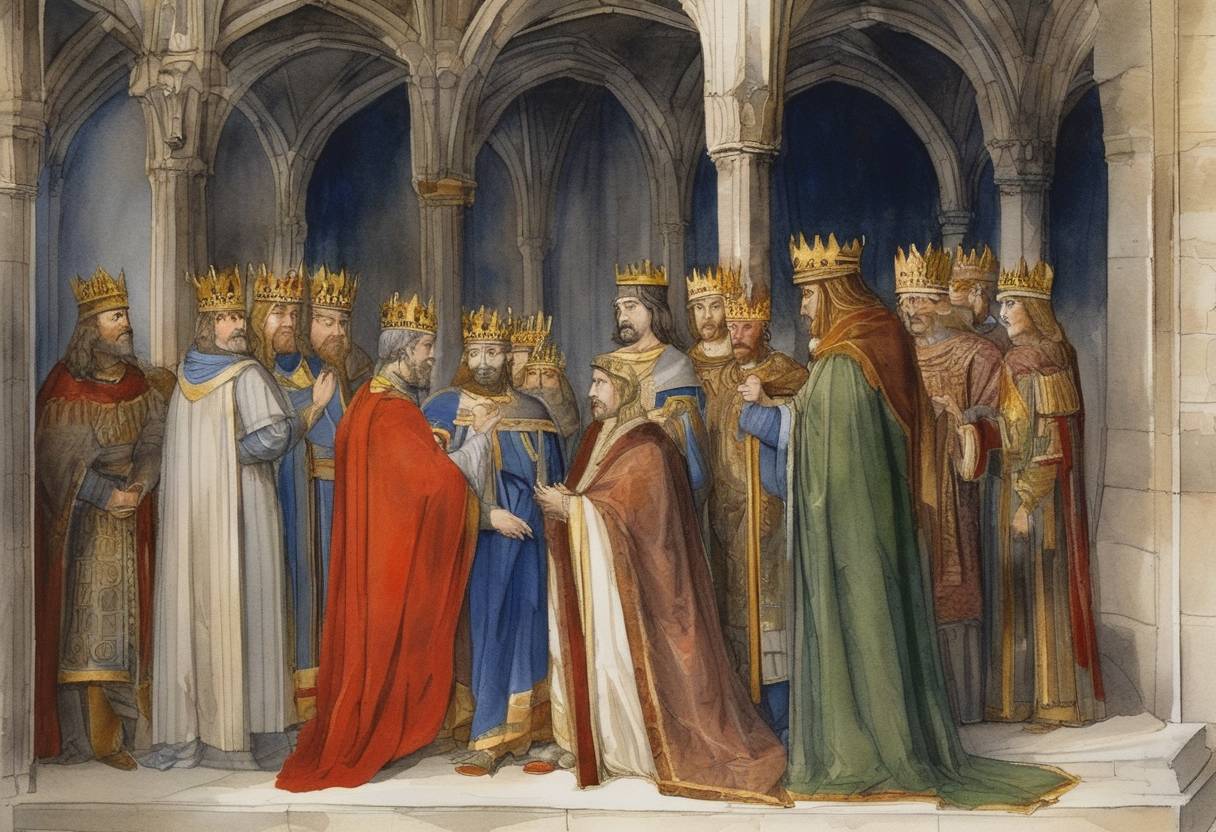
On March 2, 986, Louis V was crowned King of the Franks, a significant event as it marked the beginning of the end for Carolingian control over West Francia. The ascension of Louis V followed the death of his father, King Lothair.
Louis V was born around 967 to King Lothair of France and Queen Emma of Italy. His father’s reign was marked by continued struggles for power among the aristocracy and challenges to royal authority. The realm, known historically as West Francia, was a part of the Carolingian Empire, with its rulers descending from the line of Charlemagne.
On his father Lothair’s death in March 986, Louis V succeeded to the throne. Lothair had attempted to consolidate power and secure the dynasty’s hold over the region, but his efforts were often thwarted by powerful nobles and external threats.
Louis’s reign was brief and largely ineffective. His rule was dominated by the influence of the local nobility, particularly from Hugh Capet, who was the Duke of the Franks and the most powerful feudal lord in the region. Louis V struggled to assert control over his nobles and to maintain the family inheritance.
Despite being heralded as the last legitimate Carolingian ruler of West Francia, the legacy of Louis V did not last long. His unexpected death in 987, only a year after his ascension, led to a crisis of succession. Hugh Capet, leveraging his significant influence and support among other nobles, was elected as the new king. This pivotal moment transferred control from the Carolingians and initiated the Capetian dynasty’s rule, fundamentally shifting the political landscape of the kingdom.
Louis V’s short reign is pivotal in French history as it represents the transition from the Carolingian dynasty to the Capetian dynasty, which would go on to rule France for centuries. This transition highlighted the decline of centralized monarchical power and the increased autonomy of regional lords, patterns that characterized medieval European politics.
Source: en.wikipedia.org