1933 · Asmara, Eritrea
The first use of aircraft in combat was demonstrated by Italy when planes dropped bombs during the Siege of Asmara.
October 23, 1911
The first use of aircraft in war took place as the Italian pilot Lieutenant Gavotti dropped bombs on Ain Zara, Libya, during the Italo-Turkish War.
Ain Zara, Libya | Italian Army
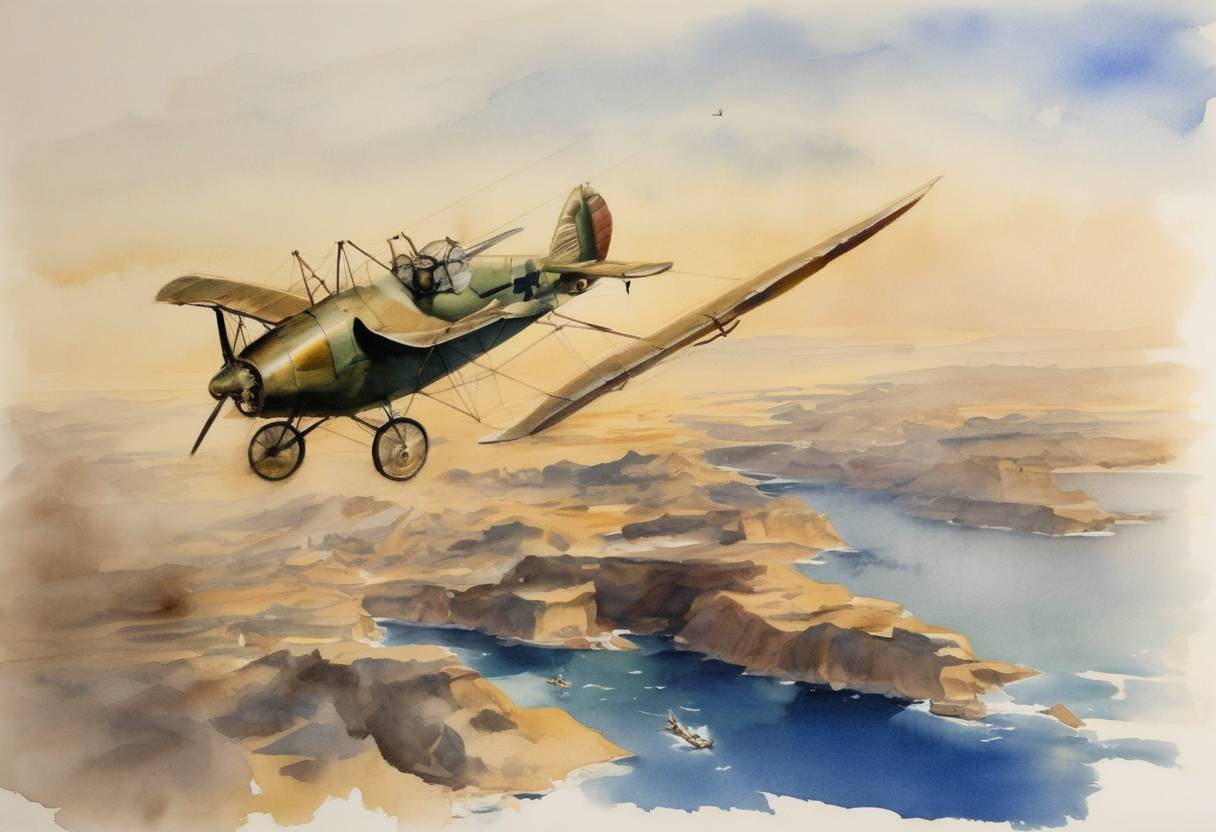
On October 23, 1911, during the Italo-Turkish War, the first recorded use of an aircraft in warfare took place. Italian pilot Lieutenant Giulio Gavotti conducted the pioneering mission by dropping bombs on Ain Zara, an oasis near Tripoli in Libya, a region then part of the Ottoman Empire.
The Italo-Turkish War (1911-1912) was a conflict between the Kingdom of Italy and the Ottoman Empire. The war was initiated by Italy’s desire to expand its colonial holdings in North Africa, targeting the Ottoman provinces of Tripolitania and Cyrenaica, which comprise modern-day Libya.
Pilot and Aircraft: Lieutenant Gavotti, an Italian aviator, piloted an Etrich Taube monoplane, a widely used aircraft at the time known for its distinctive bird-like wing structure, enhancing its stability and control.
Mission Details: Taking off from an Italian base near Tripoli, Gavotti carried multiple small grenades. During the mission, he manually dropped these explosives over enemy positions in Ain Zara, marking a seminal moment in military aviation.
Bombs Used: The grenades were an early form of aerial ordinance. Gavotti released several 4.5-pound (approximately 2 kilograms) bombs, each delivering a limited payload due to the nascent state of aviation technology and armaments.
Military Impact: Though the tactical impact of the bombing was minimal with little reported damage, the psychological and strategic implications were significant. The event demonstrated the potential of aerial bombardment, previewing a profound shift in military doctrine and strategy throughout the 20th century.
Technological Development: This operation highlighted the need for advancements in both aircraft technology and aerial munitions, paving the way for future innovations in military aviation.
Historical Significance: Gavotti’s mission marks the beginning of aerial warfare’s integration into military strategy, evolving to play crucial roles in both World Wars and subsequently in global military engagements.
The Italo-Turkish War itself concluded with the Treaty of Ouchy in 1912, leading to Italian control over Libya. However, the precedent set by this event continued to influence military tactics and technology development far beyond the war’s end.
Source: www.history.com