Ingenuity's Survival: February 21, 2021
2021 · Jezero Crater, Mars
NASA's Mars helicopter Ingenuity survived its first night on Mars autonomously, a key milestone before its historic flight.
April 18, 2021
NASA's Mars Helicopter Ingenuity performs its first flight on Mars, marking the first powered, controlled flight on another planet.
Jezero Crater, Mars Exploration Program | NASA
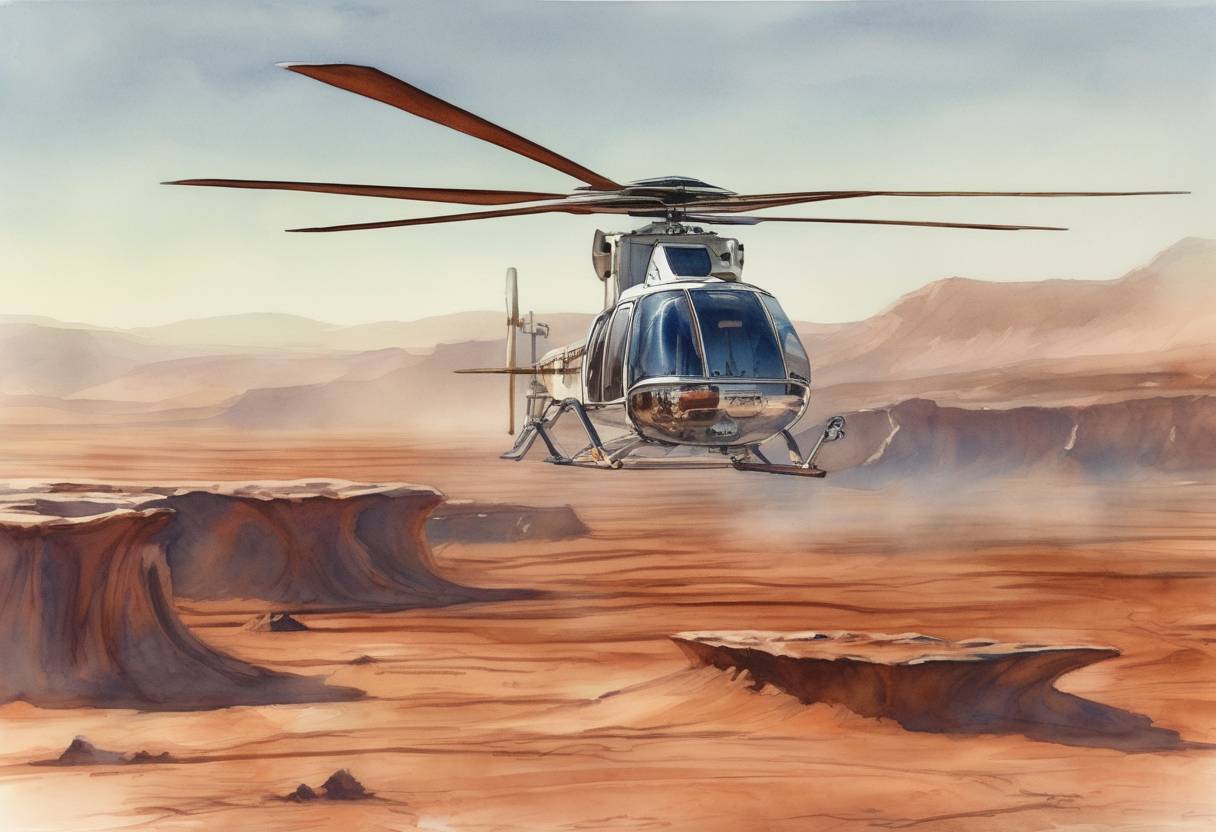
On April 19, 2021, NASA’s Mars Helicopter Ingenuity successfully performed its first flight on Mars, making history as the first powered, controlled flight of an aircraft on another planet. This monumental achievement took place inside the Jezero Crater on Mars and represented a pivotal moment in space exploration.
Ingenuity was carried to Mars attached to the belly of the Perseverance rover, which landed on February 18, 2021. The helicopter is a technology demonstration project aimed at proving that flight on Mars is possible. Due to Mars’ thin atmosphere, which is less than 1% of Earth’s surface pressure, developing a flying vehicle required engineering innovation to ensure lift capability.
Ingenuity weighed just under 4 pounds (1.8 kilograms) and featured counter-rotating blades that spun at about 2,500 revolutions per minute, much faster than would be required on Earth to achieve lift. Significant challenges included surviving the cold Martian nights and operating autonomously with pre-uploaded commands due to communication time delays between Mars and Earth.
Ingenuity’s successful flight marked a new chapter in extraterrestrial exploration, demonstrating new capabilities for future Mars missions. The helicopter’s achievement opened possibilities for aerial exploration, including scouting new terrains for vehicles or human explorers and collecting data in previously inaccessible locations.
Subsequent flights in the following weeks continued to test the limits of the helicopter’s capabilities, with each subsequent mission building on the successes of the previous endeavors. Ingenuity’s success provides critical insights and serves as a chapter in the ongoing efforts towards broader space exploration and understanding of the Martian environment.
Source: mars.nasa.gov