The Russo-Japanese War: The Surprise Attack on Port Arthur
1904 · Port Arthur, China
The Russo-Japanese War began with a surprise attack by the Japanese on the Russian fleet at Port Arthur.
January 2, 1905
The Russian garrison at Port Arthur surrendered to Japanese forces after a nearly year-long siege during the Russo-Japanese War, marking a significant turning point in the conflict. The fall of Port Arthur was a major blow to Russian military prestige and contributed to the eventual loss of Russia in the war.
Port Arthur, China | Imperial Japanese Army
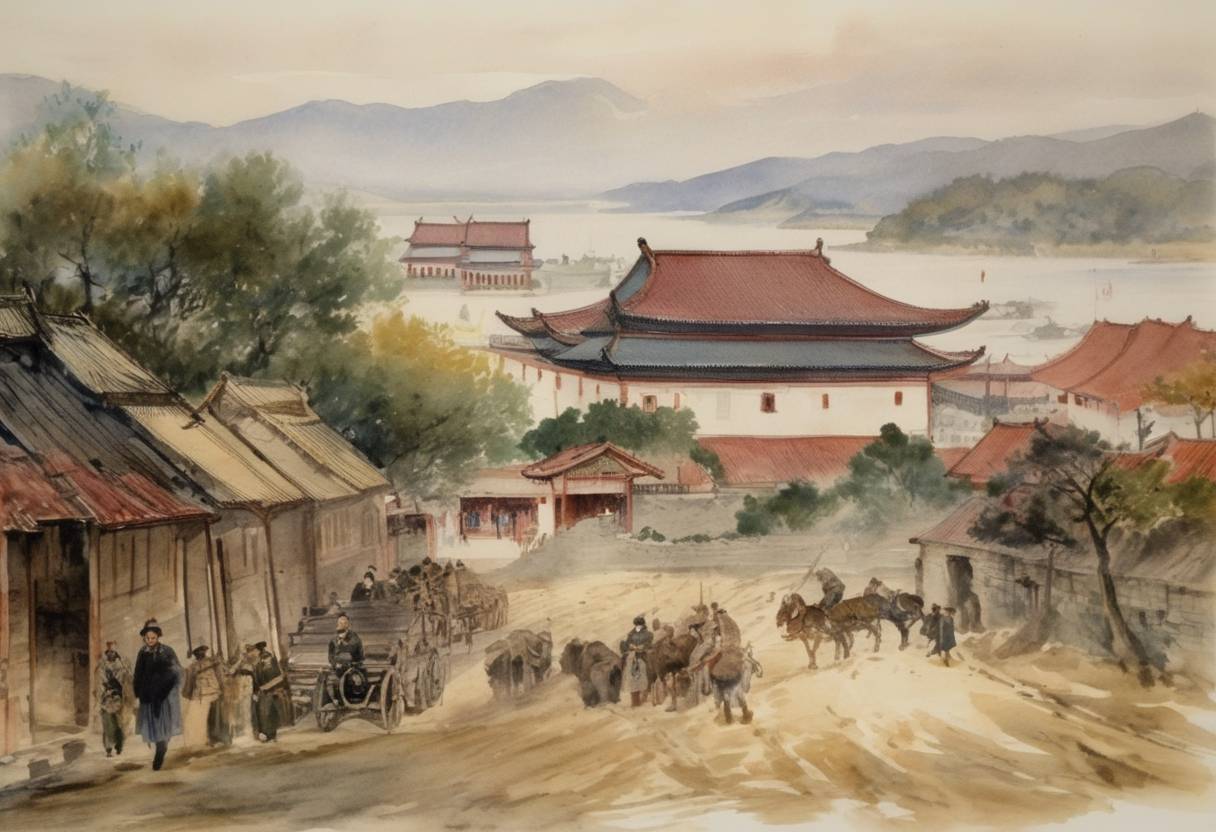
On January 2, 1905, after enduring an extensive and grueling siege that lasted for nearly a year, the Russian garrison stationed at Port Arthur surrendered to the Imperial Japanese Army. This event marked a pivotal moment in the Russo-Japanese War, significantly influencing the trajectory of the conflict in favor of Japan.
Port Arthur, located at the southern tip of the Liaodong Peninsula in northeastern China, was a strategically critical naval base for the Russian Empire. Its capture was imperative for Japan to assert naval dominance in the region. The siege began on August 1, 1904, following several land battles that saw Japanese forces gradually encircle the fortress city.
The protracted siege involved modern warfare techniques with extensive use of trenches, artillery bombardments, and eventually, direct assaults on the fortified positions. Despite fierce resistance from the Russian defenders, the Japanese army’s persistent strategies under General Nogi Maresuke progressively tightened their control around the city.
The siege comprised intense fighting characterized by severe losses on both sides. The Japanese forces were relentless in their assault initiatives, including the successful attack on the 203 Meter Hill in December 1904. This victory allowed the Japanese to position artillery, effectively directing fire onto the city and the Russian fleet anchored in the harbor.
Supplied by blockades and facing dwindling resources, the conditions within Port Arthur deteriorated over the months. The defenders were plagued by dwindling supplies, low morale, and outbreaks of disease, contributing to their weak position.
General Anatoly Stessel, the commanding officer of the Russian forces, eventually negotiated the terms of surrender. Despite the criticism he faced from some of his contemporaries for capitulating, the decision reflected the untenable position of the Russian forces.
The fall of Port Arthur had profound ramifications. It symbolized a significant loss of Russian military prestige and undermined Russia’s status as a dominant power in East Asia. The event galvanized Japanese military efforts and deterred Russian hopes of a quick recovery in the war.
The surrender at Port Arthur was instrumental in shaping the outcome of the Russo-Japanese War. It foreshadowed subsequent Japanese victories, ultimately leading to the Treaty of Portsmouth later in 1905, which concluded the war. The conflict’s resolution shifted the balance of power in the region, heralding Japan’s rise as a formidable imperial power and highlighting the declining influence of the Russian Empire.
The event remains a significant historical example of early 20th-century warfare, demonstrating the evolution of military technology and strategy and its implications in global geopolitics.
Source: en.wikipedia.org