The Great White Fleet: Circumnavigation Begins on December 16, 1907
1907 · Hampton Roads, United States
The Great White Fleet, a United States Navy battle fleet, begins its circumnavigation of the globe.
February 22, 1909
The Great White Fleet, a United States Navy fleet sent by Theodore Roosevelt on a worldwide tour, returned to Hampton Roads, Virginia, after a journey of over a year symbolizing America's emerging blue-water navy capability.
Hampton Roads, United States | United States Navy
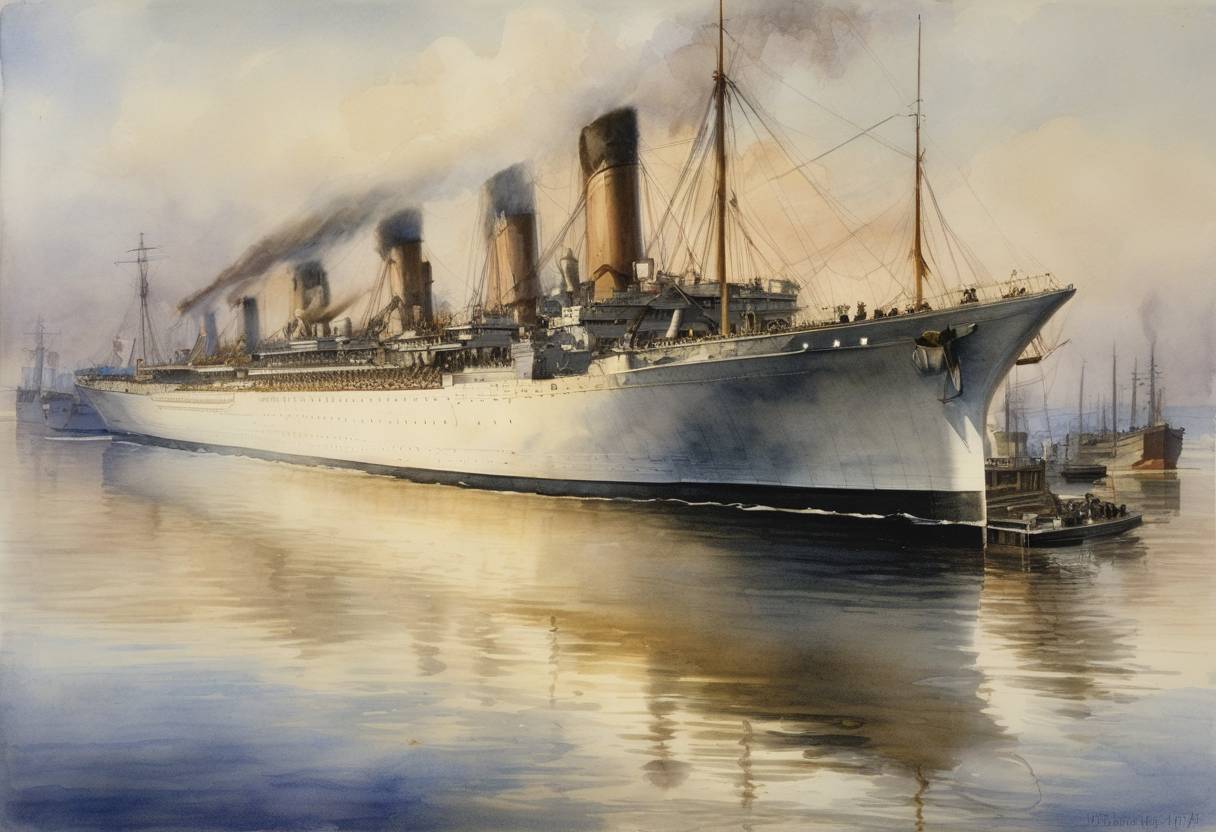
On February 22, 1909, The Great White Fleet returned to Hampton Roads, Virginia, concluding a monumental 14-month journey that symbolized the United States’ emergence as a global naval power. Initiated by President Theodore Roosevelt, the voyage was a demonstration of America’s growing capabilities in naval warfare and blue-water strategy, which refers to the ability to project power across oceans.
Motivated by the need to showcase American naval strength and to foster goodwill with countries around the globe, President Roosevelt commissioned the fleet in December 1907. The fleet comprised 16 battleships split into four squadrons, along with various support ships, all painted white, the peacetime color of the U.S. Navy, which gave the fleet its iconic name.
The Great White Fleet embarked on its journey on December 16, 1907. It traversed approximately 43,000 nautical miles and visited six continents and 20 ports of call. Significant stops included Australia, New Zealand, Japan, and several countries in South America and the Mediterranean. The voyage served not only as a projection of power but also as an exercise in logistics and international diplomacy. The reception at each port showcased both the influence of U.S. naval power and the importance of naval diplomacy.
The return of The Great White Fleet underscored several key outcomes:
Upon its return to Hampton Roads on February 22, the fleet was celebrated nationwide, highlighting its successful demonstration of international naval diplomacy and the United States’ commitment to maintaining a powerful naval presence on the world stage. The event is remembered as a pivotal moment in U.S. naval history and as a testament to Theodore Roosevelt’s vision of the United States as an international power.
Source: www.history.com