Coronation of Philip V of France
1322 · Reims, France
Philip V of France, also known as Philip the Tall, was crowned King of France at Reims Cathedral.
August 10, 1316
John II of France, also known as John the Good, was born. He would later become the King of France from 1350 to 1364, and his reign is noted for its fateful involvement in the Hundred Years' War.
Gué-de-Maulny, France | French Monarchy
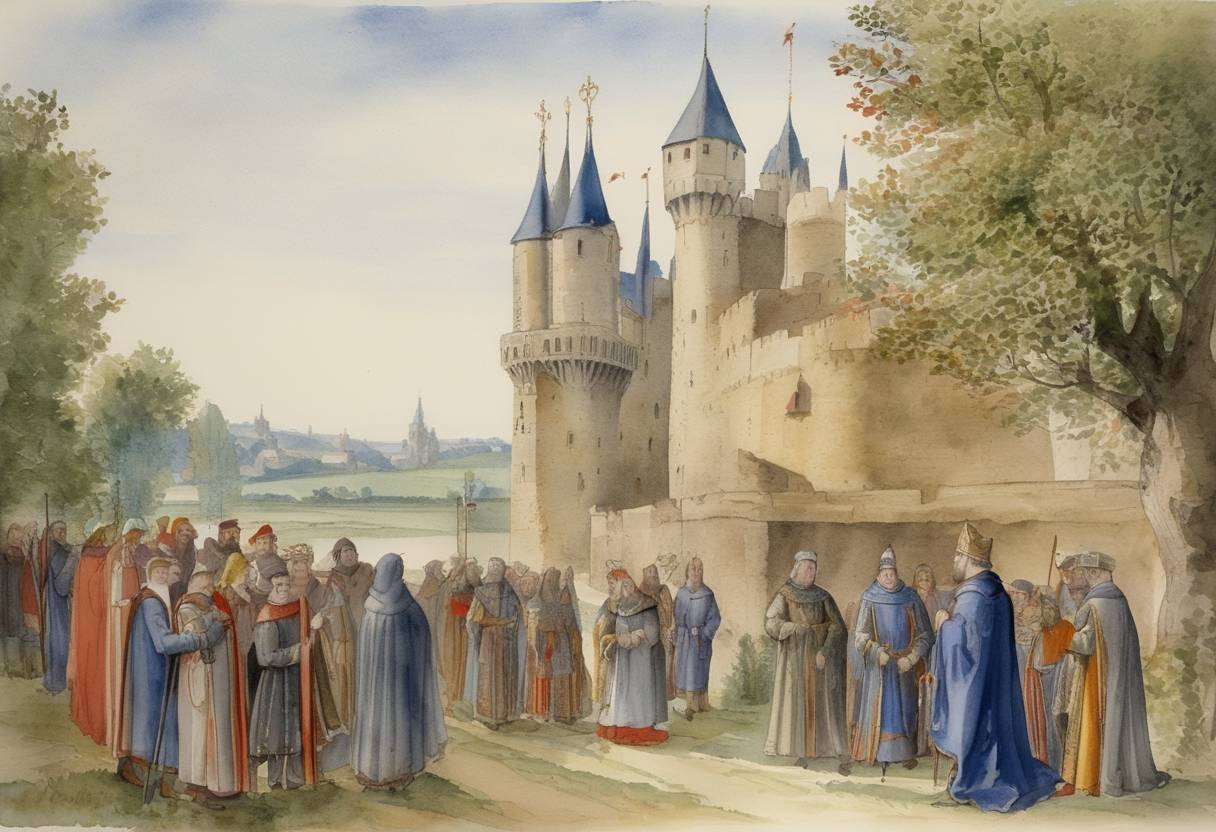
John II of France, also known as John the Good, was born on April 16, 1319, in Le Mans, France. His birth is an important event in French history as he would later become the King of France, reigning from 1350 to 1364. John the Good’s reign is particularly noted for his role in the Hundred Years’ War and the national turmoil that ensued during this period.
John was born into the House of Valois, which came to the French throne during a turbulent period marked by dynastic struggles and complex feudal allegiances. His father, Philip VI, became the King of France in 1328, establishing the Valois line in response to the extinction of the direct Capetian line.
John became Dauphin of France, the heir apparent, following the ascension of his father Philip VI to the throne. His upbringing was in a context of ongoing conflict with England, framed by territorial, dynastic, and feudal disputes that would envelop France in intermittent warfare for decades.
Ascending to the throne in 1350 after the death of his father, John II’s reign was characterized by significant challenges. These included financial difficulties, internal social unrest, and the continuing threat from England. The capture of John by the English at the Battle of Poitiers in 1356 was a pivotal event with dire consequences for France, leading to the debilitating Treaty of Brétigny in 1360.
Despite his best intentions and acts of chivalric valor, John’s reign is often viewed as a period of exacerbated crises in France, given the escalation of the Hundred Years’ War and the associated political and social upheaval. His leadership during these precarious times has been remembered in history both for attempts at reform and the struggles that beset his kingdom.
Source: en.wikipedia.org