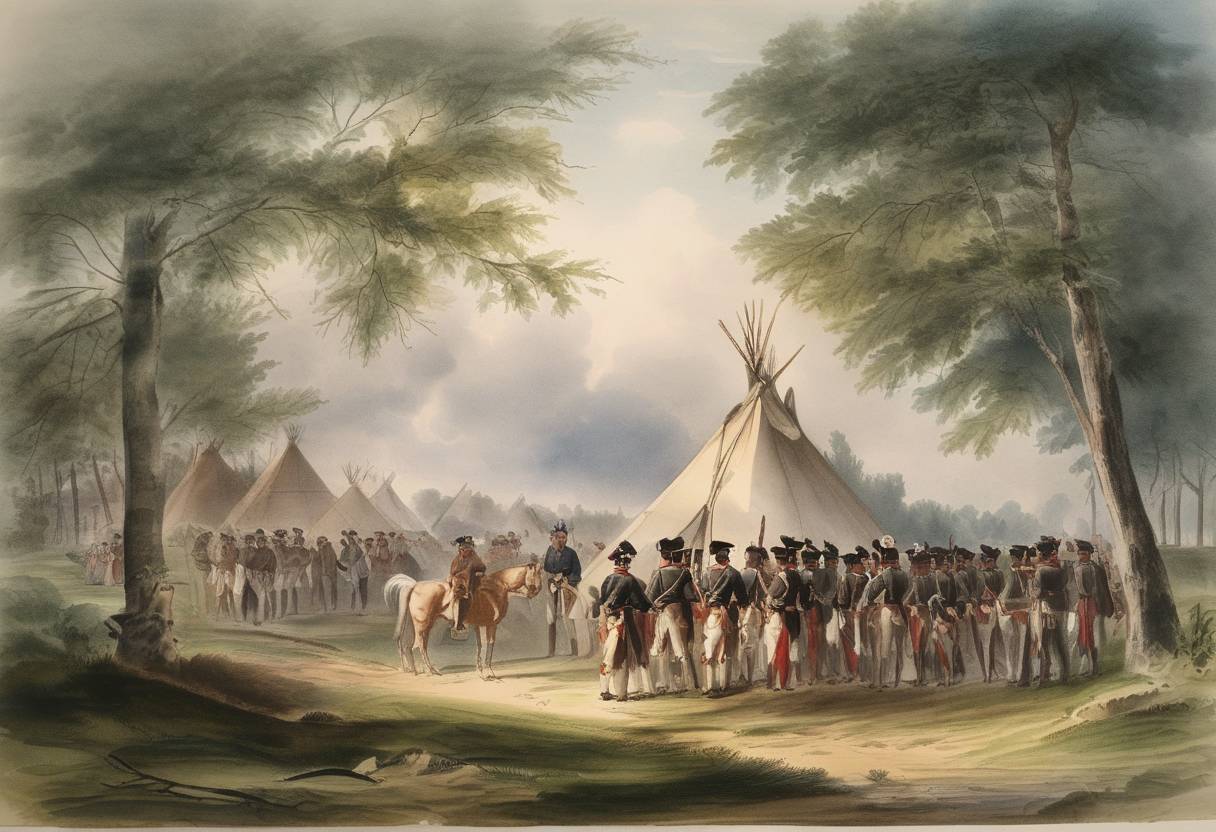
Creation of the Bureau of Indian Affairs on February 10, 1824
On February 10, 1824, the United States War Department established the Bureau of Indian Affairs (BIA), marking a significant development in U.S. government policies concerning Native American affairs. Initially formed as a division within the War Department, the creation of the BIA represented an attempt to formalize and centralize U.S. dealings with Native American tribes, which until that time had been inconsistently managed through various military and legislative actions.
Context and Background
The early 19th century was a period marked by rapid territorial expansion in the United States, driven by the doctrine of Manifest Destiny. As settlers moved westward, the federal government faced increasing pressure to address conflicts between Native Americans and encroaching settlers. Prior to the establishment of the BIA, Native American affairs were handled in a decentralized manner, often resulting in inconsistent and, at times, conflicting policies.
Initial Functions and Leadership
The Bureau’s primary responsibilities upon its founding included negotiating treaties, distributing funds and supplies to tribes, and enforcing Indian policies. The first head of the Bureau was Thomas L. McKenney, who previously served as the Superintendent of Indian Trade. McKenney advocated for the “civilization” of Native Americans through assimilation into Euro-American culture, reflecting contemporary attitudes that often disregarded Native sovereignty and culture.
Impact and Consequences
The creation of the BIA can be seen as both an attempt to centralize Indian policy and a reflection of the growing complexity of managing American expansionist policies. The Bureau played a crucial role in administering Indian Removal policies, which forcibly relocated tribes from their ancestral lands, infamously exemplified in the Trail of Tears in the 1830s. Over time, the BIA became notorious for inefficiency and corruption, contributing to a legacy of mistrust between Native American communities and the federal government.
Broader Historical Significance
The establishment of the Bureau of Indian Affairs marks a pivotal shift in the U.S. government’s approach to Native American policy. As the country expanded, the BIA’s role in implementing federal policies underlined a broader pattern of systemic dispossession and assimilation that significantly impacted Native American societies. Despite its controversial historical role, the BIA continues to exist today as part of the Department of the Interior, tasked with managing relations between the U.S. government and Native American tribes.