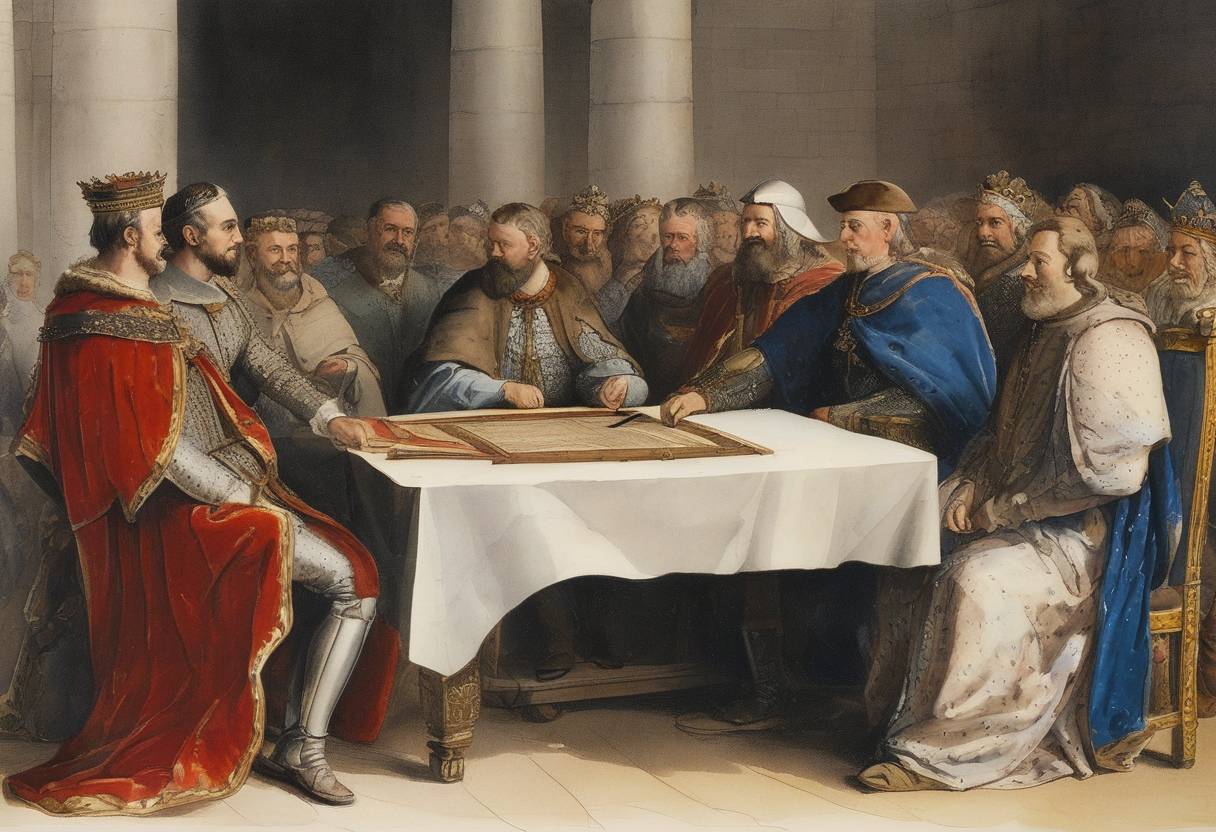
The Treaty of Boves (October 26, 1185)
The Treaty of Boves, signed on October 26, 1185, was a significant medieval agreement that marked the resolution of territorial disputes between King Philip II of France and Philip I, Count of Flanders. This treaty was a pivotal moment in the complex political landscape of 12th-century France and had lasting implications for the balance of power among its nobility.
Context and Background
In the late 12th century, the Kingdom of France was undergoing a process of consolidation, with the monarch seeking to expand and solidify royal authority over fragmented feudal territories. The conflict between Philip II and the Count of Flanders was emblematic of the broader struggle for control between the French crown and powerful regional lords.
Philip I of Flanders, a prominent magnate, held vast territories that were strategically important due to their economic wealth and geographic position. The tensions between him and the French king stemmed from overlapping claims and interests in the region, which included key territories such as Vermandois and the Artois.
Provisions of the Treaty
The Treaty of Boves was negotiated as a means to peacefully resolve these disputes and avoid prolonged conflict. Key provisions of the treaty included:
- Territorial Adjustments: The agreement delineated clear boundaries for the territories claimed by both parties, essentially redistributing several contested areas in favor of strengthening royal influence in northern France.
- Marriage Alliances: As part of the treaty, it was customary during this period to cement alliances through marriages. Although specific marital arrangements from this treaty are not thoroughly documented, these alliances generally served to reinforce peace and cooperation.
- Feudal Obligations: Both parties recognized certain feudal obligations which established a clearer hierarchal relationship, emphasizing the subservience of the Count of Flanders to the French king.
Aftermath and Significance
The Treaty of Boves was a notable step in the expansion of Capetian power. Through diplomatic negotiation rather than outright war, Philip II managed to advance his territorial interests and continued the gradual dissolution of largely autonomous feudal domains. This shift laid the groundwork for a more centralized and cohesive French state.
Moreover, the resolution of disputes within noble ranks allowed King Philip II to turn his attention to other pressing matters, such as his conflicts with England and his participation in the Third Crusade. By stabilizing the northern borders, the treaty indirectly supported his broader geopolitical strategies.
The Treaty of Boves is an example of medieval diplomatic practices and highlights how negotiated settlements could effectively replace military confrontation, embodying the complex power dynamics of medieval France and the savvy political maneuvering that characterized the reign of Philip II.