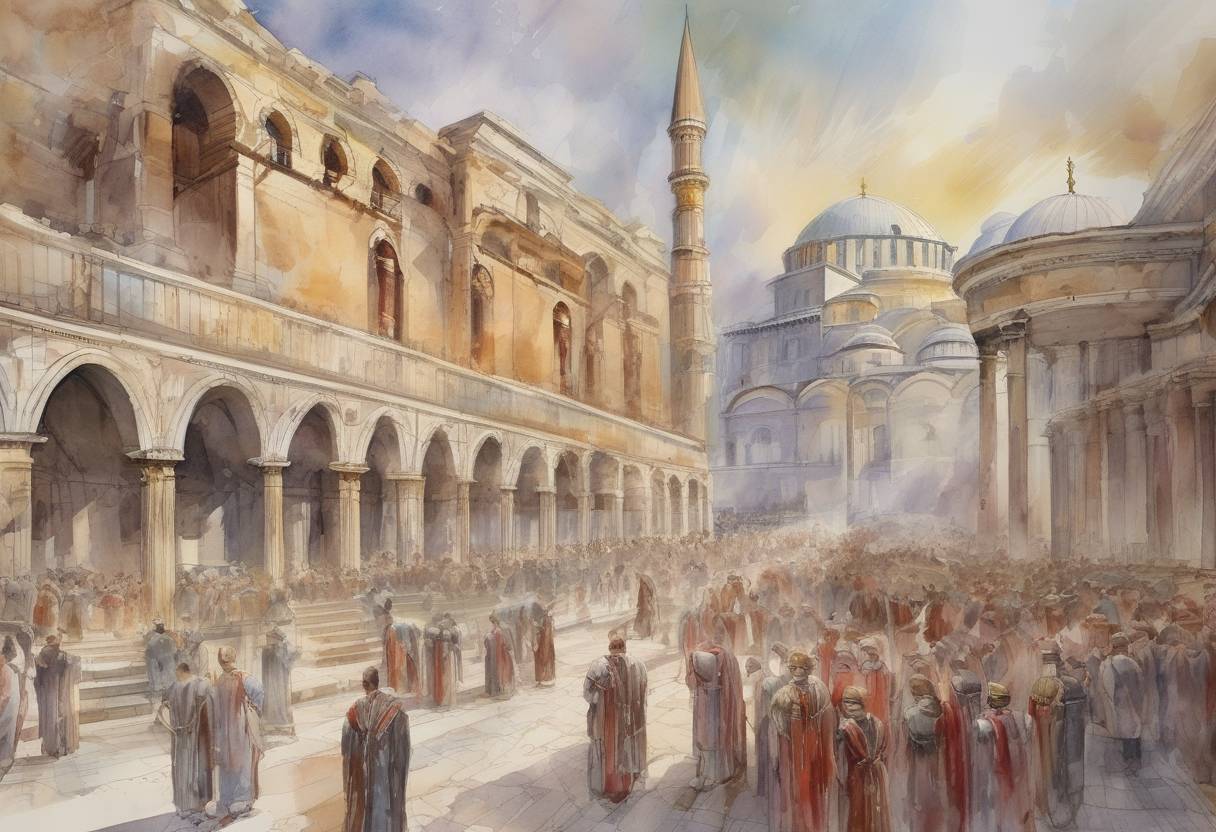
Consecration of Constantinople as the New Capital of the Roman Empire
On May 11, 330, Emperor Constantine the Great officially consecrated Constantinople as the new capital of the Roman Empire. This momentous event marked a significant shift in the empire’s center of power and had profound implications for the future of both the Roman Empire and the city itself.
Historical Context
Foundation of Byzantium: The site of Constantinople was originally the ancient city of Byzantium, founded by Greek colonists from Megara around 657 BCE. Its strategic location on the Bosporus Strait made it a valuable and contested site throughout history.
Rise of Constantine: Constantine the Great became the sole ruler of the Roman Empire after defeating his rivals, including Maxentius at the Battle of the Milvian Bridge in 312 and Licinius in 324. His reign marked the transition from the Tetrarchy to a more centralized imperial rule.
Strategic Importance: The decision to establish a new capital in the East was influenced by several factors, including the strategic military and economic advantages of the location. Positioned at the crossroads of Europe and Asia, Constantinople was ideally situated to control key trade routes and defend against eastern threats.
The Consecration Ceremony
Transformation of the City: Constantine initiated an extensive building program to transform Byzantium into a grand imperial capital. This included the construction of new walls, public buildings, palaces, and churches, most notably the Hagia Sophia, which would later be rebuilt by Emperor Justinian.
Ceremonial Events: The consecration of Constantinople was marked by elaborate ceremonies and festivities. Constantine sought to imbue the city with the grandeur and authority befitting an imperial capital, blending Roman traditions with Christian elements, reflecting his own conversion to Christianity.
Significance and Aftermath
Cultural and Religious Impact: Constantinople quickly became a major center of Christianity, influencing the religious landscape of the empire. The city’s establishment as a Christian capital helped solidify the religion’s prominence within the Roman state.
Political Shifts: The move of the capital from Rome to Constantinople signaled a shift in the empire’s focus from the West to the East. This would have lasting implications, particularly as the Western Roman Empire began to decline in the following centuries.
Legacy: Constantinople remained the capital of the Byzantine Empire (Eastern Roman Empire) for over a millennium, enduring numerous sieges and playing a pivotal role in medieval history until its fall to the Ottoman Turks in 1453.
In summary, the consecration of Constantinople as the new capital by Constantine the Great on May 11, 330, was a transformative event that reshaped the Roman Empire’s political, cultural, and religious landscape, leaving a lasting legacy on the history of Europe and the Near East.