Establishment of Yosemite National Park - October 1, 1890
1890 · Yosemite, United States
Yosemite National Park is established by the U.S. Congress, preserving the area for public use and enjoyment.
March 1, 1872
Yellowstone National Park was established as the first national park in the world, marking a significant step in the conservation movement.
Yellowstone, United States | United States Congress
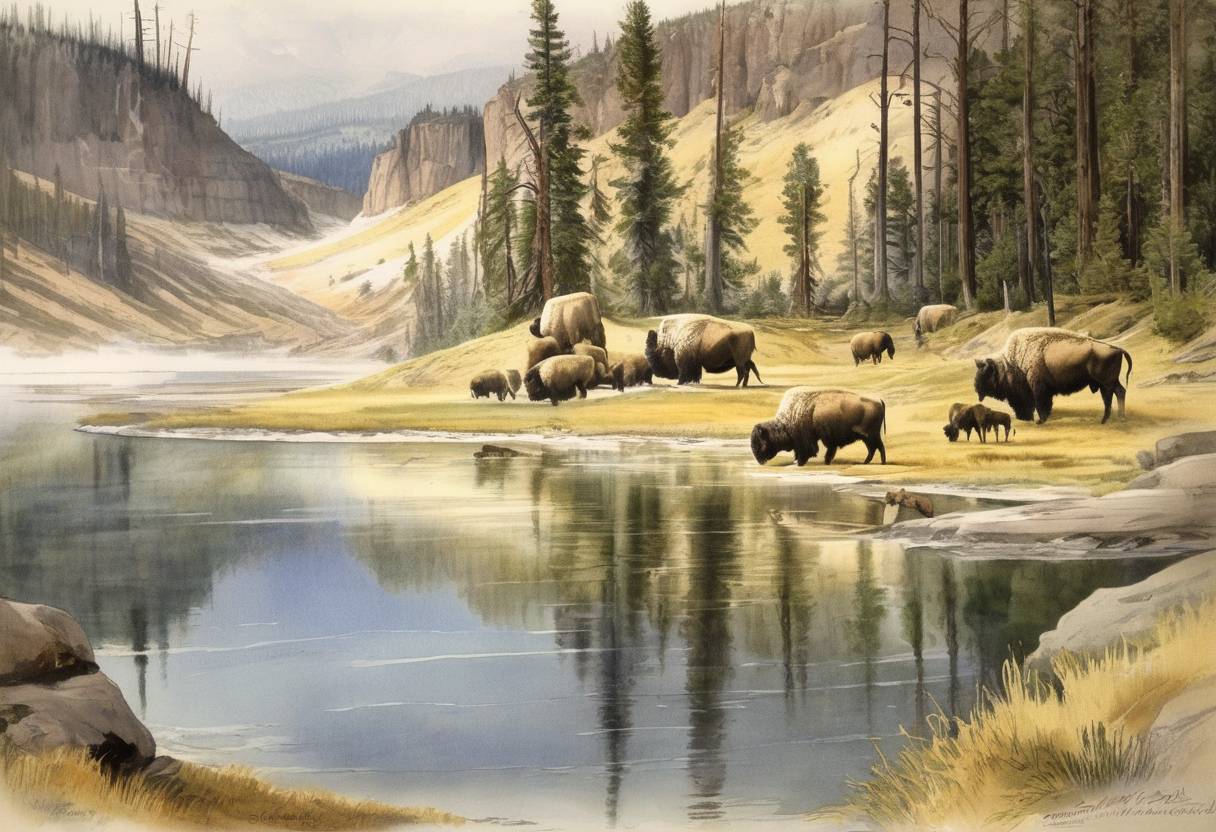
On March 1, 1872, Yellowstone National Park was established as the first national park in the world, marking a pivotal moment in the history of conservation. This groundbreaking event set a precedent for the preservation of natural landscapes and the protection of wildlife, influencing conservation efforts globally.
Exploration and Discovery: The region that would become Yellowstone was explored by various expeditions in the mid-19th century. Notably, the Washburn-Langford-Doane Expedition of 1870 provided detailed reports of the area’s geothermal features, wildlife, and stunning landscapes, capturing public and governmental interest.
Advocacy for Preservation: Influential figures such as Ferdinand V. Hayden, who led the 1871 Hayden Geological Survey of Yellowstone, played a crucial role in advocating for the area’s protection. Hayden’s comprehensive report, along with photographs by William Henry Jackson and paintings by Thomas Moran, helped to galvanize support for the park’s establishment.
Legislative Action: The idea of creating a national park gained traction in Congress, leading to the introduction of a bill to set aside the Yellowstone region as a public park. The bill emphasized the need to preserve the area’s unique geothermal features and natural beauty for future generations.
Presidential Approval: On March 1, 1872, President Ulysses S. Grant signed the Yellowstone National Park Protection Act into law. This act designated over two million acres of land as a public park, free from settlement, occupancy, or sale.
Conservation Milestone: Yellowstone’s establishment marked the beginning of the national park movement, highlighting the importance of preserving natural wonders. It inspired the creation of additional national parks in the United States and around the world.
Cultural and Ecological Importance: The park’s creation helped protect diverse ecosystems and species, including iconic wildlife such as bison, grizzly bears, and wolves. It also preserved geothermal features like geysers and hot springs, which are among the most extensive and diverse in the world.
Legacy: Yellowstone’s establishment set a precedent for the concept of national parks as spaces for public enjoyment and environmental stewardship. It underscored the idea that certain natural areas should be preserved for their intrinsic value and for the benefit of future generations.
The establishment of Yellowstone National Park on March 1, 1872, was a landmark event in the history of conservation. It demonstrated a growing recognition of the need to protect natural landscapes and laid the groundwork for the global national park movement, which continues to play a vital role in preserving the planet’s natural heritage.
Source: en.wikipedia.org