Deep Impact Mission: Collision with Comet Tempel 1
2005 · Pasadena, United States
NASA's Deep Impact spacecraft successfully collided with the comet Tempel 1, providing valuable data about the composition of comets.
January 2, 2004
NASA's Stardust spacecraft successfully flies by Comet Wild 2, collecting samples of the comet's dust and returning them to Earth in 2006.
Comet Wild 2, Space | NASA
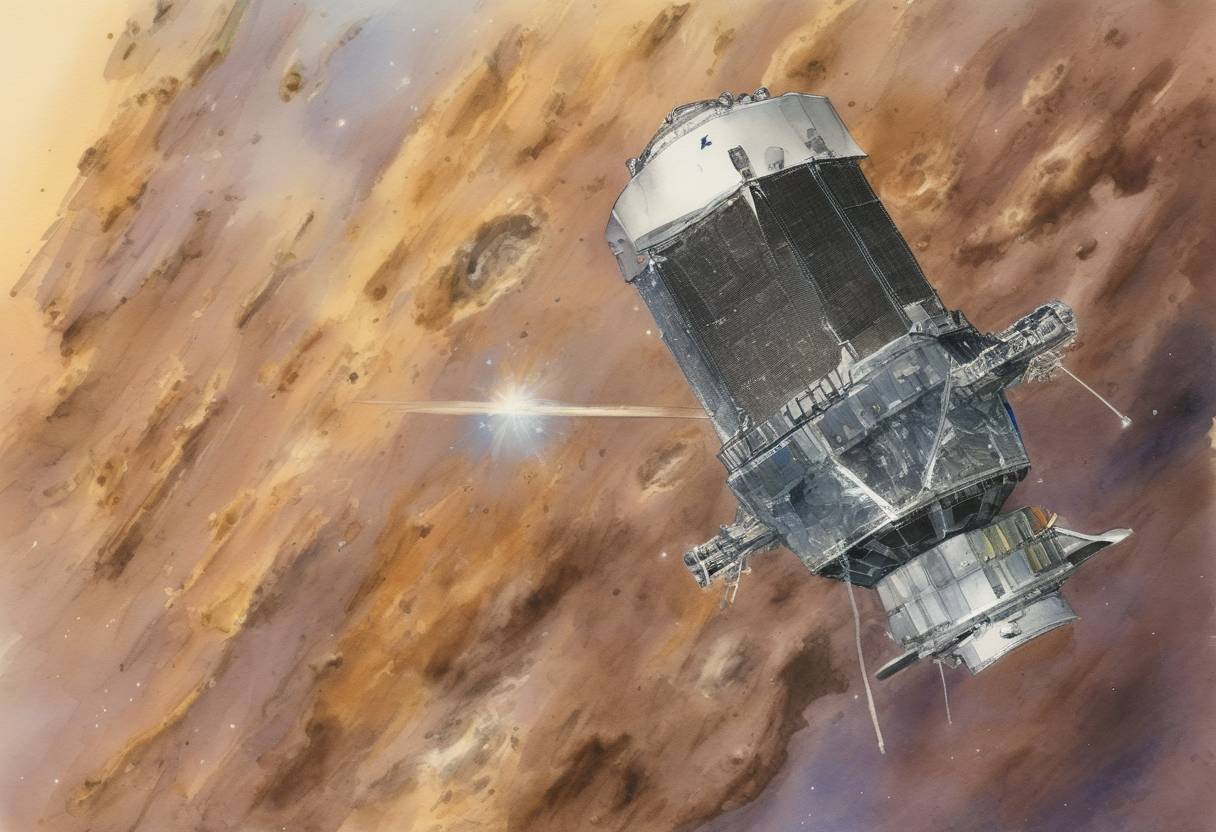
On January 2, 2004, NASA’s Stardust spacecraft successfully executed a flyby of Comet Wild 2, marking a significant milestone in space exploration and the study of comets. This mission was pivotal as it was the first time a spacecraft collected samples from a comet and returned them to Earth.
The Stardust mission was launched on February 7, 1999, with the primary goal of collecting dust samples from the coma of Comet Wild 2 and returning them to Earth for analysis. Comet Wild 2, discovered by Swiss astronomer Paul Wild in 1978, was chosen due to its relatively recent transition from the Kuiper Belt to the inner solar system, making it a pristine object for study.
During the flyby on January 2, 2004, Stardust approached Comet Wild 2 at a distance of approximately 240 kilometers (about 149 miles). The spacecraft was equipped with a specialized collector made of aerogel, a lightweight and porous material designed to capture tiny particles without damaging them due to high-speed impact.
After the successful collection, Stardust began its journey back to Earth. The samples were enclosed in a capsule that re-entered Earth’s atmosphere and landed in the Utah desert on January 15, 2006. This marked the first time cometary material was brought back to Earth for direct study.
The Stardust mission provided invaluable insights into the composition of comets, which are considered to be the building blocks of the solar system. Analysis of the samples revealed the presence of glycine, an amino acid, suggesting that some of the fundamental ingredients for life might have been delivered to Earth by comets.
The success of Stardust paved the way for future missions aimed at understanding the origins of the solar system and the potential for life elsewhere in the universe. It demonstrated the feasibility of sample-return missions, influencing subsequent missions like OSIRIS-REx, which aimed to return samples from an asteroid.
In summary, the Stardust spacecraft’s flyby of Comet Wild 2 was a landmark achievement in space exploration, providing a wealth of scientific data and enhancing our understanding of the early solar system.
Source: www.nasa.gov