The Blitz Begins: September 7, 1940
1940 · London, United Kingdom
The Blitz began as Nazi Germany started a sustained bombing campaign against London during World War II.
June 13, 1944
Germany launched the first V-1 flying bomb attack on London during World War II, marking the beginning of a new phase of aerial warfare.
London, United Kingdom | Nazi Germany
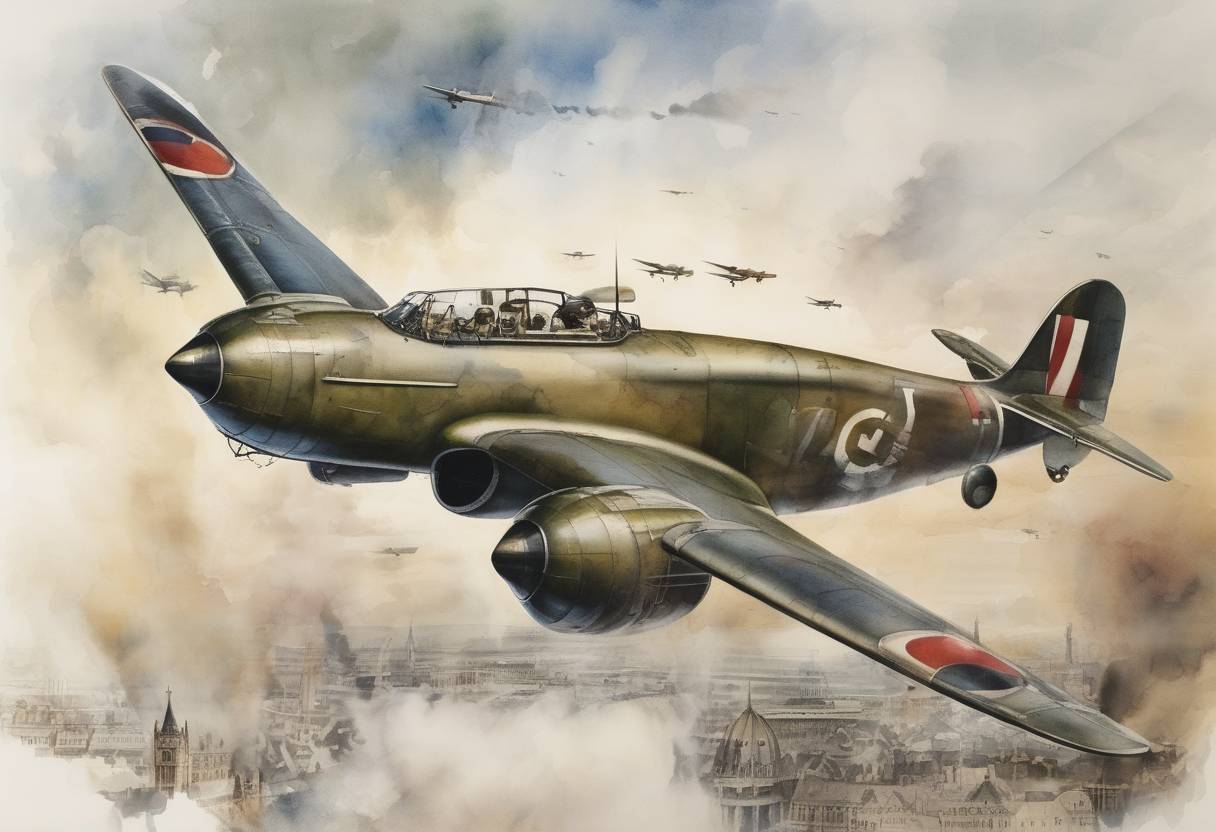
On June 13, 1944, Germany launched the first V-1 flying bomb attack on London, marking a significant development in aerial warfare during World War II. This event introduced a new phase of conflict characterized by the use of unmanned, long-range weapons designed to target civilian populations and infrastructure.
The V-1 flying bomb, also known as the “buzz bomb” or “doodlebug,” was developed by Nazi Germany as part of its Vergeltungswaffen, or “vengeance weapons,” program. The V-1 was an early cruise missile powered by a pulsejet engine, capable of reaching speeds of up to 400 miles per hour and carrying a one-ton warhead. It had a range of approximately 150 miles, making it suitable for attacks on London from launch sites in German-occupied Europe.
The development of the V-1 was driven by Germany’s need to retaliate against the Allied bombing campaigns that had devastated German cities. The V-1 was intended to demoralize the British population and disrupt the Allied war effort.
The first V-1 flying bomb was launched from a site near the French coast in the early hours of June 13, 1944. It reached London within 15 minutes, striking a railway bridge in the Mile End area of the city. The explosion caused significant damage, resulting in the deaths of six people and injuring many others.
This attack marked the beginning of a sustained V-1 bombing campaign against London and other targets in southern England. Over the following months, thousands of V-1s were launched, causing widespread destruction and civilian casualties.
The V-1 attacks had a profound psychological impact on the British public, as the bombs were difficult to detect and intercept. The distinctive buzzing sound of the V-1’s engine, followed by sudden silence as the engine cut out before impact, became a source of terror for Londoners.
In response, the Allies implemented several countermeasures. Anti-aircraft guns and barrage balloons were deployed around London, and fighter aircraft were tasked with intercepting the V-1s mid-flight. Additionally, Allied forces launched operations to capture or destroy the launch sites in France and the Low Countries.
The V-1 campaign continued until October 1944, when advancing Allied forces overran the launch sites. By that time, over 9,500 V-1s had been fired at the United Kingdom, causing approximately 6,000 deaths and injuring many more.
The introduction of the V-1 flying bomb represented a significant shift in warfare, foreshadowing the development of more advanced missile technologies in the post-war era. It highlighted the increasing importance of technological innovation in military strategy and underscored the devastating impact of targeting civilian populations during conflict.
The V-1 attacks also spurred advancements in air defense systems and contributed to the development of early warning and interception technologies that would become crucial during the Cold War.
Source: en.wikipedia.org