Saddam Hussein Becomes President of Iraq
1979 · Baghdad, Iraq
Saddam Hussein becomes the President of Iraq, succeeding Ahmed Hassan al-Bakr.
February 8, 1963
The Ba'ath Party came to power in Iraq after a coup d'état, marking the beginning of a period of Ba'athist rule.
Baghdad, Iraq | Ba'ath Party
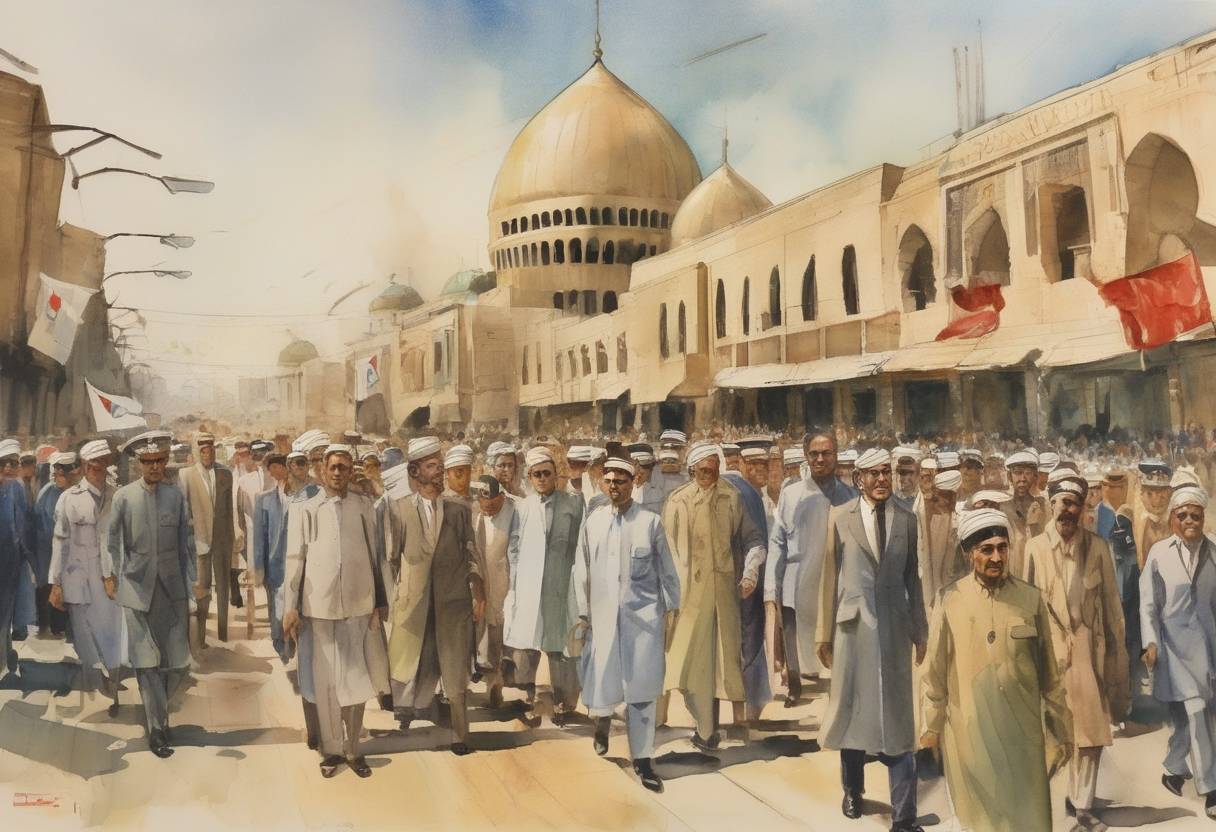
On February 8, 1963, the Ba’ath Party orchestrated a successful coup d’état in Iraq, marking the beginning of a significant period of Ba’athist rule in the country. This event was a pivotal moment in Iraqi history, characterized by a shift in political power and the establishment of a new regime.
The Ba’ath Party, formally known as the Arab Socialist Ba’ath Party, was founded on the principles of Arab nationalism, socialism, and anti-imperialism. It aimed to unify the Arab world and promote social and economic reforms. By the early 1960s, the party had gained substantial influence in several Arab countries, including Iraq.
Prior to the coup, Iraq was under the rule of Prime Minister Abd al-Karim Qasim, who had come to power after overthrowing the monarchy in 1958. Qasim’s government was marked by its nationalist policies and attempts at social reform, but it faced criticism for its authoritarian tendencies and failure to deliver on economic promises. Additionally, Qasim’s regime was increasingly isolated due to its strained relations with both Western powers and neighboring Arab states.
The coup on February 8, 1963, was executed by a coalition of Ba’athists, military officers, and other political factions dissatisfied with Qasim’s rule. The operation was swift and violent, involving intense fighting in Baghdad and other key locations. Qasim was captured and executed shortly after the coup, effectively ending his administration.
The Ba’ath Party, with the support of the military, quickly established control over the government. The new regime was led by a Revolutionary Command Council, with prominent Ba’athist figures such as Ahmed Hassan al-Bakr and Ali Salih al-Sa’di playing key roles in the new government.
The 1963 coup marked the beginning of a tumultuous period in Iraqi politics. The Ba’ath Party’s rule was characterized by its efforts to consolidate power, implement socialist policies, and suppress opposition. However, internal divisions within the party and conflicts with other political groups led to instability.
In November 1963, the Ba’athists were ousted from power by a counter-coup led by Abdul Salam Arif, a former ally of Qasim. Despite this setback, the Ba’ath Party would return to power in 1968, establishing a more enduring regime under the leadership of Ahmed Hassan al-Bakr and later Saddam Hussein.
The events of February 8, 1963, had lasting implications for Iraq and the broader Middle East. The rise of the Ba’ath Party influenced regional politics, contributing to the spread of Arab nationalism and socialism. The coup also set the stage for future conflicts and power struggles within Iraq, shaping the country’s political landscape for decades to come.
Source: en.wikipedia.org