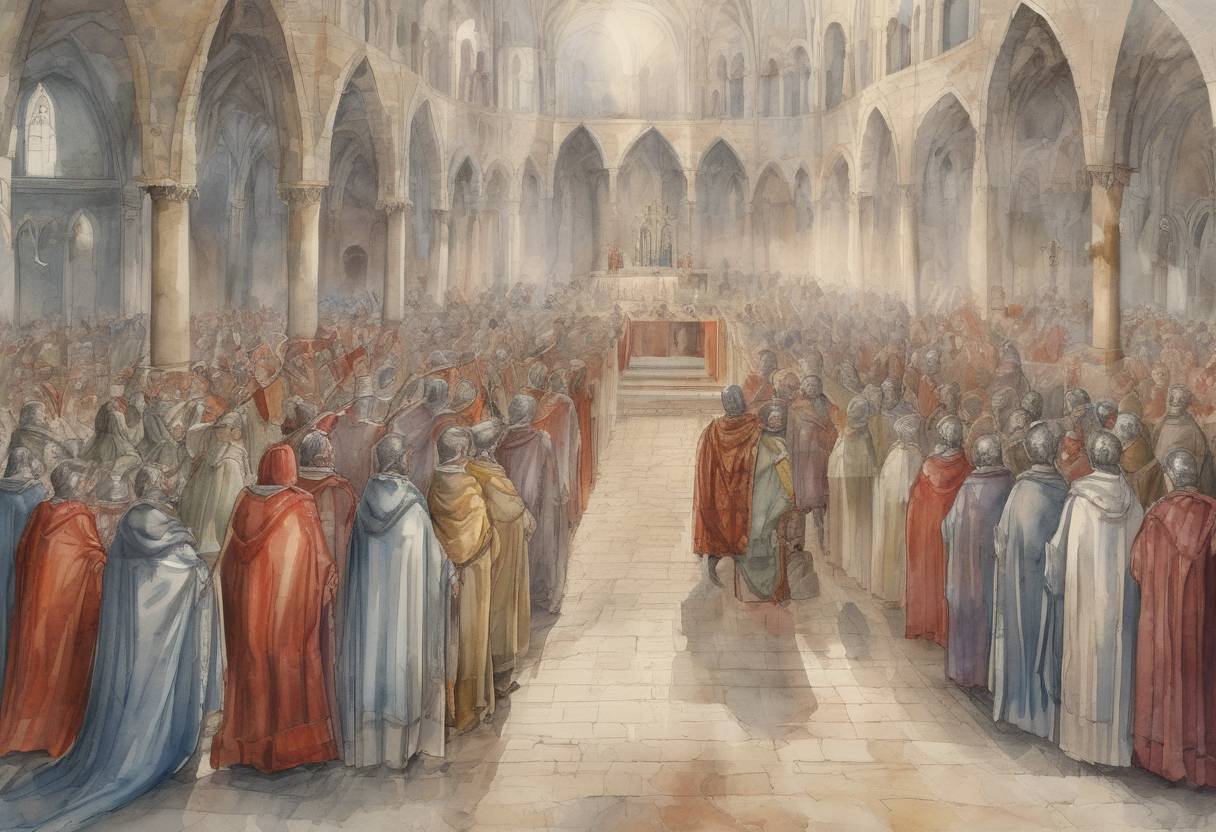
The Second Council of Tours - May 25, 567
The Second Council of Tours, convened on May 25, 567, was a significant ecclesiastical assembly in the Frankish Kingdom. This council was part of a series of synods held during the Merovingian period, aimed at addressing various issues within the Church, particularly concerning church discipline and the conduct of clergy.
Historical Context
During the 6th century, the Frankish Kingdom was undergoing significant changes. The Merovingian dynasty, which ruled over the Franks, was marked by both expansion and internal strife. The Church played a crucial role in stabilizing and legitimizing the rule of the Merovingian kings. However, the rapid expansion and integration of diverse peoples into the Frankish realm brought about challenges in maintaining ecclesiastical discipline and uniformity.
Key Issues Addressed
The Second Council of Tours focused on several critical issues:
Clerical Discipline: The council sought to address the conduct of the clergy, emphasizing the need for moral integrity and adherence to ecclesiastical duties. This was crucial in maintaining the Church’s authority and moral standing in society.
Liturgical Practices: Standardizing liturgical practices was another focus, as variations had emerged across different regions. The council aimed to ensure uniformity in worship, which was essential for the cohesion of the Church.
Marriage and Celibacy: The council also dealt with issues related to marriage and celibacy among the clergy. It reinforced the expectation of celibacy for bishops and other high-ranking clerics, a topic of ongoing debate and concern.
Relations with Secular Authorities: The council addressed the relationship between the Church and secular rulers, seeking to delineate the boundaries of ecclesiastical and royal authority. This was particularly important in the context of the Merovingian kings, who often sought to exert influence over church matters.
Broader Historical Significance
The Second Council of Tours was part of a broader movement within the Church to assert its authority and standardize practices across the rapidly expanding Frankish territories. These councils were instrumental in shaping the medieval Church’s structure and its relationship with secular powers.
The decisions made at Tours had lasting impacts on the governance of the Church and its role in medieval society. By reinforcing clerical discipline and standardizing practices, the council helped to solidify the Church’s influence during a period of political fragmentation and cultural integration.
Aftermath
The outcomes of the Second Council of Tours contributed to the ongoing efforts to reform and strengthen the Church’s position in the Frankish Kingdom. The council’s decrees were disseminated throughout the realm, influencing ecclesiastical policy and practice in subsequent years. The emphasis on clerical discipline and the relationship with secular authorities continued to be central themes in the Church’s development during the early medieval period.
In summary, the Second Council of Tours was a pivotal moment in the history of the Frankish Church, reflecting broader trends in ecclesiastical reform and the consolidation of Christian practices across Europe.