Cristina Fernández de Kirchner Elected as President of Argentina
2007 · Buenos Aires, Argentina
Cristina Fernández de Kirchner was elected as the first female President of Argentina, succeeding her husband, Néstor Kirchner.
June 29, 1974
Isabel Perón was sworn in as the first female President of Argentina, following the illness of her husband, President Juan Perón.
Buenos Aires, Argentina | Argentine government
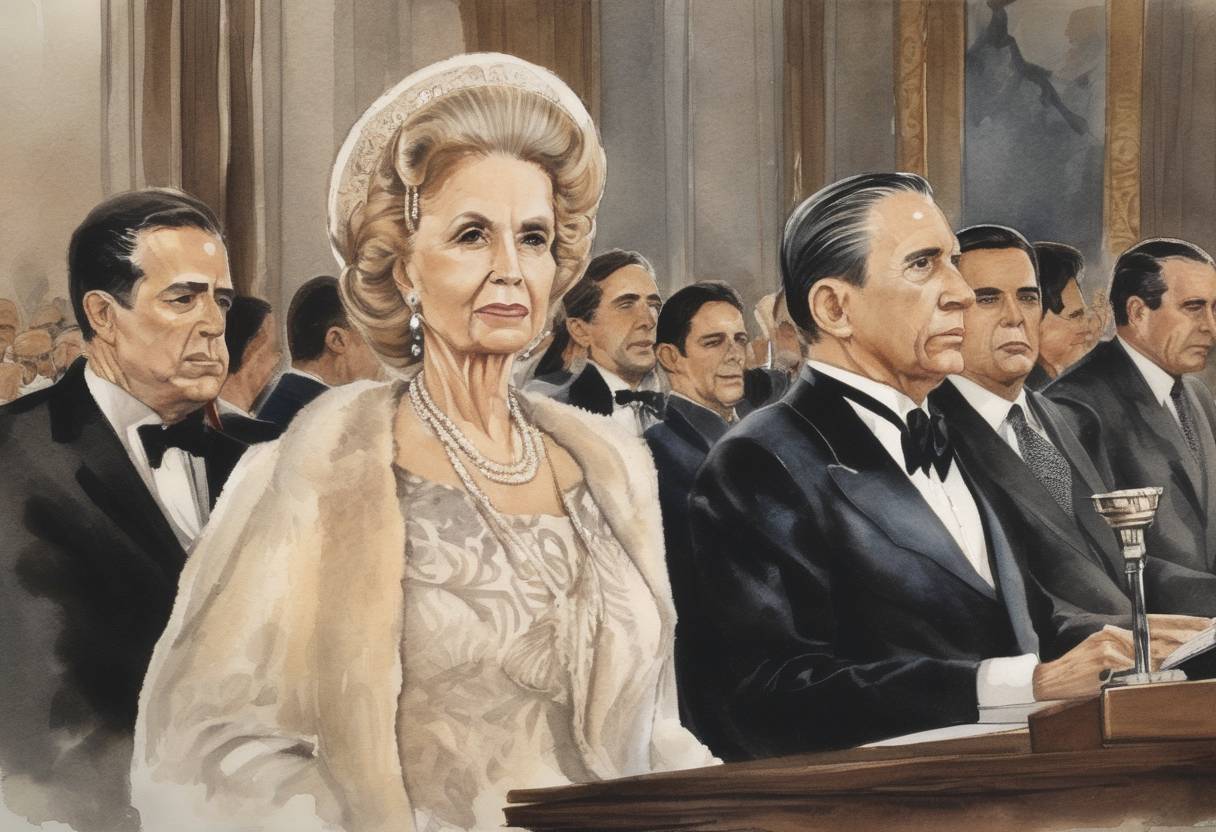
On June 29, 1974, María Estela Martínez de Perón, commonly known as Isabel Perón, was sworn in as the President of Argentina, marking a historic moment as she became the first female president in the world. Her ascension to the presidency followed the illness of her husband, President Juan Domingo Perón, who was suffering from severe health issues.
Isabel Perón was born on February 4, 1931, in La Rioja, Argentina. She was a dancer before meeting Juan Perón in the early 1950s. They married in 1961, and Isabel became deeply involved in politics, eventually serving as her husband’s vice president and first lady when he returned to power in 1973 after years of exile.
Juan Perón’s third term as president began in October 1973, but his health rapidly declined due to heart problems and other ailments. As vice president, Isabel was constitutionally next in line to assume the presidency.
On June 29, 1974, Isabel Perón was sworn in as acting president while Juan Perón was hospitalized. Her assumption of the presidency was initially intended to be temporary, but Juan Perón’s condition worsened, leading to his death on July 1, 1974. Following his death, Isabel Perón officially became the President of Argentina.
Isabel Perón’s presidency was fraught with challenges from the outset. She inherited a country plagued by economic instability, social unrest, and increasing violence from both left-wing guerrillas and right-wing paramilitary groups. Her administration struggled to maintain control and address these issues effectively.
One of the most controversial aspects of her presidency was the empowerment of José López Rega, a close advisor and the Minister of Social Welfare, who wielded significant influence over her decisions. López Rega was associated with the formation of the Argentine Anticommunist Alliance (AAA), a right-wing death squad responsible for numerous political assassinations.
Isabel Perón’s presidency ended abruptly on March 24, 1976, when she was overthrown in a military coup. This coup marked the beginning of a brutal military dictatorship that lasted until 1983, a period known for widespread human rights abuses and the “Dirty War.”
Despite the challenges and controversies of her presidency, Isabel Perón’s rise to power remains a significant historical milestone as she broke gender barriers in global politics. Her tenure is often studied in the context of Argentina’s turbulent political history and the broader struggle for women’s political representation worldwide.
Source: en.wikipedia.org