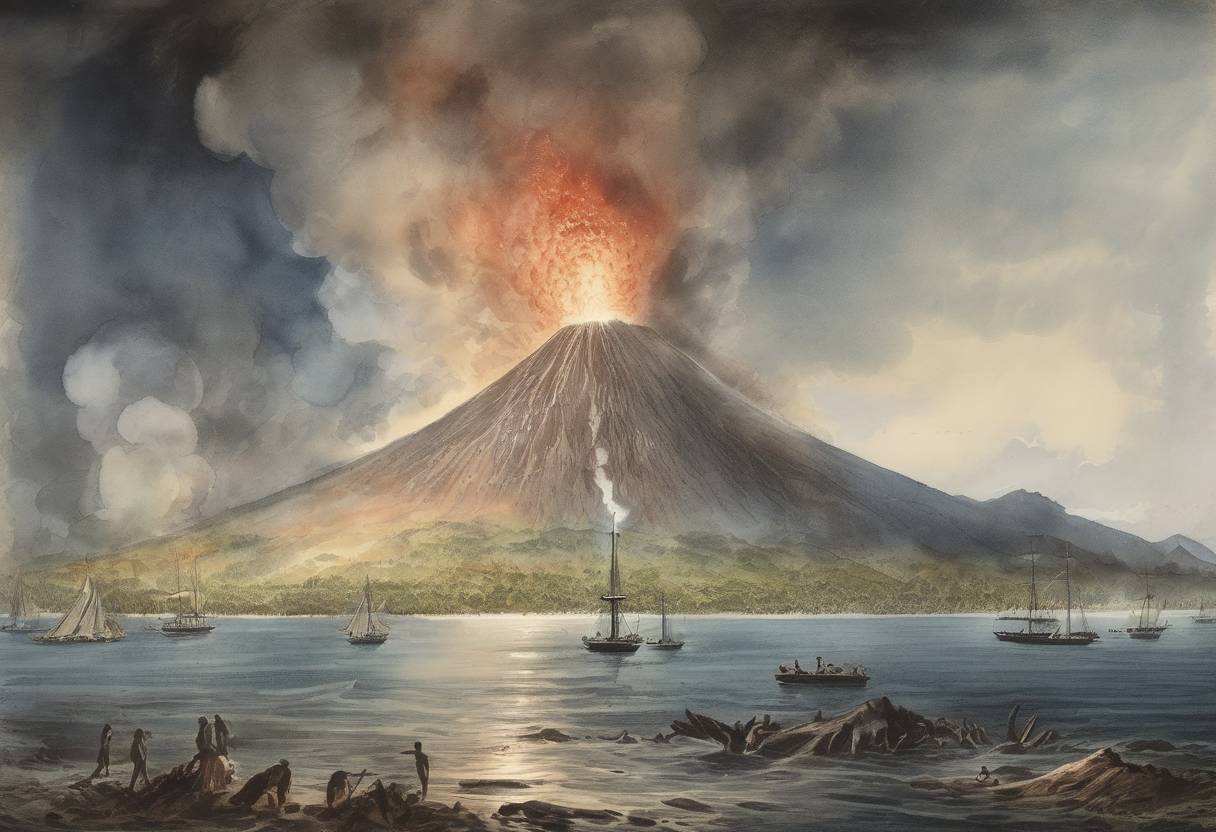
The Eruption of Krakatoa: May 20, 1883
On May 20, 1883, the volcanic island of Krakatoa, located in the Sunda Strait between the islands of Java and Sumatra in present-day Indonesia, began a series of eruptions that would culminate in one of the most catastrophic volcanic events in recorded history. This initial eruption marked the beginning of a period of intense volcanic activity that would have profound local and global impacts.
Context and Background
Krakatoa is part of the Pacific Ring of Fire, an area with a high level of tectonic activity, including frequent earthquakes and volcanic eruptions. Prior to 1883, Krakatoa had been relatively quiet since its last significant eruption in the late 17th century. However, the region’s geological instability meant that the potential for volcanic activity was ever-present.
Key Events Leading Up to the Eruption
Early Signs: In the months leading up to May 1883, there were reports of increased seismic activity in the region. Local inhabitants noticed minor tremors and steam emissions from the volcano, indicating that Krakatoa was becoming active once again.
Initial Eruptions: On May 20, 1883, Krakatoa began erupting with a series of smaller explosions. These eruptions were characterized by the emission of ash and pumice, which were carried by winds across the surrounding area.
The Catastrophic Eruption
The activity that began in May escalated dramatically over the following months. On August 26-27, 1883, Krakatoa experienced a series of massive explosions, culminating in a cataclysmic eruption. The eruption was so powerful that it destroyed over two-thirds of the island and generated tsunamis that devastated coastal communities.
Consequences
Loss of Life: The eruption and resulting tsunamis led to the deaths of over 36,000 people, making it one of the deadliest volcanic events in history.
Global Climatic Effects: The eruption ejected an estimated 20 cubic kilometers of ash into the atmosphere, which led to a significant drop in global temperatures. The ash cloud caused spectacular sunsets around the world and contributed to what is known as the “year without a summer” in 1884.
Geological Impact: The eruption significantly altered the geography of the region, with the island of Krakatoa largely obliterated. The event also led to the formation of a new volcanic island, Anak Krakatau, which emerged in the early 20th century.
Broader Historical Significance
The eruption of Krakatoa in 1883 is a pivotal event in the study of volcanology and atmospheric science. It highlighted the potential for volcanic eruptions to have far-reaching effects on the climate and underscored the importance of monitoring volcanic activity. The event also served as a stark reminder of the power of natural forces and the vulnerability of human societies to such catastrophic events.
In summary, the eruption of Krakatoa that began on May 20, 1883, was a precursor to one of the most violent and impactful volcanic events in history, with lasting effects felt both locally and globally.