1593 · Saint-Cosme-en-l'Isle, France
Pierre de Ronsard, a prominent French poet in the literature of the Renaissance, passed away.
April 26, 1336
Francesco Petrarca, known as Petrarch, ascends Mont Ventoux in France, an event often considered symbolic of the Renaissance's humanist spirit.
Mont Ventoux, France
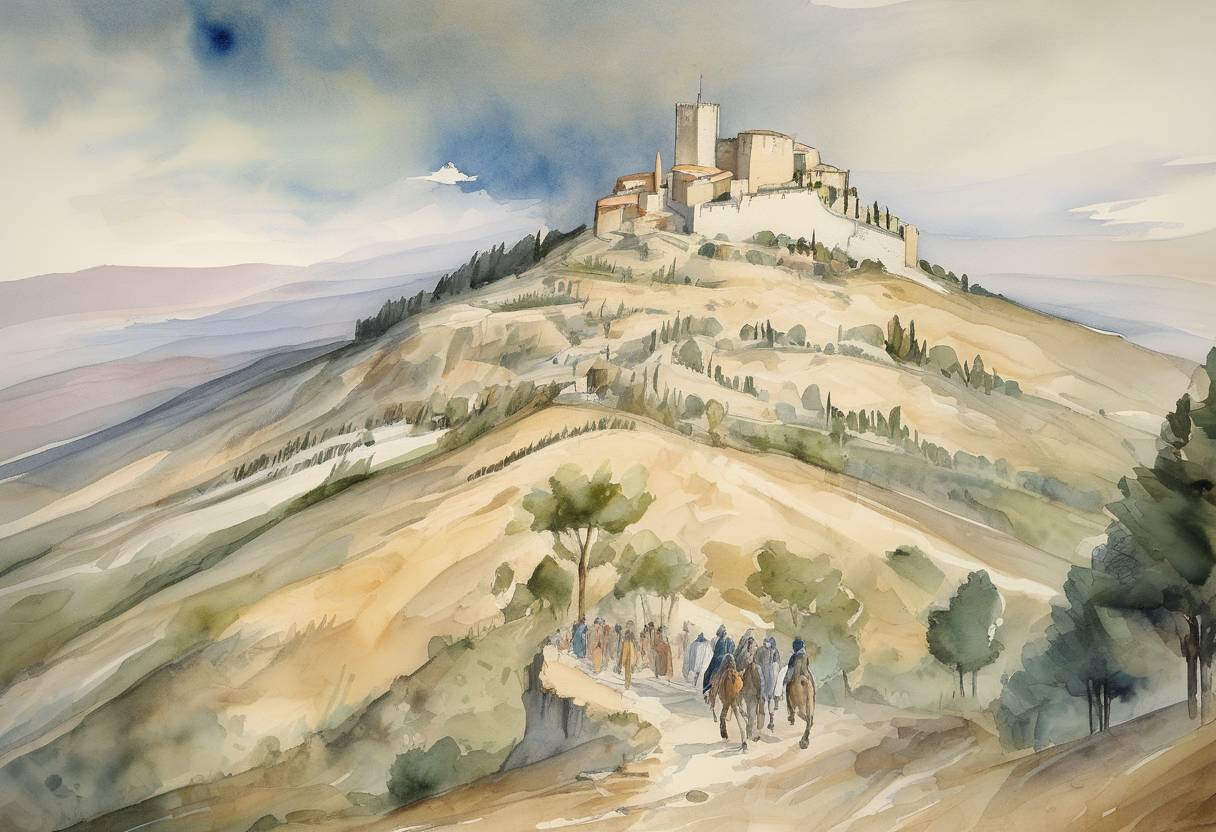
On April 26, 1336, the Italian scholar and poet Francesco Petrarca, commonly known as Petrarch, undertook a climb of Mont Ventoux in Provence, France. This event is often regarded as emblematic of the burgeoning humanist spirit of the Renaissance.
Francesco Petrarca (1304-1374): Petrarch was a key figure in the early Renaissance, known for his poetry, particularly the “Canzoniere,” and his revival of classical texts. His work laid the groundwork for Renaissance humanism, emphasizing the study of classical antiquity and the potential of human achievement.
Renaissance Humanism: This intellectual movement focused on the study of classical texts, the value of the individual, and the potential for human achievement. It marked a departure from the medieval scholasticism that dominated Europe, emphasizing a return to the sources of ancient Greek and Roman thought.
Mont Ventoux: Standing at 1,912 meters (6,273 feet), Mont Ventoux is a prominent peak in the Provence region of France. Its name, meaning “windy mountain,” reflects its often harsh and windy conditions.
The Climb: Petrarch’s ascent was not merely a physical endeavor but a symbolic act. He was accompanied by his brother and two servants. The climb was arduous, and Petrarch later recounted the experience in a letter to his former confessor, Dionigi di Borgo San Sepolcro.
Personal Reflection: During the climb, Petrarch reportedly carried a copy of St. Augustine’s “Confessions,” which he read upon reaching the summit. This act symbolized the merging of classical and Christian thought, a hallmark of Renaissance humanism.
Humanist Spirit: Petrarch’s ascent is often interpreted as a metaphor for the humanist pursuit of knowledge and the exploration of the self. His reflection on the journey and the view from the summit underscored the Renaissance emphasis on individual experience and introspection.
Literary Impact: The letter describing his ascent, “The Ascent of Mont Ventoux,” is considered one of the earliest examples of modern autobiographical writing. It reflects Petrarch’s introspective nature and his belief in the transformative power of nature and personal experience.
Influence on Humanism: Petrarch’s writings and his symbolic ascent of Mont Ventoux inspired future generations of humanists and scholars. His emphasis on personal experience and the study of classical texts became central to Renaissance thought.
Cultural Impact: The event is often cited as a turning point in the cultural history of Europe, marking a shift towards the values and ideals that would define the Renaissance.
Petrarch’s climb of Mont Ventoux remains a powerful symbol of the Renaissance’s humanist ideals, representing a pivotal moment in the transition from medieval to modern thought.
Source: en.wikipedia.org