The Foundation of Cologne Cathedral: August 15, 1248
1248 · Cologne, Holy Roman Empire
The foundation stone of Cologne Cathedral was laid, marking the beginning of its construction.
August 14, 1880
Construction of the Cologne Cathedral in Germany was completed, 632 years after it began in 1248.
Cologne, Germany
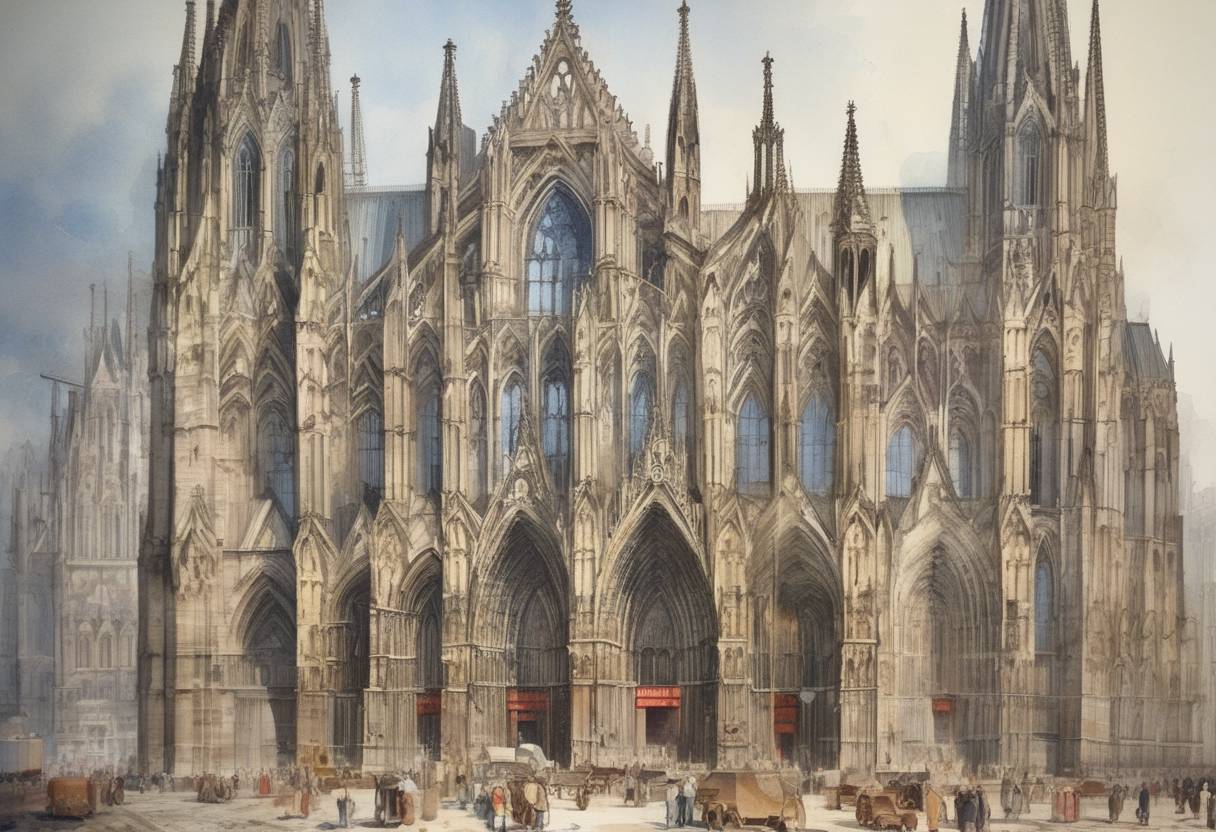
The Cologne Cathedral, one of the most iconic landmarks in Germany, was officially completed on August 14, 1880. This marked the end of a construction period that spanned 632 years, beginning in 1248. The cathedral is a masterpiece of Gothic architecture and stands as a testament to the architectural and cultural evolution of Europe through the centuries.
Initial Construction (1248): The foundation stone of the Cologne Cathedral was laid on August 15, 1248, under the direction of Archbishop Konrad von Hochstaden. The cathedral was intended to house the reliquary of the Three Kings, which had been brought to Cologne in 1164, making it a significant pilgrimage site.
Medieval Construction (1248-1473): The construction during this period was characterized by the Gothic style, which was prevalent in Europe. The choir was completed in 1322, allowing it to be used for religious services. However, progress was slow, and by 1473, construction was halted, leaving the cathedral incomplete.
Renaissance and Baroque Periods: During these periods, the unfinished cathedral stood as a symbol of the city’s aspirations. However, economic and political factors, including the Reformation and the Thirty Years’ War, diverted resources and attention away from its completion.
19th Century Revival: Interest in completing the cathedral was revived in the 19th century, fueled by a growing sense of German nationalism and the Romantic movement, which idealized the medieval past. King Frederick William IV of Prussia was a significant patron of the project.
Completion (1880): Under the guidance of architect Ernst Friedrich Zwirner, construction resumed in 1842. The original medieval plans were used, ensuring the cathedral’s Gothic style was preserved. The completion in 1880 was celebrated as a national event, symbolizing the unity and strength of the newly formed German Empire.
Design: The Cologne Cathedral is renowned for its twin spires, which reach a height of 157 meters (515 feet), making it the tallest building in the world at the time of its completion. The cathedral’s design includes a vast nave, intricate stained glass windows, and a richly decorated façade.
Cultural Impact: As a UNESCO World Heritage Site, the cathedral is not only a place of worship but also a cultural and historical monument. It attracts millions of visitors each year, who come to admire its architectural beauty and historical significance.
Preservation: The cathedral has undergone various restoration efforts to preserve its structure and art. It survived both World Wars with relatively minor damage, serving as a symbol of resilience.
Modern Significance: Today, the Cologne Cathedral remains a central feature of Cologne’s skyline and a symbol of the city’s historical and cultural heritage. It continues to be a site of religious importance and a major tourist attraction.
The completion of the Cologne Cathedral in 1880 was not just the end of a long construction journey but also a moment that encapsulated the historical, cultural, and national aspirations of Germany.
Source: www.britannica.com