Death of Otto III, Holy Roman Emperor
1002 · Civita Castellana, Italy
Otto III, Holy Roman Emperor, died in the castle of Paterno near Civita Castellana of malaria.
November 1, 0996
Emperor Otto III issues a document confirming the privileges of the monastery of San Salvatore in Pavia, Italy.
Pavia, Holy Roman Empire (modern-day Italy) | Holy Roman Empire
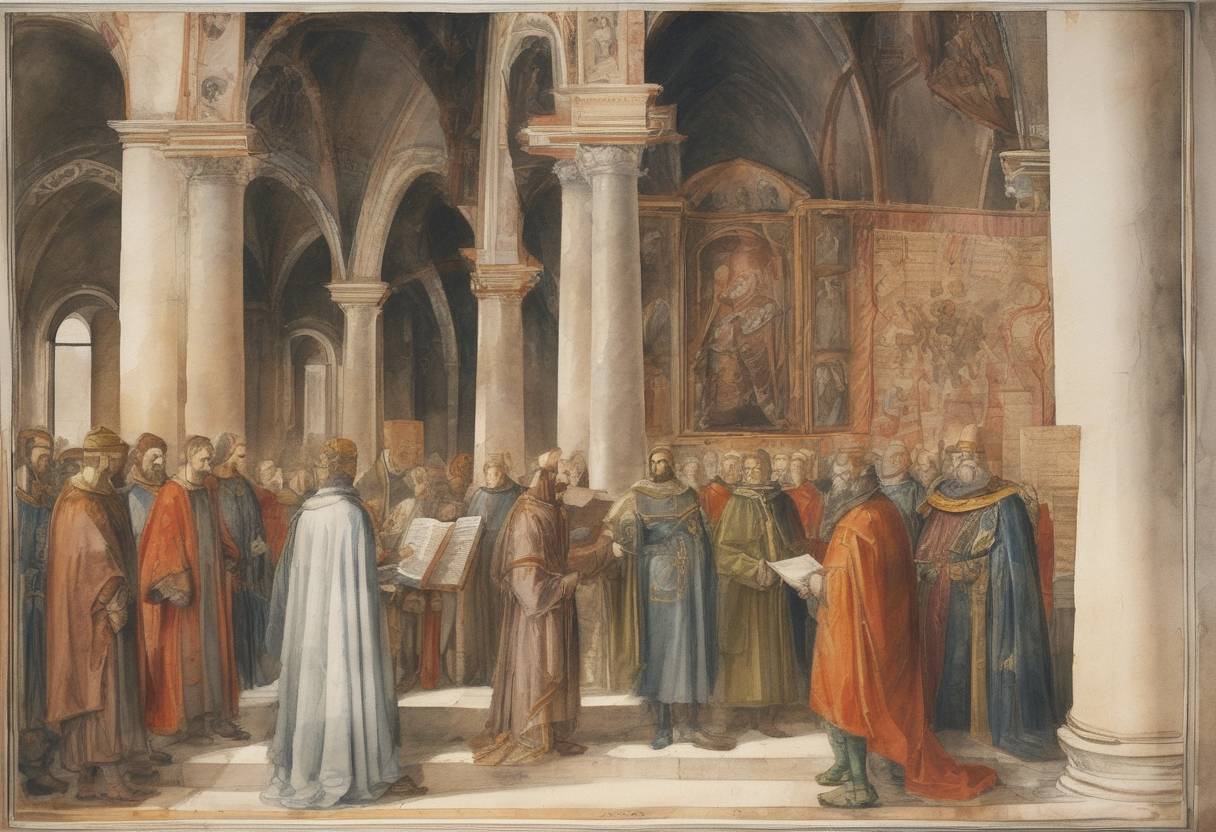
On November 1, 996, Emperor Otto III issued a significant document confirming the privileges of the monastery of San Salvatore in Pavia, Italy. This event is a notable example of the relationship between the Holy Roman Empire and religious institutions during the medieval period.
Otto III, born in 980, became Holy Roman Emperor in 996, following the death of his father, Otto II. His reign was marked by a vision of reviving the Roman Empire’s glory, blending Christian and imperial ideals. Otto III sought to strengthen the empire’s influence over the church and consolidate his power across Europe.
The Monastery of San Salvatore, located in Pavia, was an important religious and cultural center in medieval Italy. Monasteries during this period were not only spiritual hubs but also centers of learning, economic activity, and political influence. The confirmation of privileges by an emperor was a significant endorsement that could enhance a monastery’s status and autonomy.
The document issued by Otto III confirmed various privileges for the monastery, likely including exemptions from certain taxes, rights to land, and autonomy in internal governance. Such confirmations were crucial for monasteries to maintain their economic base and independence from local secular authorities.
The confirmation of privileges for monasteries like San Salvatore helped solidify the Holy Roman Empire’s control over its territories by aligning with influential religious institutions. This relationship between the empire and the church would continue to evolve, influencing European politics and society for centuries.
In summary, the issuance of this document by Otto III on November 1, 996, highlights the complex dynamics of power, religion, and culture in medieval Europe, reflecting the emperor’s broader ambitions and the pivotal role of monastic institutions in the era.
Source: en.wikipedia.org