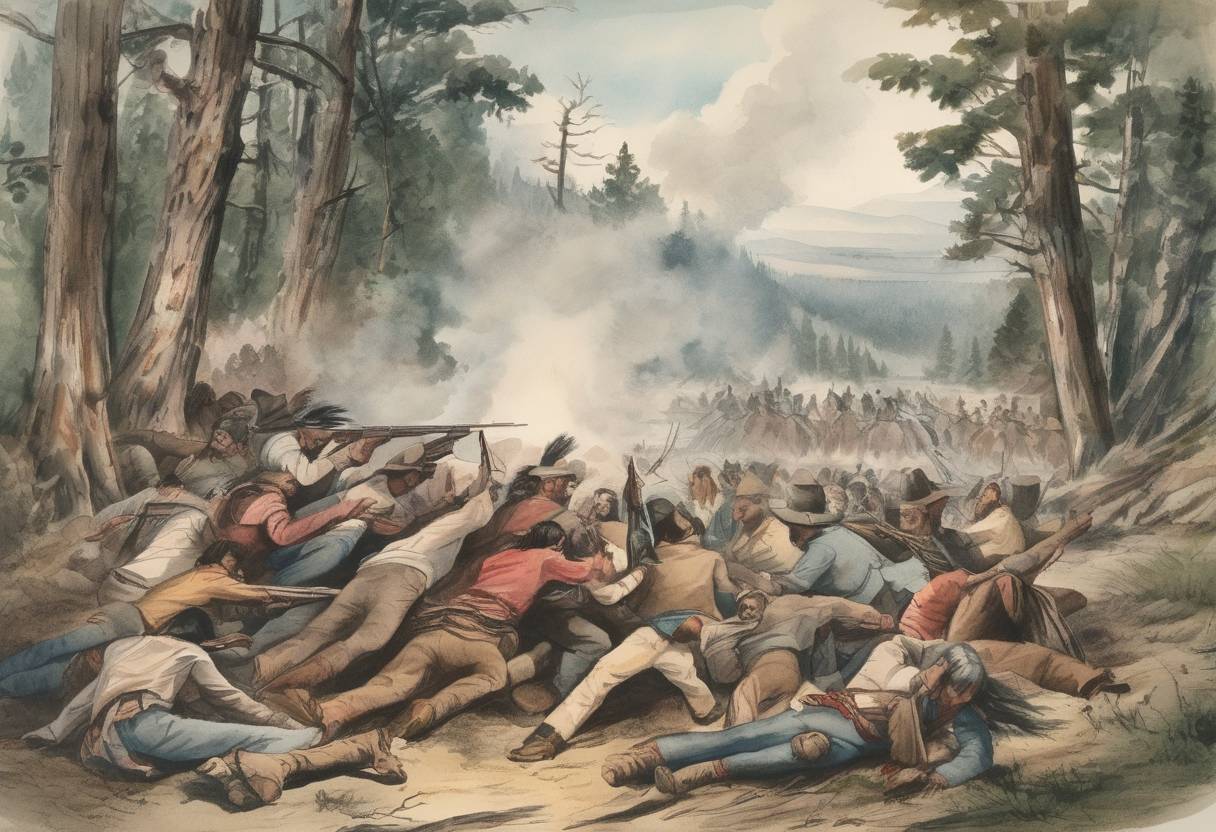
The Whitman Massacre: November 29, 1847
On November 29, 1847, a tragic event known as the Whitman Massacre occurred in the Oregon Country, marking a significant and violent clash between Native American inhabitants and European-American settlers. This event involved the killing of Dr. Marcus Whitman, his wife Narcissa, and 11 others by members of the Cayuse tribe at the Whitman Mission near present-day Walla Walla, Washington.
Background
The Whitman Mission
- Established in 1836: Marcus and Narcissa Whitman, along with Reverend Henry Spalding and his wife Eliza, established missions in the Oregon Country to convert Native Americans to Christianity and provide medical care.
- Location: The Whitman Mission was situated near the Walla Walla River, in the territory of the Cayuse tribe.
Tensions Leading Up to the Massacre
- Cultural Differences: The Whitmans’ efforts to convert the Cayuse and change their traditional ways of life led to cultural misunderstandings and resentment.
- Disease: An outbreak of measles in 1847, brought by settlers traveling along the Oregon Trail, devastated the Cayuse population, who had little immunity to European diseases. The Cayuse suffered heavy losses, while many settlers survived, leading to suspicions that Whitman was deliberately poisoning the tribe.
The Massacre
- Date: November 29, 1847
- Attack: A group of Cayuse warriors attacked the mission, killing Marcus and Narcissa Whitman and 11 others. The attack was fueled by the belief that Whitman was responsible for the measles outbreak.
- Aftermath: The Cayuse took 54 women and children hostage, holding them for a month before they were eventually ransomed by the Hudson’s Bay Company.
Consequences
- Retaliation: The massacre led to the Cayuse War (1847-1855), a series of conflicts between the Cayuse and the United States, as settlers and the U.S. government sought retribution.
- Trial and Execution: In 1850, five Cayuse men were tried and executed for the murders, despite questions about the fairness of the trial and the men’s actual involvement.
Long-term Effects
- Increased Tensions: The massacre exacerbated tensions between Native American tribes and settlers, contributing to further conflicts in the region.
- Missionary Efforts: The event marked a turning point in missionary efforts in the Pacific Northwest, leading to increased military presence and eventual U.S. territorial control.
Historical Significance
The Whitman Massacre is a poignant example of the cultural and physical clashes that occurred as European-American settlers expanded westward. It highlights the devastating impact of disease on Native American populations and underscores the complex dynamics of frontier life, where misunderstandings and mistrust often led to violence. The event remains a significant chapter in the history of the Pacific Northwest and the broader narrative of American westward expansion.