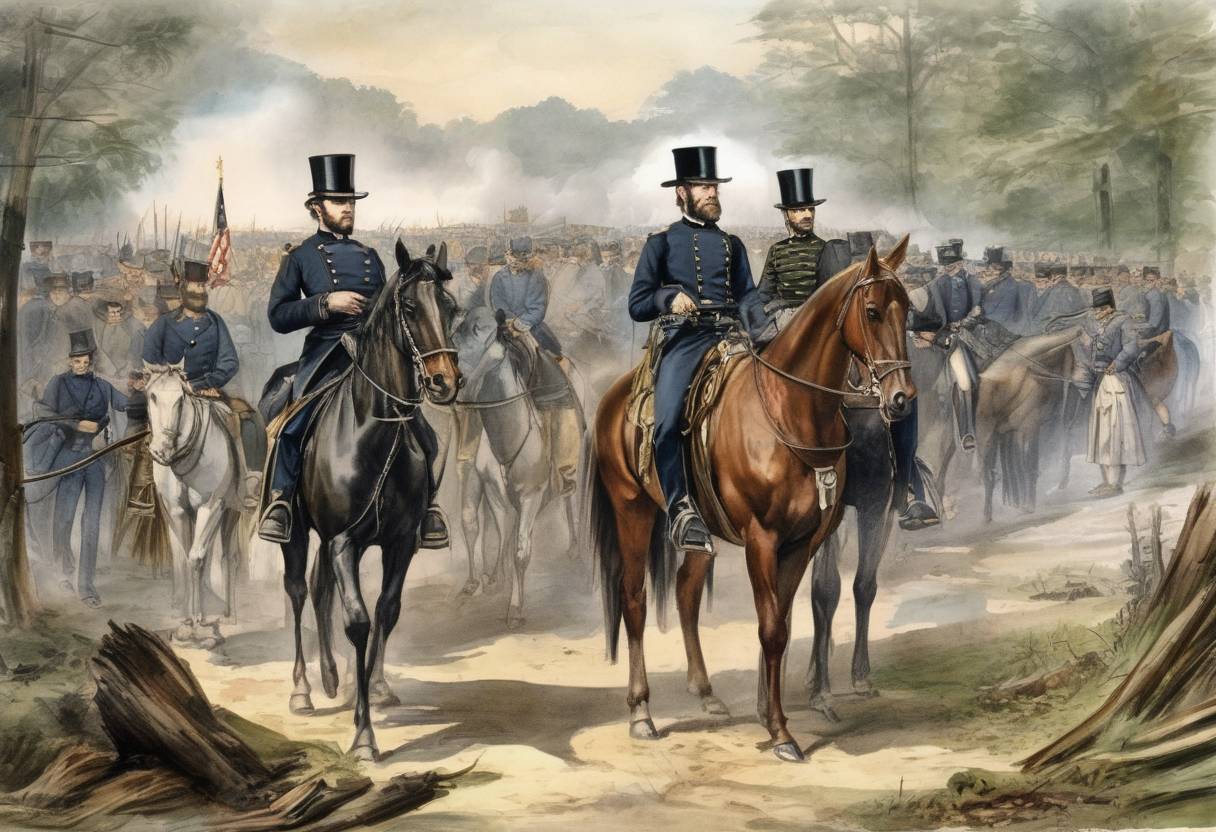
Sherman’s March to the Sea: November 15, 1864
On November 15, 1864, Union General William Tecumseh Sherman embarked on his infamous “March to the Sea” during the American Civil War. This military campaign was a pivotal moment in the war, marking a shift in tactics and strategy that would have lasting impacts on the conflict and the Southern states.
Context and Prelude
The Civil War, which began in 1861, was at a critical juncture by 1864. The Union, led by President Abraham Lincoln, was seeking decisive victories to weaken the Confederacy and hasten the end of the war. General Sherman, a key figure in the Union Army, had already captured Atlanta, Georgia, in September 1864, a significant logistical and railroad hub for the Confederacy.
Sherman’s strategy was rooted in the concept of “total war,” aiming to break the will of the Southern populace and diminish their capacity to sustain the war effort. By targeting not just military forces but also the economic infrastructure supporting them, Sherman hoped to expedite the Union’s victory.
The March Begins
On November 15, 1864, Sherman and his troops departed from Atlanta, leaving the city in ruins after setting it ablaze. His force, numbering approximately 60,000 soldiers, was divided into two wings, each taking separate routes to the coastal city of Savannah, Georgia. The march covered a distance of about 300 miles and lasted until December 21, 1864.
Sherman’s army moved swiftly, living off the land by requisitioning supplies from local farms and plantations. This strategy not only sustained his troops but also inflicted economic damage on the Confederacy. The march was characterized by the destruction of railroads, factories, and other infrastructure, further crippling the Southern war effort.
Impact and Consequences
Sherman’s March to the Sea had several significant outcomes:
Psychological Impact: The campaign demoralized the Southern populace and military, showcasing the Union’s ability to penetrate deep into Confederate territory with little resistance.
Economic Devastation: By destroying resources and infrastructure, Sherman effectively disrupted the Confederate economy and its ability to support the war.
Military Strategy: The march demonstrated the effectiveness of total war tactics, influencing future military strategies.
Political Ramifications: The success of the campaign bolstered Northern morale and contributed to the re-election of President Lincoln in November 1864.
End of the War: Sherman’s campaign hastened the collapse of the Confederacy, leading to its eventual surrender in April 1865.
Conclusion
Sherman’s March to the Sea remains one of the most controversial and studied campaigns of the American Civil War. It exemplified the harsh realities of total war and underscored the Union’s resolve to restore the nation. The march not only contributed to the military defeat of the Confederacy but also left a lasting legacy on the Southern landscape and its people.